




Urolithin A, chemically classified as a polyphenol, is a highly active metabolite produced through the intricate metabolism of ellagic acid by gut microbiota. In nature, walnuts, pomegranates, and berries are rich in ellagitannins, which are the precursor substances of urolithin A. When the human body ingests foods containing ellagitannins, they are hydrolyzed into ellagic acid in the upper digestive tract. Subsequently, gut microorganisms play a crucial role in further metabolizing ellagic acid into biologically active free urolithin A.
However, the production and absorption of urolithin A in the human body are not always straightforward. The composition of the gut microbiota acts like a “key,” determining whether the door to urolithin A bioavailability can be successfully opened. Significant differences exist in the gut microbiota of different individuals, and some people’s gut microbiota may not be able to effectively convert the precursor substances into urolithin A, leading to a significantly reduced efficiency in obtaining urolithin A from food. Studies have shown that in an experiment on mice, 1 hour after oral administration of urolithin A, the level of unconjugated urolithin A in the mice’s plasma significantly increased, and the oxygen radical antioxidant capacity (ORAC) score also increased significantly. This not only confirms that urolithin A can be rapidly absorbed but also demonstrates its powerful antioxidant activity. However, in the human body, due to the complexity of the gut microbiota, the situation may be different.
Ordinary urolithin A faces many absorption obstacles in the human body, resulting in low bioavailability. Bioavailable forms of urolithin A, like a “supercharged” version, successfully overcome the intestinal absorption barrier through structural optimization or advanced carrier technologies. Taking nanotechnology as an example, encapsulating urolithin A in nanoparticles can increase its stability, making it easier to penetrate the intestinal mucosa, thereby directly increasing its effective concentration in the body.
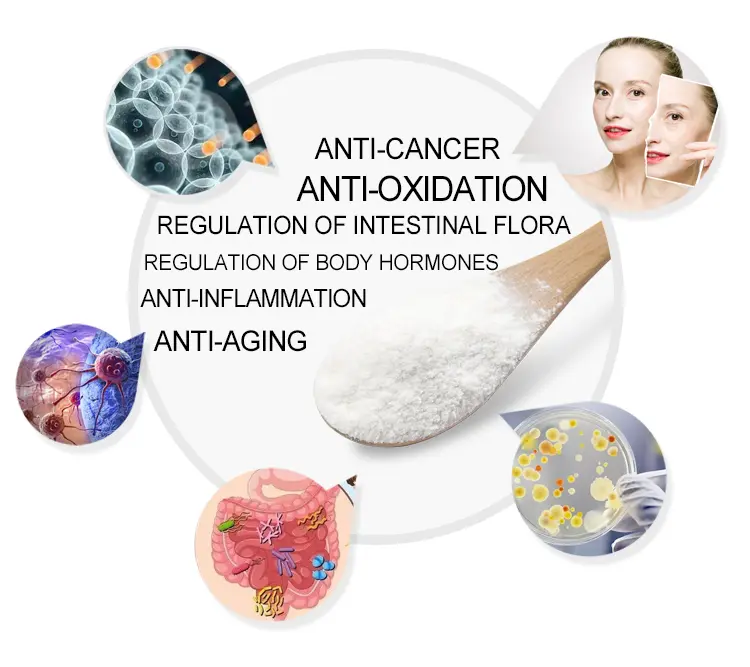
From a mechanistic perspective, bioavailable urolithin A has multifaceted effects. In terms of anti-inflammatory effects, it can precisely inhibit the NF-κB p65 pathway, reducing the release of inflammatory factors, effectively “putting the brakes” on inflammation. In the field of anti-proliferation, it is relentless against tumor cells, inhibiting their uncontrolled division by blocking them in the G2/M and S phases. On the antioxidant front, it not only directly scavenges free radicals but also activates the Nrf2 pathway, enhancing the cell’s own antioxidant defense system, like giving the cell a protective “antioxidant armor.”
In maintaining mitochondrial health, bioavailable urolithin A has a unique advantage. Mitochondria are known as the cell’s “energy factories,” and with age or exposure to adverse external factors, mitochondria are prone to damage, leading to abnormal energy metabolism and cellular dysfunction. Urolithin A can stimulate mitochondrial autophagy, allowing aging and damaged mitochondria to be promptly cleared, making room for newly generated healthy mitochondria. This ensures a stable energy supply for the cell and maintains its normal physiological functions.
Targeting Mitochondria: The Health-Enhancing Mechanisms of Urolithin A
(I) Precise Activation of Mitochondrial Autophagy – Clearing “Damaged Energy Factories”
Mitochondria play a crucial role in cellular life activities, known as “energy factories,” responsible for the synthesis of most ATP in cells, providing energy support for various physiological activities. However, with age and external environmental stimuli, mitochondria inevitably suffer damage, such as decreased mitochondrial membrane potential and respiratory chain dysfunction. These damaged mitochondria not only fail to efficiently produce energy but also become “time bombs,” releasing large amounts of reactive oxygen species (ROS), triggering oxidative stress, damaging biomolecules such as proteins, lipids, and DNA within the cell, and even releasing pro-apoptotic factors to induce cell apoptosis.
Urolithin A acts like a “precise scavenger,” acutely identifying and activating mitochondrial autophagy, a key mechanism. Within the cell, there is a signaling pathway called Pink1-Parkin, which acts as the “switch” for mitochondrial autophagy. Under normal circumstances, the Pink1 protein is expressed at low levels on the outer mitochondrial membrane and is rapidly degraded. However, when mitochondria are damaged, the mitochondrial membrane potential decreases, and the Pink1 protein cannot be properly transported and degraded, leading to its accumulation on the outer mitochondrial membrane. The accumulated Pink1 protein recruits the Parkin protein, which acts like a “destruction tag” for damaged mitochondria. It ubiquitinates various proteins on the mitochondrial membrane, allowing the damaged mitochondria to be recognized and engulfed by autophagosomes, ultimately fusing with lysosomes and being degraded by hydrolytic enzymes in the lysosomes.
Urolithin A specifically targets aging or damaged mitochondria by regulating this Pink1-Parkin signaling pathway, promoting their degradation. In in vitro experiments, researchers treated human colon cancer cells with different concentrations of urolithin A and found that micromolar concentrations of urolithin A could induce autophagy in the cells. During this process, intracellular DNA synthesis was significantly inhibited, indicating that urolithin A-induced autophagy had a significant impact on cell proliferation and metabolism. In in vivo studies, researchers administered urolithin A to aged mice. After a period of time, they found that the ATP production in the skeletal muscle mitochondria of the aged mice was significantly increased, recovering to more than 80% of that of young mice. This exciting result fully demonstrates the powerful efficacy of urolithin A in improving mitochondrial function and restoring energy metabolism.
(II) Positive Regulation of Mitochondrial Biogenesis – Reshaping the “Energy Supply Network”
In addition to timely removal of damaged mitochondria, urolithin A also actively participates in the positive regulation of mitochondrial biogenesis, acting like a diligent “architect” dedicated to reshaping the intracellular “energy supply network.” Within cells, there is a SIRT1-PGC-1α signaling pathway, which is the core regulatory pathway for mitochondrial biogenesis. SIRT1 is a nicotinamide adenine dinucleotide (NAD⁺)-dependent deacetylase that plays a key role in cellular metabolism and aging. PGC-1α is a key transcriptional co-activator of mitochondrial biogenesis, which can interact with various transcription factors to promote the expression of nuclear-encoded mitochondrial genes.
When urolithin A enters the cell, it can activate the SIRT1-PGC-1α pathway. Specifically, urolithin A can increase the intracellular level of NAD⁺, thereby enhancing the activity of SIRT1. The activated SIRT1 then deacetylates PGC-1α, enhancing its activity. The activated PGC-1α binds to the promoter region of nuclear-encoded mitochondrial genes, recruiting relevant transcription factors and RNA polymerase, promoting the transcription of these genes, and thus accelerating the generation of healthy mitochondria. These newly generated mitochondria have a complete structure and efficient function, enabling them to perform oxidative phosphorylation more effectively and provide sufficient energy for the cell. In the HepG2 cell model, researchers observed that urolithin A not only promotes mitochondrial biogenesis but also significantly impacts cell proliferation and apoptosis. On the one hand, urolithin A downregulates the expression of pro-proliferative factors such as β-catenin and c-Myc, inhibiting excessive cell proliferation; on the other hand, it upregulates the expression of tumor suppressor proteins such as p53 and caspase-3, inducing apoptosis. Simultaneously, urolithin A improves mitochondrial quality and enhances mitochondrial function, leading to more stable cellular energy metabolism. This simultaneous improvement of mitochondrial quality and cell cycle regulation provides a dual safeguard against aging and disease.
(III) Dual Regulation of Oxidative Stress and Inflammation – Building a Strong Mitochondrial Protective Shield
Oxidative stress and inflammation are like two “mountains” constantly threatening mitochondrial health, while urolithin A acts as a “protective guardian,” building a strong protective shield for mitochondria through a dual regulatory mechanism.
In terms of oxidative stress, urolithin A demonstrates exceptional performance. ROS are the main products of oxidative stress, including superoxide anions and hydroxyl radicals. These have extremely strong oxidizing properties and can attack lipids, proteins, and mitochondrial DNA on the mitochondrial membrane, leading to damage to mitochondrial structure and function. Urolithin A itself is a polyphenol substance with multiple phenolic hydroxyl groups. These phenolic hydroxyl groups can provide hydrogen atoms, reacting with ROS and reducing them to relatively stable substances, thus directly scavenging superoxide anions, hydroxyl radicals, and other ROS. Urolithin A can also activate the Nrf2 signaling pathway in cells. Nrf2 is a key transcription factor in the cellular antioxidant defense system. When Nrf2 is activated, it enters the cell nucleus and binds to the antioxidant response element (ARE), initiating the expression of a series of antioxidant genes, such as glutathione (GSH) synthetase and superoxide dismutase (SOD). These antioxidants work synergistically to enhance the cell’s own antioxidant capacity, further reducing ROS damage to mitochondria. In terms of inflammation regulation, urolithin A primarily exerts its effects by inhibiting the NF-κB pathway. NF-κB is a transcription factor widely present in cells and plays a central role in inflammatory responses. When cells are stimulated by inflammation, NF-κB is activated, translocates from the cytoplasm to the nucleus, and binds to the promoter regions of related genes, promoting the transcription and expression of inflammatory factors such as TNF-α and IL-6. These inflammatory factors trigger inflammatory responses, leading to mitochondrial dysfunction. Urolithin A can inhibit the activation of NF-κB, preventing its translocation to the nucleus, thereby reducing the secretion of inflammatory factors such as TNF-α and IL-6. In nerve tissue, inflammatory responses often lead to neuronal damage and neurodegenerative diseases. After supplementation with urolithin A, the levels of inflammatory factors decrease, and the mitochondrial structure and function of neurons are effectively protected, delaying the progression of neurodegenerative diseases. In muscle tissue, urolithin A can also alleviate inflammatory aging, maintain the normal function of muscle mitochondria, and improve muscle endurance and strength.
Dietary Supplements: The Advantages of Bioavailable Urolithin A
(I) Precise Supplementation Overcoming Food Conversion Limitations
In the field of dietary nutrition, while food-derived urolithin A holds great potential, it faces a significant hurdle: individual differences in gut microbiota. Research shows that approximately 50% of the population, due to the unique composition of their gut microbiota, cannot efficiently convert ellagitannins from food into biologically active urolithin A. This is like having carefully prepared ingredients but being unable to create a delicious meal due to limitations in cooking tools. For example, in a dietary intervention study involving different groups of people, one group with normal gut microbiota and another with specific gut microbiota were given pomegranate juice rich in ellagitannins. After a period of time, it was found that the levels of urolithin A in the urine and blood of the group with normal gut microbiota increased significantly, while the levels in the group with specific gut microbiota remained almost unchanged. This clearly demonstrates the critical influence of gut microbiota on urolithin A production.
To address this challenge, dietary supplements have emerged as the “key” to precise urolithin A supplementation. These supplements directly provide optimized bioavailable urolithin A, eliminating the need for gut microbiota conversion and fundamentally avoiding the problem of insufficient intake due to individual differences. Regardless of the specific gut microbiota composition, individuals can consistently obtain urolithin A through supplements, providing sufficient nutritional support for the body.
In terms of formulation technology, researchers are constantly innovating, employing advanced technologies such as nanocrystals and enteric coating to further enhance the absorption efficiency of urolithin A. Nanocrystal technology is like transforming urolithin A into tiny “energy particles,” greatly increasing its contact area with the intestinal mucosa, resulting in faster and more complete absorption. Enteric coating technology is like giving urolithin A a “protective layer,” allowing it to successfully pass through the “strong acid test” of stomach acid and safely reach the intestines for absorption, ensuring an effective concentration targeting mitochondria, and allowing each supplement to precisely exert its effect.
(II) Dosage Safety Window and Dosage Form Design
In the development of Urolithin A dietary supplements, determining the dosage safety window and designing the dosage form are crucial steps. Preclinical studies have provided abundant data support, showing that Urolithin A exhibits significant inhibitory effects on tumor cells at concentrations of 50-100 μM. Taking T24 bladder cancer cells as an example, its IC50 (half-maximal inhibitory concentration) is 43.9 μM, meaning that at this concentration, Urolithin A can effectively inhibit the growth of 50% of T24 bladder cancer cells. Encouragingly, Urolithin A has extremely low toxicity to normal cells; while exerting its anti-cancer effects, it does not cause serious damage to normal body cells, providing strong assurance of its safety as a dietary supplement.
Based on these research results, Urolithin A supplements on the market are typically designed with a dosage of 50-200 mg/day. This dosage range has been verified through numerous experiments and clinical practices, ensuring sufficient intake of Urolithin A to exert its effects, such as improving mitochondrial health, while remaining within a safe range to avoid adverse reactions. To further enhance the bioavailability of Urolithin A, researchers have cleverly combined it with dietary fiber or probiotics. Dietary fiber acts like a “scavenger” in the intestines, promoting intestinal motility and improving the intestinal environment, creating favorable conditions for the absorption of Urolithin A; probiotics regulate the balance of intestinal flora, enhance the digestive and absorption functions of the intestines, and work synergistically with Urolithin A to jointly improve health benefits.
In terms of dosage form design, there are many types of Urolithin A supplements on the market, commonly including tablets, capsules, and sublingual tablets. Tablets have the advantages of accurate dosage, convenient administration, and easy storage, making them suitable for most people; capsules better protect Urolithin A from gastric acid degradation, ensuring its release and absorption in the intestines; sublingual tablets have the advantage of rapid absorption, directly entering the bloodstream through the sublingual mucosa, avoiding the first-pass effect of the liver, and improving bioavailability, making them especially suitable for people with high requirements for drug absorption or weak gastrointestinal function.
(III) Evidence of Safety and Tolerability
Safety and tolerability are crucial indicators for determining whether a dietary supplement can be widely used, and Urolithin A performs satisfactorily in this regard. In animal experiments, researchers orally administered Urolithin A to mice. After long-term observation and testing, no significant toxic reactions were observed in the mice. Furthermore, inflammatory markers in the mice’s plasma, such as C-reactive protein, were significantly reduced, indicating that Urolithin A is not only safe but also effectively reduces inflammation and positively promotes the health of the mice.
Human clinical studies also provide strong evidence for the safety and effectiveness of Urolithin A. A long-term supplementation study in patients with colon polyps found that Urolithin A improved the immune microenvironment of colon polyps, reduced systemic inflammation levels, and no significant side effects were observed throughout the supplementation process. This result instills confidence in the future applications of Urolithin A. Whether for healthy individuals seeking to prevent disease and maintain mitochondrial health, or for middle-aged and elderly people aiming to delay aging and improve their quality of life, Urolithin A dietary supplements have become a safe and reliable option.
 Scientific Evidence: Evidence-Based Support from Laboratory to Dietary Supplements
 Scientific Evidence: Evidence-Based Support from Laboratory to Dietary Supplements
(I) In Vitro Studies: Multi-Dimensional Bioactivity Verification
In the journey of exploring the bioactivity of Urolithin A, in vitro studies have opened a crucial window, allowing us to gain a deeper understanding of its miraculous effects at the microscopic level. Researchers selected various cell lines as research subjects and conducted a series of rigorous experiments.
In experiments with SW620 colorectal cancer cells, Urolithin A demonstrated powerful anti-cancer potential. It acted as a precise “cell cycle regulator,” cleverly blocking the cell cycle, firmly controlling cancer cells at a specific stage, preventing them from successfully dividing and proliferating. Urolithin A also acted as an “apoptosis inducer,” activating the apoptotic signaling pathway within cancer cells, inducing apoptosis, and effectively inhibiting tumor growth. In HepG2 liver cancer cells, Urolithin A took a different approach, downregulating the β-catenin signaling pathway, fundamentally reducing the expression of proliferation-related genes, thus curbing the rampant proliferation of liver cancer cells.
In terms of anti-proliferative activity, Urolithin A’s performance in Caco-2 colon cancer cells was particularly outstanding, with an IC50 value of 49 μM. This data acts like a precise “ruler,” clearly measuring Urolithin A’s inhibitory ability on Caco-2 colon cancer cells, meaning that at a concentration of 49 μM, Urolithin A can effectively inhibit 50% of Caco-2 colon cancer cell growth, bringing new hope and theoretical basis for the prevention of digestive system tumors.
(II) In Vivo Experiments: Bidirectional Regulation of Inflammation and Aging
In vivo experiments are like a “simulated human battlefield,” providing a more realistic environment for verifying the efficacy of Urolithin A. In a mouse carrageenan-induced inflammation model, researchers cleverly administered Urolithin A orally to mice, with surprising results. After only 1 hour, the volume of paw edema in the mice was significantly reduced, indicating that Urolithin A can rapidly reduce inflammatory responses and alleviate tissue swelling. Meanwhile, the antioxidant capacity of the mice’s plasma significantly increased, as if a powerful “antioxidant force” had been injected into their bodies, enhancing their ability to resist oxidative stress and reducing the damage caused by free radicals to body tissues.
Experiments on aged rats also yielded remarkable results. After aged rats were continuously supplemented with urolithin A for 8 weeks, the levels of inflammatory factors in their hippocampus decreased by 35%. This data intuitively demonstrates the excellent efficacy of urolithin A in reducing neuroinflammation, providing strong support for the prevention and improvement of neurodegenerative diseases. Mitochondrial function in the skeletal muscle of aged rats also improved significantly, with enhanced mitochondrial respiration and increased ATP production, as if a “vitality booster” had been injected into the aging skeletal muscle mitochondria, restoring their energy metabolism to a healthier level.
Walnut intervention studies further confirmed the health benefits of urolithin A from another perspective. In this study, participants showed a significant increase in urolithin A levels after consuming walnuts. Even more encouragingly, the increase in urolithin A levels was positively correlated with a decrease in inflammatory markers such as serum IL-6 and C-reactive protein. This finding is significant because IL-6 and C-reactive protein are closely related to the risk of cancer and cardiovascular diseases; their decrease is directly linked to a reduction in the risk of these major diseases, further highlighting the important role of urolithin A in maintaining overall health.
(III) Human Evidence: From Natural Foods to Functional Supplements
Epidemiological surveys act like a “health network,” collecting extensive population data and providing macro-level evidence for the health benefits of urolithin A. The survey results show that people who can efficiently produce urolithin A have a significantly lower incidence of inflammation-related diseases. This phenomenon suggests that urolithin A has a potential protective effect in preventing inflammation-related diseases, acting like an invisible “health barrier” protecting people’s bodies.
Clinical intervention trials have more directly verified the application value of urolithin A in humans. In these trials, people using urolithin A supplements showed encouraging changes. Their mitochondrial DNA repair efficiency increased by 25%, meaning that the mitochondria, the “energy factories” of the cells, were better protected and repaired, enabling them to provide energy to the cells more stably. The rate of telomere shortening slowed by 30%. Telomeres are considered the “biological clock” of cellular aging, and the reduced rate of shortening directly indicates that urolithin A has a significant effect in delaying cellular aging, providing a viable approach for people seeking healthy aging.
 How to Choose a High-Quality Urolithin A Dietary Supplement
 How to Choose a High-Quality Urolithin A Dietary Supplement
(I) Core Indicators: Purity, Dosage Form, and Bioavailability
When choosing a Urolithin A dietary supplement, purity is the primary key indicator to consider. Products with a purity of ≥98% as detected by high-performance liquid chromatography (HPLC) can minimize interference from impurities, ensuring that the supplement contains sufficient active ingredients and providing a solid guarantee for improving mitochondrial health. Just as high-quality raw materials are the foundation of a stable structure when building a tall building, high-purity Urolithin A is the cornerstone for its health benefits.
The choice of dosage form is equally important, as it directly relates to the stability and absorption of Urolithin A. Microencapsulation technology is like giving Urolithin A a “protective coat,” encapsulating it in tiny capsules, effectively isolating it from the external environment and extending its shelf life; liposomal encapsulation technology utilizes the unique structure of liposomes to incorporate Urolithin A, making it easier for cells to absorb and greatly improving bioavailability. For example, enteric-coated formulations cleverly bypass the strong acidic environment of the stomach, preventing Urolithin A from being prematurely broken down in the stomach, ensuring that it reaches the absorption site in the intestines intact, like a sturdy ship breaking through the “turbulent waves” of stomach acid and safely arriving at the “harbor” of the intestines, thus exerting its optimal health benefits.
(II) Scientific Formulation: Synergistic Ingredients and Dosage Optimization
To further enhance the health benefits of Urolithin A, a scientifically sound formulation design is crucial. Vitamin D acts like an “energy booster,” promoting calcium absorption and maintaining bone health, working synergistically with Urolithin A to support normal mitochondrial function; magnesium is an activator of various enzymes in cells, participating in energy metabolism, and when combined with Urolithin A, it can enhance the energy production efficiency of mitochondria.
Probiotics (such as Bifidobacterium) play an important role in regulating the intestinal environment. They can improve the balance of gut microbiota, enhance the digestive and absorptive functions of the intestines, and create a favorable intestinal microecological environment for the absorption of urolithin A, much like diligent gardeners cultivating fertile soil for the growth of flowers.
Based on dosage recommendations from clinical studies, taking 50-100mg of urolithin A daily in divided doses can maintain a stable and effective concentration in the body, continuously exerting its effect on improving mitochondrial health. Taking urolithin A with meals is a good option, as the fat in food can promote better dissolution and absorption of lipid-soluble urolithin A, acting like a “transport partner” to help it enter the body’s circulatory system more smoothly.
(III) Brand and Compliance: Evidence-Based Endorsement and Quality Control
Brand reputation and product compliance are crucial factors that cannot be ignored when choosing a urolithin A dietary supplement. Prioritize brands that have received FDA GRAS certification or EU EFSA safety assessment. These certifications and assessments act as “quality benchmarks,” indicating that the product has undergone rigorous safety and quality testing, allowing consumers to use it with greater confidence.
Verifying the manufacturing process is also a key aspect of ensuring product quality. Low-temperature extraction technology can extract urolithin A at lower temperatures, maximizing the preservation of its biological activity, much like carefully protecting a precious work of art; aseptic filling prevents microbial contamination during the production process, ensuring the purity and safety of the product. Third-party testing reports are like the product’s “quality identification card,” clearly displaying whether the product’s various indicators meet the standards, giving consumers a clear understanding of product quality.
Ensuring consistency between raw material sources and efficacy claims is equally important. For example, if a product claims to contain pomegranate or walnut extract as the source of urolithin A, it should be able to provide reliable raw material traceability information, ensuring that consumers truly receive the expected health benefits and avoid being misled by false advertising.
Opening the Era of Precision Intervention for Mitochondrial Health
Bioavailable urolithin A, as a dietary supplement, opens the door to an era of precision intervention for mitochondrial health. From the initial exploration of its chemical structure and sources, to the in-depth analysis of its multi-dimensional mechanisms targeting mitochondria, and then to the verification of its efficacy and safety in clinical studies, urolithin A is gradually moving from the laboratory to the field of public health.
During the aging process, mitochondrial dysfunction is one of the root causes of many physiological declines. Urolithin A, by activating mitochondrial autophagy, promoting mitochondrial biogenesis, and regulating oxidative stress and inflammation, builds a comprehensive protective barrier for mitochondrial health. This not only provides new ideas for delaying aging but also brings hope for the prevention and improvement of a series of chronic diseases related to mitochondrial dysfunction, such as cardiovascular diseases and neurodegenerative diseases.
In the context of personalized nutrition, urolithin A dietary supplements, with their precise supplementation advantages that overcome the limitations of food conversion, scientific dosage design, and good safety profile, have become an ideal choice to meet the mitochondrial health needs of different individuals. With continuous research and technological innovation, we have reason to believe that urolithin A will play a more important role in future health management, leading us from the traditional disease treatment model to a new health management paradigm focused on functional maintenance and disease prevention, allowing more people to benefit from the health dividends brought by precision nutrition.
