







The Core Technological Advantages of Liposomal Curcumin
(I) Revolutionary Improvement in Bioavailability
Traditional curcumin, due to its structural characteristics, has extremely low solubility in water, only 0.016 mg/mL. This makes it difficult to dissolve and disperse in the aqueous environment of the gastrointestinal tract, greatly hindering its absorption into the bloodstream. Furthermore, after oral administration, curcumin undergoes significant metabolism in the liver during its first pass, resulting in very little actual amount entering systemic circulation to exert its effects, with a bioavailability of less than 1%. This means that even with large amounts of curcumin ingested, the effective components available to the body are negligible, severely limiting its efficacy.
The emergence of liposomal technology provides a solution to this problem. Liposomal consist of a phospholipid bilayer, cleverly encapsulating curcumin within its hydrophobic core, acting like a “protective coat” for the curcumin. Taking PEG-PE modified Liposomal as an example, the hydrophilic “coating” of PEG can effectively reduce the chance of Liposomal being recognized and cleared by the immune system, prolonging their circulation time in the body. The half-life of ordinary free curcumin in the blood is only about 0.5 hours, while the half-life of PEG-modified liposomal curcumin can be increased to 6-8 hours. In an animal experiment, after administering the same dose of free curcumin and liposomal curcumin, the blood curcumin concentration was measured, and it was found that the blood concentration in the liposomal curcumin group was 10-20 times higher than that in the free group. This indicates that Liposomal not only help curcumin overcome solubility barriers but also reduce liver metabolic losses, achieving a shift from inefficient exposure to efficient accumulation, allowing curcumin to be more effectively absorbed and utilized by the human body.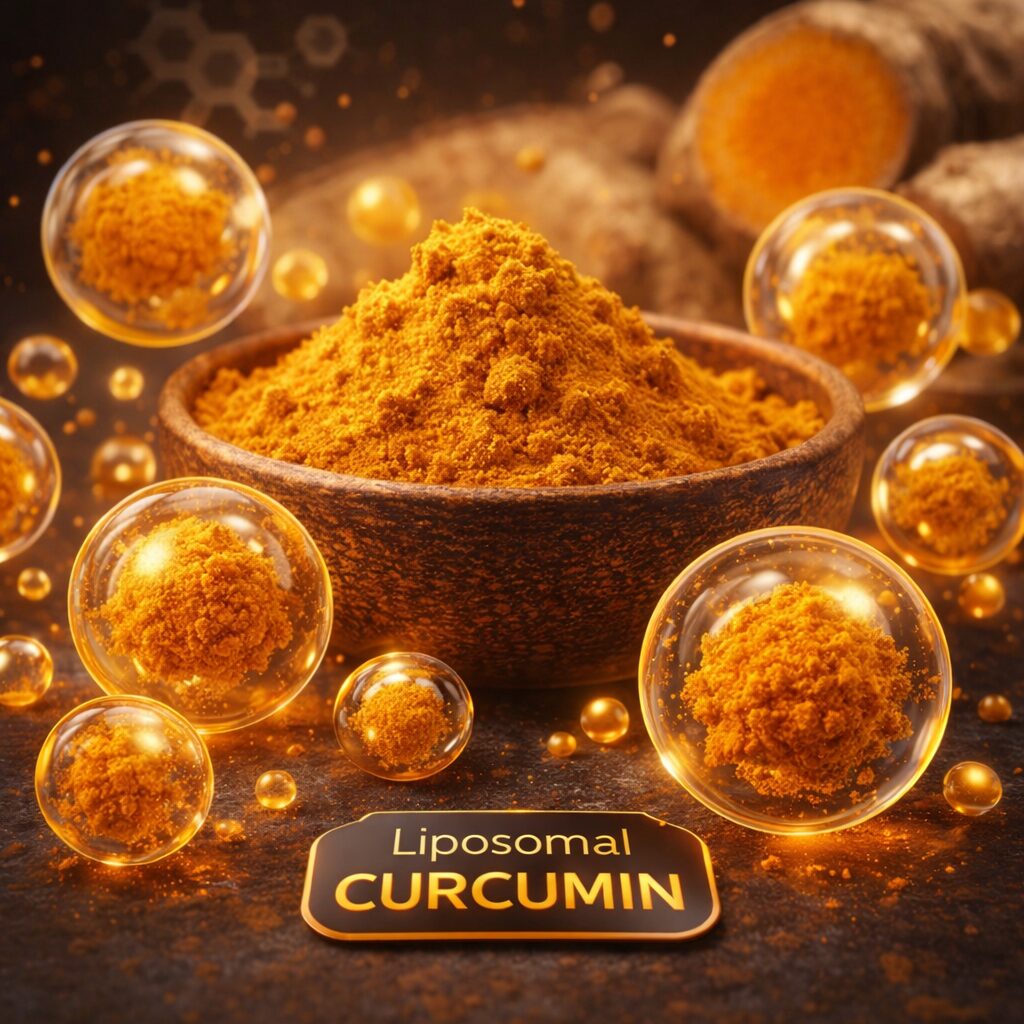
(II) Targeted Delivery and Precise Drug Release
The treatment of diseases often requires drugs to act precisely on the lesion site, reducing the impact on normal tissues. Lipoosomal curcumin demonstrates unique advantages in this regard. By modifying the surface of Liposomal with targeting molecules, it’s like equipping them with a “navigation system,” enabling them to precisely locate their targets. For example, tumor cells often overexpress specific receptors, such as CD44. When Liposomal are modified with hyaluronic acid, which has a specific affinity for CD44, liposomal curcumin can specifically recognize and bind to tumor cells, achieving targeted enrichment of the drug in tumor tissue. This results in a 3-5 fold increase in local drug concentration, enhancing the inhibitory effect on tumor cells while reducing damage to normal tissues. Similarly, Liposomal modified with TAT transmembrane peptides can help curcumin penetrate cell membranes and more effectively enter the cell to exert its effects.
Besides targeting, the drug release process is also crucial. Polylactic acid-glycolic acid copolymer (PLGA) Liposomal utilize the degradable properties of PLGA to achieve precise control over the curcumin release rate. In vivo, PLGA gradually hydrolyzes, slowly releasing the encapsulated curcumin and maintaining a stable drug release over 72 hours. In contrast, traditional curcumin preparations often exhibit a “burst release effect” after entering the body, releasing large amounts of drug in a short period, leading to drug waste and potentially excessively high blood drug concentrations and adverse reactions. Liposomal curcumin, with its stable drug release characteristics, can continuously provide effective drug concentrations to the lesion site while significantly reducing systemic toxicity, thus improving the safety and effectiveness of treatment.
(III) Stability Enhancement Technology
Curcumin itself is chemically reactive and sensitive to external environmental factors such as light, heat, and acidity/alkali, making it prone to degradation and inactivation during storage and use. Under light conditions, double bonds and other structures in the curcumin molecule are easily decomposed through photochemical reactions; high temperatures accelerate molecular motion and promote degradation; different pH environments also affect the stability of the curcumin molecular structure, with decomposition particularly likely under alkaline conditions.
The double-membrane structure of Liposomal provides a robust “protective barrier” for curcumin, effectively isolating it from direct contact with the external environment and significantly improving its stability. Experimental data show that when Liposomal-encapsulated curcumin and free curcumin were placed in a pH 7.4 buffer solution for 24 hours, the degradation rate of free curcumin reached as high as 60%, while the degradation rate of liposomal-encapsulated curcumin was <5%. After storage at 40℃ for 30 days, the curcumin content retention rate of the liposomal group was >90%, while that of the free curcumin group decreased to 50%. This improved stability allows liposomal curcumin to better maintain the content of active ingredients during formulation development, whether in preparation, storage, or transportation. This provides a stable foundation for developing high-quality pharmaceuticals, health products, or functional foods, ensuring that consumers receive stable and reliable efficacy.
 Diversified Preparation Processes and Quality Control
 Diversified Preparation Processes and Quality Control
Comparison of Mainstream Preparation Methods
The preparation process of liposomal curcumin is a crucial factor determining its quality and performance. Different preparation methods have their own characteristics, and the appropriate method must be selected based on specific needs in practical applications.
The thin-film dispersion method is a commonly used method in laboratories. Its key technical point is to dissolve lipid materials such as phospholipids and cholesterol in organic solvents such as chloroform or methanol, and then evaporate them under reduced pressure in a rotary evaporator, forming a uniform thin film on the container wall. Next, a hydration medium containing curcumin is added, and hydration is carried out at a certain temperature, allowing the curcumin to be encapsulated within the Liposomal structure formed by the lipid bilayer. Finally, ultrasonic dispersion is used to uniformly disperse the Liposomal, forming a stable suspension with a particle size typically between 100 and 500 nm. This method is relatively simple to operate, does not require complex equipment, and is suitable for basic drug delivery mechanism research. It facilitates researchers in conducting preliminary explorations and optimizations of the preparation conditions and encapsulation efficiency of liposomal curcumin in a laboratory environment, such as studying the effect of different phospholipid to cholesterol ratios on the encapsulation effect of curcumin. High-pressure homogenization is more geared towards industrial production needs. First, curcumin and lipid materials are prepared into a lipid suspension. Then, under high pressure (100-200 MPa), the suspension is repeatedly circulated through a specially designed homogenizing valve or microfluidic device. Under high pressure and high-speed shear force, large Liposomal are broken down into uniformly sized small particles, with a particle size precisely controlled between 50-100 nm, and an encapsulation efficiency exceeding 90%. v prepared using this method have uniform particle size and stable quality, making them ideal for large-scale production of pharmaceutical-grade liposomal curcumin products, ensuring consistent quality across batches and meeting stringent clinical drug requirements.
The core technology of nanoprecipitation utilizes the rapid mixing of organic solvents with an aqueous phase. An organic solvent containing dissolved curcumin and lipid materials is rapidly added dropwise to an aqueous phase containing a stabilizer (such as polyethylene glycol, PEG). Due to the rapid diffusion and dilution of the solvent, the lipids and curcumin quickly aggregate to form nanoscale precipitates, i.e., Liposomal. By adjusting the degree of PEG modification and mixing conditions, a stable dispersion system with a particle size of less than 80 nm can be formed. This method does not require high-temperature treatment and can effectively protect the activity of heat-sensitive components such as curcumin, thus it is widely used in functional foods and cosmetics. Adding liposomal curcumin prepared by the nanoprecipitation method to functional foods ensures both the stability and activity of curcumin and allows for better absorption by the human body. In cosmetics, its small particle size can be utilized to promote the penetration of curcumin into the deep layers of the skin, exerting antioxidant and anti-inflammatory effects. The choice of preparation method directly affects the quality and application range of liposomal curcumin. With continuous technological development, more efficient, environmentally friendly, and cost-effective preparation technologies are expected to emerge in the future, further promoting the development of the liposomal curcumin industry.
Breakthroughs and Innovations in Multiple Applications
 Breakthroughs and Innovations in Multiple Applications
(I) Pharmaceutical Field: From Basic Research to Clinical Translation
In the pharmaceutical field, liposomal curcumin has shown enormous potential, gradually moving from basic research to clinical translation, bringing new hope for the treatment of various diseases.
In anti-tumor synergistic therapy, TAT peptide-modified Liposomal carrying curcumin have become a research hotspot. TAT peptides have strong transmembrane capabilities, enabling Liposomal to precisely target tumor cells. When excited by light, curcumin produces reactive oxygen species (ROS). These ROS act like tiny “bombs,” triggering a series of reactions within tumor cells and inducing apoptosis. Research data shows that compared to free curcumin, curcumin carried by TAT peptide-modified Liposomal increases the apoptosis rate by 3 times. In combination therapy, the use of this liposomal curcumin in conjunction with cisplatin Liposomal has shown remarkable effects. It not only enhances the killing effect on tumor cells but also reduces the dosage of chemotherapy drugs by 50%, significantly reducing the nephrotoxicity caused by cisplatin and improving the quality of life for patients. Preclinical studies have shown that this combination therapy regimen inhibited HepG2 liver cancer cells by up to 85%, while traditional formulations only achieved 60%, highlighting the unique advantages of liposomal curcumin in anti-tumor therapy.
In the field of anti-inflammatory and immunomodulatory effects, PEGylated curcumin Liposomal have demonstrated excellent performance. Inflammation is a crucial pathogenic mechanism for many diseases. PEGylated curcumin Liposomal inhibit the NF-κB pathway, blocking the transmission of inflammatory signals at its source. The NF-κB pathway acts as the “commander” of the inflammatory response; once activated, it prompts cells to secrete large amounts of pro-inflammatory factors, such as TNF-α and IL-6. PEGylated curcumin Liposomal can effectively inhibit the activity of the NF-κB pathway, reducing the secretion of these pro-inflammatory factors and thus alleviating the inflammatory response. In a mouse model of rheumatoid arthritis, this Liposomal achieved a 70% inhibition rate of joint swelling without causing gastrointestinal irritation like oral curcumin, which only achieved a 40% inhibition rate. This provides a safer and more effective treatment option for inflammatory diseases such as rheumatoid arthritis, and is expected to improve long-term treatment outcomes and quality of life for patients. With further research and technological advancements, the application prospects of liposomal curcumin in the pharmaceutical field will be even broader, potentially bringing benefits to more patients.
(II) Functional Foods and Health Products: A New Choice for Highly Efficient Absorption
With the increasing health awareness of the public, the demand for functional foods and health products is growing. Liposomal curcumin, with its highly efficient absorption characteristics, has become a new favorite in this field.
Metabolic syndrome has become a global health problem, encompassing various metabolic abnormalities such as insulin resistance and dyslipidemia, seriously threatening people’s health. Liposomal curcumin has shown significant improvement effects on this problem. In a study targeting individuals with metabolic syndrome, daily administration of 500 mg of liposomal curcumin yielded surprising results. The serum curcumin concentration reached 1.2 μg/mL, while that of ordinary curcumin preparations was only 0.1 μg/mL. This means that liposomal curcumin can be more effectively absorbed into the bloodstream. High serum curcumin concentrations bring a series of positive health effects. Insulin resistance is significantly improved, with a 25% reduction in HOMA-IR. This improved insulin resistance helps regulate blood sugar levels and reduces the risk of diabetes. Blood lipid levels are also effectively regulated, with an 18% decrease in LDL-C. LDL-C, often referred to as “bad cholesterol,” reduces the incidence of atherosclerosis and lowers the risk of cardiovascular disease. Liposomal curcumin achieves excellent efficacy while reducing the dosage by 75%, successfully overcoming the dilemma of “high dosage, low efficacy” inherent in traditional curcumin preparations. Consumers only need to take a small amount of liposomal curcumin products to achieve better health maintenance effects, making it highly competitive in the functional food and health supplement market. Currently, various products containing added liposomal curcumin, such as functional beverages and nutritional supplements, are available on the market and are favored by people pursuing a healthy lifestyle. In the future, with the continuous deepening of research on liposomal curcumin and ongoing innovation in product development, its application in the functional food and health supplement fields will become more widespread, providing stronger support for people’s health.
(III) Cosmetics: Transdermal Delivery and Efficacy Enhancement
In the cosmetics field, consumers have increasingly higher demands for product efficacy and safety. Liposomal curcumin, with its unique transdermal delivery and efficacy enhancement properties, has become a core ingredient in high-end anti-aging skincare products, bringing a new revolution to skin care.
TPP-PEG-PLGA Liposomal encapsulation of curcumin is an innovative application in this field. TPP, as a transdermal penetration enhancer, effectively enhances curcumin’s ability to penetrate the skin barrier; PEG’s hydrophilicity provides the Liposomal with good dispersibility and stability on the skin surface; and PLGA’s biodegradability ensures the slow and continuous release of curcumin. This carefully designed Liposomal structure increases the transdermal absorption rate of curcumin by 5 times, achieving a cumulative amount of 8 μg/cm² in the epidermis, while free curcumin is only 1.6 μg/cm². This high cumulative amount of curcumin can maintain its effect in the skin for up to 72 hours. Curcumin possesses powerful antioxidant capabilities, effectively scavenging free radicals with a DPPH scavenging rate as high as 92%. Free radicals are a major factor contributing to skin aging, damaging skin cell structure and function, leading to wrinkles, sagging, and other signs of aging. By scavenging free radicals, curcumin effectively combats oxidative stress damage to the skin, delaying skin aging. In practical applications, skincare products containing curcumin encapsulated in TPP-PEG-PLGA Liposomal can significantly improve the depth of wrinkles caused by photoaging, reducing wrinkle depth by 20% and resulting in firmer, smoother skin. Currently, many high-end anti-aging skincare brands are incorporating liposomal curcumin into their product formulations, launching a series of products with multiple benefits including antioxidant, anti-wrinkle, and skin brightening effects. These products not only meet consumers’ needs for anti-aging skin but also gain consumer trust due to their natural and safe properties. With the continuous development of cosmetic technology, liposomal curcumin is expected to be applied in more types of skincare products in the future, bringing consumers a higher quality skincare experience.
The Technological Gap with Traditional Curcumin
Liposomal curcumin, as an innovative dosage form of curcumin, differs significantly from traditional curcumin in several dimensions. These differences highlight the substantial advantages of Liposomal technology in enhancing curcumin performance.
From an absorption mechanism perspective, ordinary curcumin primarily relies on passive diffusion to cross the intestinal mucosal barrier. This absorption method is limited by curcumin’s poor water solubility and the physiological structure of the intestinal mucosa. The tightly packed intestinal epithelial cells form a natural barrier, hindering curcumin’s passage. Furthermore, digestive enzymes and the intestinal microbial environment degrade curcumin, resulting in extremely low absorption efficiency of ordinary curcumin in the intestine. Liposomal curcumin, however, utilizes the fusion properties of Liposomal with cell membranes to achieve active uptake. The phospholipid bilayer structure of Liposomal is similar to that of cell membranes. When liposomal curcumin comes into contact with cells, it can fuse with the cell membrane, directly delivering the encapsulated curcumin into the cell interior, greatly improving absorption efficiency.
Bioavailability is a key indicator for measuring drug efficacy. Ordinary curcumin has poor solubility, making it difficult to dissolve and disperse in the gastrointestinal tract, with most of it being excreted unabsorbed. Combined with the first-pass metabolism in the liver, the bioavailability of ordinary curcumin is extremely low, typically less than 1%. Liposomal curcumin, through a carrier protection mechanism, effectively reduces the degradation of curcumin in the gastrointestinal tract and the metabolic loss in the liver. The Liposomal encapsulation allows curcumin to pass stably through the gastrointestinal tract, avoiding contact with digestive enzymes and microorganisms. After entering the bloodstream, it also reduces the chance of being metabolized by the liver, increasing oral bioavailability to 10%-20%, significantly improving the effective utilization rate of curcumin.
Regarding targeting, ordinary curcumin, after entering the human body, lacks an effective targeting mechanism and is widely distributed throughout the body, making it difficult to form high concentrations at specific lesion sites. This not only reduces the therapeutic effect but may also have unnecessary impacts on normal tissues. Liposomal curcumin, however, achieves precise enrichment through receptor-mediated targeting technology. Modifying the surface of Liposomal with molecules that have affinity for specific receptors, such as CD44, allows liposomal curcumin to specifically recognize and bind to CD44 receptors on the surface of tumor cells, achieving targeted delivery to tumor tissues, increasing drug concentration at the lesion site, enhancing therapeutic efficacy, and reducing damage to normal tissues. Stability is also a significant difference between the two. Ordinary curcumin molecules are exposed and easily degraded by external factors such as light, heat, and acid. Under light conditions, the double bond structure in curcumin molecules is prone to photochemical reactions, leading to molecular structure destruction; high temperatures accelerate the thermal motion of curcumin molecules, promoting their degradation; acidic environments also affect the molecular stability of curcumin, causing structural changes. Liposomal curcumin, through the isolation and protection of a lipid membrane, effectively isolates curcumin from the external environment, avoiding direct effects of external factors on curcumin, significantly improving its stability, and ensuring that its effective component content is maintained during storage, transportation, and use.
In terms of clinical dosage, due to the low bioavailability of conventional curcumin, a high dose of 8-12 g is required daily to achieve an effective therapeutic concentration. This not only increases the financial burden on patients but may also lead to more adverse reactions. Liposomal curcumin, with its highly efficient absorption and stable properties, requires only 0.5-1 g daily to achieve therapeutic effects comparable to high doses of conventional curcumin. This represents a shift from low-efficiency, high-load to high-efficiency, low-load treatment, improving treatment safety and patient compliance. The technological differences between liposomal curcumin and traditional curcumin across various dimensions represent a qualitative leap in performance, paving new avenues for the widespread application of curcumin.
