







Astaxanthin (CAS 472-61-7) is a natural carotenoid widely found in organisms such as Haematococcus pluvialis, salmon, and krill. It is hailed as “nature’s strongest antioxidant”—its antioxidant capacity is 6000 times that of vitamin C, 1000 times that of vitamin E, and 800 times that of coenzyme Q10. It also possesses both fat-soluble and water-soluble properties, allowing it to penetrate cell barriers and exert its effects, making it a “star active ingredient” in nutritional supplements and cosmetics.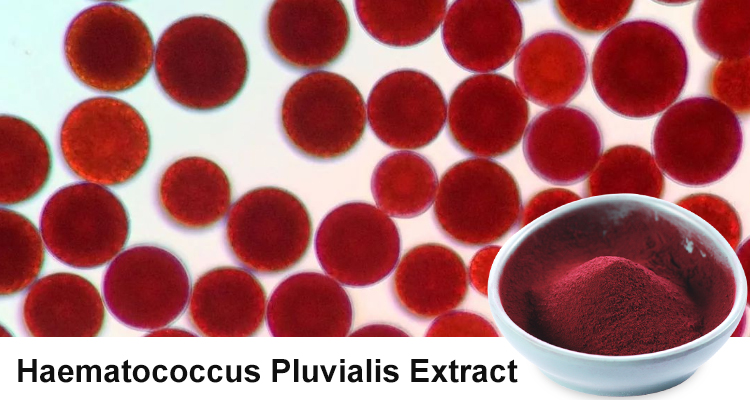
Core Essence: From Natural Sources to Key Characteristics
(I) Natural Sources and Production Methods
Astaxanthin sources are mainly divided into three categories, with Haematococcus pluvialis extraction being the most mainstream natural source:
Natural Extraction: Haematococcus pluvialis synthesizes large amounts of astaxanthin under extreme environments to resist damage. It has high purity and the strongest biological activity (all-trans structure ≥90%), making it the preferred raw material for nutritional supplements and high-end cosmetics;
Bio-fermentation: Produced through fermentation with Rhodopsin, it has stable yield and moderate cost, suitable for food additives and general health products;
Chemical Synthesis: Synthesized based on petrochemical raw materials, it has the lowest cost, but its biological activity is only 1/10 of that of natural products, and it may contain trans isomer impurities. It is mostly used in low-end feed additives.
(II) Core Physicochemical Properties
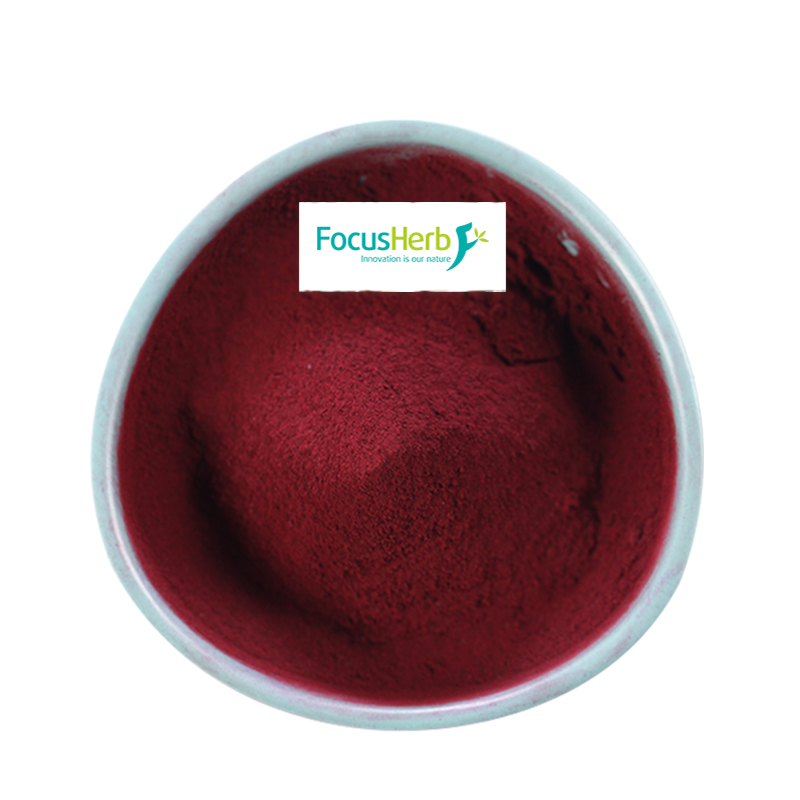
Appearance: Deep red to purplish-red powder (purity ≥5%) or oily liquid (high concentration formulation), with strong natural coloring power;
Solubility: Lipid-soluble (standard type), can be converted to water-soluble/water-dispersible form through microencapsulation technology, suitable for beverages, dairy products, and other diverse dosage forms;
Stability: Sensitive to light, heat, and oxygen, requires light-protected and sealed storage. In cosmetics, it is often combined with ingredients such as Vitamin E and ceramides to improve stability;
Safety: Natural astaxanthin is FDA-approved as GRAS (Generally Recognized As Safe), with no side effects, suitable for long-term oral or topical use.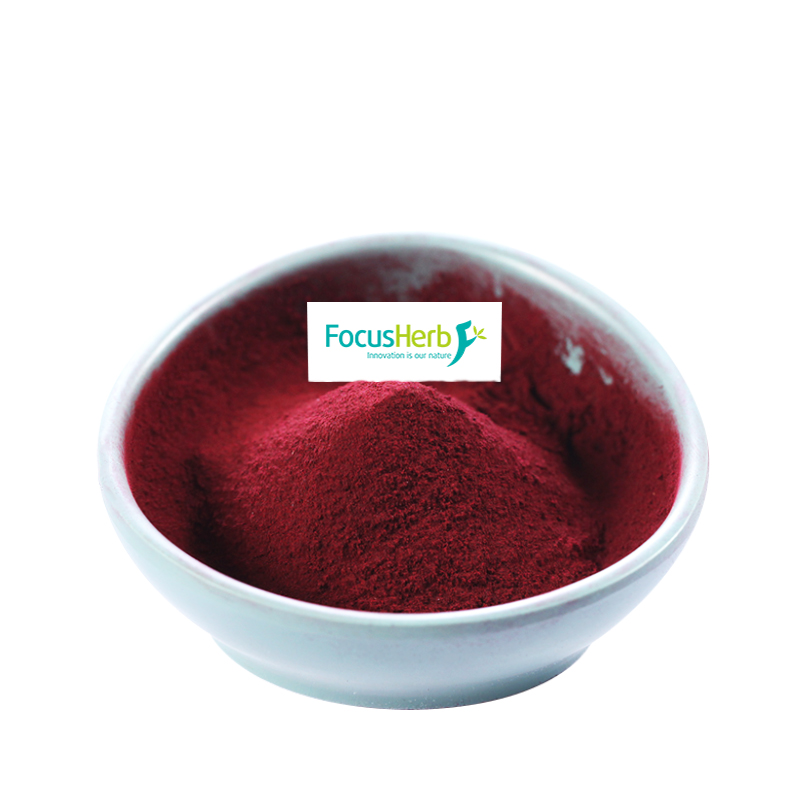
II. Powerful Antioxidant Mechanism: More Than Just “Scavenging Free Radicals”
Astaxanthin’s antioxidant capacity stems from its unique molecular structure (containing hydroxyl and ketone groups at both ends, with a conjugated double bond in the middle), enabling it to function through a triple mechanism:
Direct Free Radical Scavenging: Efficiently captures harmful free radicals such as reactive oxygen species (ROS) and hydroxyl radicals in the body, blocking lipid peroxidation and reducing cellular oxidative damage;
Inhibition of Oxidative Stress: Downregulates the expression of pro-oxidative genes and upregulates the activity of endogenous antioxidant enzymes such as SOD (superoxide dismutase) and CAT (catalase), enhancing the body’s own antioxidant capacity;
Cross-Barrier Protection: It can penetrate cell membranes to protect cytoplasm and cross the blood-brain barrier and retinal barrier to protect nerve cells and retinal cells—an advantage that other antioxidants (such as vitamins C and E) cannot achieve.
Core Applications in Nutritional Supplements: Internal Regulation for Multidimensional Health Protection
Astaxanthin’s fat-soluble properties allow it to accumulate in human adipose tissue and cell membranes, exerting a long-lasting health-promoting effect. Core application scenarios include:
(I) Eye Health Protection: A “Natural Protective Shield” for the Retina
Mechanism of Action: Penetrates the retinal barrier, eliminates free radicals in the eye, inhibits oxidative damage to retinal photoreceptor cells, and reduces blue light stimulation of the macula;
Core Efficacy: Improves eye fatigue (dryness, soreness), delays age-related macular degeneration (AMD), and enhances dark adaptation;
Application Forms: Soft capsules (the mainstream dosage form, synergistically enhanced with lutein and zeaxanthin), tablets, and oral eye-protecting solutions. Recommended daily dose: 2-4 mg.
(II) Cardiovascular and Cerebrovascular Care: The “Antioxidant Guardian” of Blood Vessels
Mechanism of Action: Inhibits low-density lipoprotein (LDL) oxidation, reduces atherosclerotic plaque formation, improves vascular endothelial function, and lowers inflammatory factor levels;
Core Efficacy: Helps regulate blood lipids, reduces the risk of thrombosis, and protects cardiomyocytes, suitable for middle-aged and elderly people and those with high blood lipids;
Application Forms: Complex nutrients (combined with Omega-3 and Coenzyme Q10), or single soft capsules, recommended daily dose 4-12mg.
(III) Anti-inflammatory and Immune Enhancement: The Body’s “Inflammation Regulator”
Mechanism of Action: Downregulates the NF-κB inflammatory pathway, inhibits the release of inflammatory factors such as TNF-α and IL-6, and alleviates chronic inflammation (such as arthritis and intestinal inflammation);
Core Efficacy: Enhances immune cell activity, reduces the risk of colds and infections, and improves muscle inflammation and soreness after exercise;
Application Forms: Sports nutrition supplements, immune-regulating capsules, recommended daily dose 4-8mg.
(IV) Anti-aging: Cell-level “Youth Preservative”
Mechanism of action: Scavenges intracellular free radicals, protects telomere length, delays cell aging and apoptosis, and improves the aging state of skin, joints, and nervous system;
Core effects: Reduces wrinkles, improves skin elasticity (internal and external conditioning), relieves joint stiffness, and improves memory. Suitable for people aged 25 and above seeking anti-aging benefits;
Application forms: Anti-aging compound capsules, oral beauty liquid. Recommended daily dose: 2-6 mg.
Core Applications in Cosmetics: Topical Skin Renewal, Antioxidant + Multi-Effect Repair
Astaxanthin, with its triple effects of “antioxidant + anti-inflammatory + repair,” has become a core ingredient in cosmetics for anti-aging, whitening, and sun protection, especially suitable for sensitive skin and photo-aged skin:
(I) Anti-aging and Repair: Reversing oxidative damage, firming and reducing fine lines
Mechanism of Action: Penetrates the epidermis, eliminates free radicals caused by ultraviolet rays and environmental pollution, promotes collagen synthesis, and inhibits the degradation of collagen by matrix metalloproteinases (MMPs);
Core Efficacy: Improves skin laxity, reduces fine lines (especially eye wrinkles and nasolabial folds), and repairs the skin barrier (suitable for post-cosmetic procedures);
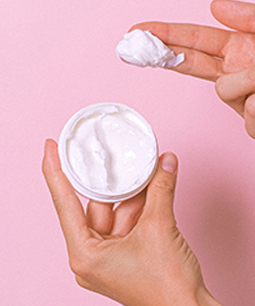
Application Scenarios: Anti-aging serums (concentration 0.05%-0.5%), face creams, eye creams, often combined with Pro-Xylane and ceramides for synergistic effects.
(II) Whitening and Brightening: Blocks melanin production and improves dullness.
Mechanism of Action: Inhibits tyrosinase activity, reduces melanin synthesis, and simultaneously removes oxidative stress products from melanocytes, accelerating pigment metabolism.
Core Efficacy: Improves uneven skin tone, fades dark spots (sunspots, post-inflammatory hyperpigmentation), and brightens skin tone; suitable for dull and dark-spotted skin.
Application Scenarios: Whitening serums, spot-fading masks, added concentration 0.1%-0.3%, can be combined with Vitamin C and niacinamide (pay attention to appropriate concentration to avoid irritation).
(III) Sun Protection: Enhances skin’s resistance to ultraviolet rays.
Mechanism of Action: As a natural “ultraviolet absorber,” it can absorb UVA/UVB ultraviolet rays while inhibiting ultraviolet-induced oxidative damage and inflammatory responses.
Core Efficacy: Assists in sun protection (cannot replace sunscreen), repairs post-sun redness, and reduces photoaging damage.
Application Scenarios: Sunscreen lotion (added concentration 0.05%-0.1%), post-sun repair serum; better results when combined with physical sunscreens (such as zinc oxide).
(IV) Sensitive Skin Repair: Anti-inflammatory and Soothing, Strengthening the Skin Barrier
Mechanism of Action: Downregulates the expression of skin inflammatory factors, relieves redness and stinging caused by ultraviolet rays and irritating ingredients, and promotes lipid synthesis in the skin barrier;
Core Efficacy: Improves redness in sensitive skin, repairs damaged skin barrier, and relieves acne inflammation; suitable for sensitive and acne-prone skin;
Application Scenarios: Repair serums, soothing creams, with an added concentration of 0.05%-0.2%, often combined with centella asiatica extract and panthenol in the formula.
Market Trends and Core Advantages
(I) Explosive Growth in Market Demand
The global astaxanthin market is projected to exceed US$3.2 billion by 2028, with a CAGR of 12%+. The Asia-Pacific region (China, Japan, and South Korea) is expected to see the fastest growth (15%+).
The proportion of naturally derived astaxanthin continues to increase (currently reaching 65%), with high-end nutritional supplements and cosmetics being the main growth areas.
(II) Core Competitive Advantages
Superior Antioxidant Capacity: Far surpasses traditional antioxidants, and possesses both fat-soluble and water-soluble properties, resulting in a wider range of effects.
Multi-Effect Combination: Simultaneously covers anti-aging, whitening, anti-inflammatory, and repair needs, reducing the amount of added ingredients in the formula and lowering the risk of irritation.
Safe and Gentle: Naturally derived products have no side effects; suitable for sensitive skin for external use and for long-term internal use, applicable to a wide range of people.
Diverse Application Scenarios: Can be used in various dosage forms such as soft capsules, tablets, serums, creams, and sunscreens, suitable for the entire nutritional supplement and cosmetics market.
Precautions for Use
Dosage Control: Recommended daily dose for oral use is 2-12mg (adjust according to efficacy requirements); for topical use, the concentration is 0.05%-0.5% (excessive concentration may cause skin staining, which will subside after discontinuation);
Storage Conditions: Store away from light, in a sealed container, and at a low temperature (for oral products, it is recommended to store below 25℃; antioxidants can be added to cosmetic formulations to improve stability);
Contraindications: Use with caution in pregnant women, breastfeeding women, and those with seafood allergies (natural astaxanthin is mostly derived from aquatic organisms and may contain trace amounts of allergens);
Combination Suggestions: For oral use, it can be synergistically enhanced with Omega-3 and Vitamin E; for topical use, avoid simultaneous use with high-concentration acids (such as glycolic acid) and alcohol to reduce irritation.
 Astaxanthin, with its core “powerful antioxidant” properties, bridges the gap between “oral anti-aging” and “topical skin rejuvenation,” satisfying consumers’ demand for natural, highly effective nutritional supplements while addressing the core pain points of anti-aging, whitening, and repair in cosmetics. It has become an “all-around” active ingredient spanning both fields. With the deepening trend towards natural ingredients and technological upgrades (such as microencapsulation and targeted delivery), the application scenarios of astaxanthin will further expand, and its market potential will continue to be unleashed.
