











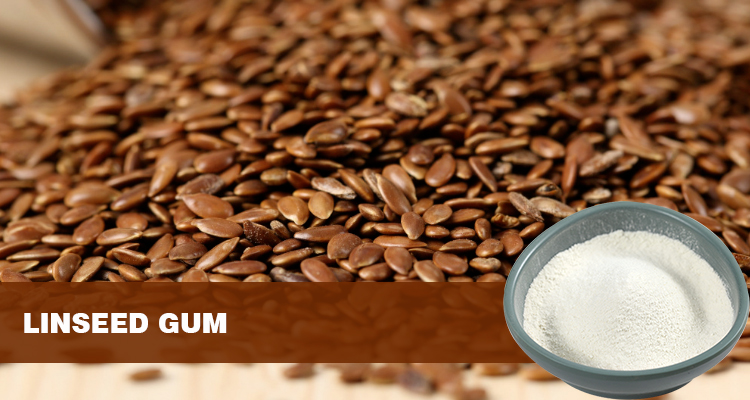
Flaxseed Gum, also known as flaxseed gum, is a natural hydrophilic colloid extracted from flaxseed or flaxseed hulls. It is a polysaccharide and appears as yellow granular crystals or a white to beige powder, with a slightly sweet aroma in its dry powder form. As a new type of green food additive, Flaxseed Gum possesses various unique physicochemical properties and functional characteristics, making it widely applicable in the food industry and other fields.
Flaxseed Gum is primarily prepared from flaxseed or defatted flaxseed meal, with water extraction being the current mainstream method. The specific preparation process involves first extracting oil from flaxseed to obtain defatted flaxseed meal, followed by extraction with water, dilute salt solution, or dilute ethanol to obtain a gum solution. This solution then undergoes a series of processing steps including concentration, purification, and drying to produce powdered Flaxseed Gum. During the extraction process, factors such as the type of extractant, extraction temperature, extraction time, and stirring speed all affect the quality of the Flaxseed Gum. Studies show that using water as the extractant not only avoids chemical contamination of the product but also yields Flaxseed Gum with higher viscosity compared to acid and alkali extractants. Among the influencing factors, temperature has the greatest impact on the viscosity of Flaxseed Gum, while time has the greatest impact on yield.
The composition of Flaxseed Gum mainly consists of acidic polysaccharides and neutral polysaccharides, with a molar ratio of approximately 2:1, predominantly acidic polysaccharides. It also contains a certain amount of protein. The acidic polysaccharides are composed of L-rhamnose, L-fucose, L-galactose, and D-galacturonic acid, with a molar ratio of 2.6:1.0:1.4:1.7; the neutral polysaccharides mainly contain L-arabinose, D-xylose, and D-galactose, with a molar ratio of 3.5:6.2:1.0. The unique composition of these components gives flaxseed gum many excellent properties, and relevant experiments have confirmed that flaxseed gum is non-toxic and highly safe. There are no special restrictions on its acceptable daily intake (ADI), and its median lethal dose (LD50) is ≥15 g/kg (mice, oral administration).
 The Core Characteristics of Flaxseed Gum – The “Hardcore Advantages” Empowering the Food Industry
 The Core Characteristics of Flaxseed Gum – The “Hardcore Advantages” Empowering the Food Industry
The characteristics of flaxseed gum are the foundation for its widespread application in the food industry. It not only possesses unique physicochemical properties, exhibiting excellent performance in solubility, rheological properties, and stability, but also boasts several key functional characteristics, such as emulsification, gelation, water retention, starch retrogradation inhibition, foaming, and suspension. These characteristics make it an indispensable raw material in the food industry. Below, we will explore these characteristics of flaxseed gum in detail.
1. Basic Physicochemical Characteristics
The basic physicochemical characteristics of flaxseed gum are an important foundation for its application in the food industry, directly affecting its effectiveness in food systems. Below, we will examine the solubility and rheological properties of flaxseed gum, as well as its stability.
Solubility and Rheological Properties
Flaxseed gum has good solubility, slowly absorbing water to form a dispersion system with low viscosity. At concentrations below 1-2 g/L, it can completely dissolve, with a solubility higher than guar gum and locust bean gum, but lower than gum arabic. The solubility of flaxseed gum is closely related to concentration and temperature. A 0.5% gum solution reaches 70% solubility at 15℃, and at 95℃, the solubility can reach 90%, with solubility increasing with increasing temperature.
In terms of rheological properties, a 10 g/L flaxseed gum solution has a viscosity of approximately 0.02-0.08 Pa·s, and the viscosity increases with increasing mass concentration and decreases with increasing shear rate. The effect of temperature on the apparent viscosity of flaxseed gum solution conforms to the Arrhenius model, with an activation energy of 271.48 kJ/mol. pH also significantly affects the apparent viscosity of its solution. Under acidic conditions, the apparent viscosity gradually decreases with decreasing pH; under alkaline conditions, the apparent viscosity also gradually decreases with increasing pH; under neutral conditions (pH 6-8), the apparent viscosity of the flaxseed gum solution reaches its maximum value.
Stability Performance
Flaxseed gum exhibits strong resistance to processing conditions such as acid, alkali, salt, heating, and freezing. Although its viscosity changes under different pH environments, it still maintains a certain degree of stability. During heating and freezing processes, flaxseed gum also maintains its characteristics well. Studies show that temperature significantly affects the viscosity of flaxseed gum; the viscosity of a solution at the same concentration at 0°C is 48 times that at 90°C. Furthermore, the viscosity of the gum solution increases with prolonged storage time, increasing by 47% after overnight storage, and continues to increase over time. This stability allows flaxseed gum to maintain good performance in complex food processing processes, ensuring the quality of food products.
2.Key Functional Characteristics
In addition to the basic physicochemical properties mentioned above, flaxseed gum also possesses several key functional characteristics that enable it to play an important role in the food industry, effectively improving the quality and texture of food. Below, we will detail the emulsifying and gelling properties, water retention and starch retrogradation inhibition properties, and foaming and suspension properties of flaxseed gum.
Emulsifying and Gelling Properties
Flaxseed gum has excellent emulsifying ability. In comparative experiments with flaxseed gum as the test group and gum arabic, alginate, xanthan gum, gelatin, CMC, etc., as control groups, with 9 concentration gradients for each gum, and adding 8% and 4% vegetable oil for emulsification, the results showed that flaxseed gum had the best emulsifying effect, and the emulsifying effect continuously increased with increasing concentration, surpassing many traditional colloids. In food processing, this emulsifying property allows oil droplets to be evenly dispersed in the aqueous phase, preventing the separation of the oil and water phases, thereby improving the stability and uniformity of food, playing an important role in the processing of dairy products, meat products, etc.
In terms of gelling properties, flaxseed gum is a hydrophilic colloid. The viscosity of 1% flaxseed gum ranges from 350 to 2500 mPa·s. Generally, undried flaxseed gum has a relatively high viscosity, greater than… 1500 mPa·s, while the viscosity of the gum solution prepared from dry gum powder is above 350 mPa·s, possessing a certain degree of gelling property. Furthermore, it can synergistically interact with other hydrophilic colloids such as xanthan gum and carrageenan to form a stable gel structure, meeting the diverse needs of different foods for gelling characteristics. For example, in the production of foods such as jelly and pudding, it helps to form a good gel texture.
Water Retention and Starch Retrogradation Inhibition Properties
Flaxseed gum has excellent water retention capacity, effectively binding water and reducing water loss during food storage and processing. In frozen foods, it can delay the growth of ice crystals, reduce the damage of ice crystals to the food structure, and maintain the textural stability of the food. When flaxseed gum is added to frozen dough, as a hydrophilic colloid, it can combine with bound water to form a hydrophilic complex, greatly enhancing the water binding capacity of the frozen dough, thereby reducing the rate of water migration, slowing down the growth of ice crystals, and thus reducing the damage caused by freezing and thawing to starch granules.
At the same time, flaxseed gum also has the property of inhibiting starch retrogradation. Starch retrogradation leads to hardening of food texture and deterioration of taste, while flaxseed gum can effectively inhibit this process, maintaining the softness and good taste of the food. In rice and noodle products, flaxseed gum can enhance the tensile strength and chewiness of noodles, prevent soup clouding, and also has good freeze-thaw resistance and anti-starch retrogradation properties, extending the shelf life of the food.
Foaming and Suspension Properties
Flaxseed gum has good foaming properties. A 0.5% gum solution can form a uniform and stable foam body after centrifugation. Only when the foam body is heated to… The foam structure can only be destroyed and the solution restored to a uniform state after being heated at 90℃ for half an hour. This foaming characteristic makes it play an important role in the production of some foods that require a foamy structure, such as cakes and mousses. It helps to form a rich, delicate, and stable foam structure, improving the taste and texture of the food.
In terms of suspension properties, flaxseed gum exhibits outstanding suspension stability and can be used as a thickening and stabilizing agent in beverages. In beverage products, it prevents the separation of ingredients, keeps various particles evenly suspended, maintains the uniformity of the product’s appearance, and gives the product a refreshing and smooth taste. For example, its application in fruit juices and plant-based protein drinks can effectively improve product quality.
The Multiple Benefits of Flaxseed Gum – A “Dual Empowerment” from Food Quality to Human Health
The value of flaxseed gum is reflected not only in its unique properties but also in the multiple benefits it brings to food quality and human health. At the food processing level, it can significantly improve the texture and taste of food, while also offering the advantage of reducing production costs; at the consumption level, it is rich in various nutrients and has a positive effect on human health, although some precautions should be taken during consumption. Below, we will explore these benefits of flaxseed gum in detail.
1 Quality Enhancement at the Food Processing Level
In the food processing industry, flaxseed gum plays a crucial role due to its unique physicochemical and functional properties, effectively improving food quality and processing performance, bringing significant benefits to the food industry.
Improving Food Texture and Taste
Flaxseed gum has a significant effect on improving food texture and taste. In ice cream production, it effectively inhibits ice crystal formation, giving the product a delicate and smooth texture, while also improving the ice cream’s resistance to melting and thermal shock. Even at higher temperatures, the ice cream maintains a good shape and does not melt easily, allowing consumers to enjoy the delicious treat more leisurely. In rice and noodle products, flaxseed gum can enhance the tensile strength and chewiness of noodles, making them more resilient and preventing them from becoming mushy during cooking. Its good freeze-thaw resistance and anti-starch retrogradation properties extend the shelf life of rice and noodle products, maintaining their freshness and texture. In meat products, flaxseed gum can improve oil and water retention, enhance emulsification stability, keeping meat products juicy during processing and storage, resulting in a more tender texture. It also helps in product shaping, improving the appearance of the product.
Reduced Production Costs and Substitution Advantages
Flaxseed gum has a significant advantage in reducing production costs. It can replace traditional food additives such as pectin, agar, and gum arabic. These traditional additives are usually expensive and have relatively limited functions. Flaxseed gum, however, is not only relatively inexpensive but also possesses multiple functions, including thickening, emulsifying, stabilizing, and foaming. Achieving the same results, using flaxseed gum can effectively reduce the cost of additives for food companies. For example, in the production of some beverages and dairy products, using flaxseed gum to replace some traditional additives can both guarantee product quality and stability and reduce production costs, improving the economic efficiency of enterprises.
2 Health Benefits for Human Consumption
Flaxseed gum not only plays an important role in food processing but also has many positive effects on human health. Moderate consumption of flaxseed gum can supplement the body with nutrients, promote intestinal health, and provide some auxiliary protection for cardiovascular health and skin condition.
Nutritional Supplementation and Bowel Regulation
Flaxseed gum is rich in various nutrients, such as protein, unsaturated fatty acids, vitamins, and amino acids, all of which are essential nutrients for maintaining normal physiological functions. Flaxseed gum also contains a large amount of dietary fiber and oils. After consumption, it can promote gastrointestinal motility, accelerate metabolism, and to a certain extent, achieve a laxative effect, helping to improve constipation symptoms, maintain normal intestinal function, and make the body feel more comfortable.
Auxiliary Lipid Control, Skin Protection, and Cardiovascular Protection
The linolenic acid and vitamin E in flaxseed gum play an important role in human health. The unsaturated fatty acids have an auxiliary effect in lowering cholesterol, reducing the cholesterol content in the blood, and lowering blood lipids, thus to a certain extent preventing cardiovascular diseases such as hypertension and coronary atherosclerosis, protecting cardiovascular health. Vitamin E and protein have antioxidant effects, which can eliminate free radicals in the body, reduce oxidative stress damage to the skin, reduce melanin deposition, maintain skin elasticity and luster, and help protect skin health, making the skin healthier and more beautiful.
Precautions for Consumption
Although flaxseed gum offers numerous health benefits, it’s important to consume it in moderation. Excessive consumption of flaxseed gum may form a viscous substance on the surface of the stomach lining, leading to delayed gastric emptying, indigestion, and symptoms such as bloating and abdominal pain. This is especially true for individuals with weak digestive systems, who need to be particularly cautious to avoid overburdening their gastrointestinal tract. In daily diets, the intake of flaxseed gum should be reasonably controlled based on individual health conditions to maximize its health benefits while avoiding potential adverse effects.
 Food Applications of Flaxseed Gum – A Versatile Additive Covering Multiple Product Categories
 Food Applications of Flaxseed Gum – A Versatile Additive Covering Multiple Product Categories
Thanks to its unique physicochemical properties and functional characteristics, flaxseed gum has extremely wide applications in the food industry. It can be used as a thickener, emulsifier, stabilizer, and foaming agent, and is applied in the production and processing of various food categories. In different food systems, flaxseed gum plays different key roles, providing strong support for improving the quality of various foods. Below, we will take a detailed look at its specific applications in different food categories.
1 Applications in Frozen Beverages and Dairy Products
In the field of frozen beverages and dairy products, flaxseed gum plays an indispensable role due to its unique thickening, emulsifying, and stabilizing properties. It can significantly improve product quality and taste, and extend the product’s shelf life.
Ice Cream and Frozen Desserts
In the production of ice cream and frozen desserts, flaxseed gum is a high-quality stabilizer. According to the “National Food Safety Standard for the Use of Food Additives” (GB 2760-2014), its maximum usage is 0.3 g/kg. Flaxseed gum can effectively inhibit the growth of ice crystals and prevent the formation of large ice crystals, thus giving the product a delicate and smooth texture. It can also improve the heat resistance of ice cream and frozen desserts, allowing the product to maintain a good shape even at higher temperatures, preventing it from melting easily, and extending the quality stability period during its shelf life, providing consumers with a better eating experience. For example, on a hot summer day, ice cream with added flaxseed gum can maintain a relatively complete shape and delicate texture even after being left outdoors for a period of time, and will not quickly melt into a puddle of liquid, allowing people to enjoy the coolness and sweetness more fully.
Liquid Milk and Margarine
In dairy products such as liquid milk and margarine, flaxseed gum is mainly used to improve the emulsification stability of the product. It can form a stable protective film at the oil-water interface, preventing oil droplet aggregation and oil-water separation, making the product’s texture more uniform and stable. Simultaneously, flaxseed gum can also improve the smoothness of products, making liquid milk smoother and artificial cream more delicate when spread. During processing and storage, it enhances the system’s adaptability to changes in environmental factors such as temperature and pH, ensuring that the product maintains good quality under different conditions, extending its shelf life, and reducing losses due to quality issues. For example, in some liquid milk products that undergo long-distance transportation and long-term storage, adding flaxseed gum can effectively prevent stratification, ensuring that every bottle of liquid milk purchased by consumers has consistent quality and taste.
2 Application in Rice and Flour Products
Flaxseed gum also plays an important role in the production of rice and flour products, effectively improving the processing performance and edible quality of the products, meeting consumers’ demands for the taste and quality of rice and flour products.
Raw Dry Noodle Products
For raw dry noodle products, such as noodles and vermicelli, the maximum dosage of flaxseed gum is 1.5g/kg. After adding flaxseed gum, the gluten strength of the dough is enhanced, which makes the noodles more stretchable during the production process, less prone to breakage, and easier to process and shape. When consumed, the chewiness of the noodles is improved, and the taste is more chewy and smooth. Flaxseed gum also has good freeze-thaw resistance, which can reduce the quality deterioration of noodles during freezing and thawing, preventing problems such as cracking and sticking. During cooking, it can reduce the dissolution of starch in the noodles, reduce the turbidity of the cooking water, maintain the integrity of the noodles, and make the cooked noodles more refreshing and delicious. For some frozen noodle products, adding flaxseed gum allows them to maintain good quality during frozen storage and subsequent cooking, with a taste almost indistinguishable from freshly made noodles.
Frozen Dough Products
Frozen dough technology is becoming increasingly widely used in the modern food industry, and flaxseed gum has important application value in frozen dough. It can combine with the water in the dough to form a stable structure, binding the water and slowing down the growth rate of ice crystals, thereby reducing the damage of ice crystals to starch granules and the gluten network. During the freezing and thawing process, frozen dough with added flaxseed gum better maintains its processing properties, such as dough extensibility and plasticity. The cooked products also maintain good taste and texture, resulting in softer bread and fluffier steamed buns. The use of flaxseed gum effectively reduces the risk of quality deterioration of frozen dough products during storage and transportation, improving product stability and shelf life, and providing strong support for the large-scale production and sales of frozen dough products. For example, in some chain bakeries, using frozen dough with added flaxseed gum to make bread ensures both the quality of the bread and allows for rapid production, meeting consumer demand.
3 Applications in Meat and Beverage Products
In the field of meat and beverage products, flaxseed gum also demonstrates unique advantages, improving product quality and stability, and providing consumers with a better product experience.
Processed Meat Products
In processed meat products, such as sausages, ham, and luncheon meat, the maximum dosage of flaxseed gum is 5.0 g/kg. It can improve the oil and water retention of meat products, reduce juice loss during processing and storage, making the meat products more juicy and tender. Flaxseed gum also has good emulsifying properties, enhancing the emulsification stability of fat and water in meat products, preventing fat particle aggregation, and making the product texture more uniform and delicate. It helps to improve the slicing properties of meat products, making the slices more complete and smooth, facilitating consumption. In some high-end sausage products, the addition of flaxseed gum results in sausages that are not only delicious and juicy but also more visually appealing when sliced and plated, enhancing the product’s market competitiveness.
Beverage Products
In beverage products, including fruit juices, plant-based protein drinks, and dairy beverages, the maximum dosage of flaxseed gum is 5.0 g/kg (for solid beverages, the dosage is increased according to the dilution ratio), mainly used as a thickening and suspending stabilizer. It can increase the viscosity of beverages, prevent the sedimentation and stratification of pulp and other components in the beverage, and maintain the uniformity and consistency of the beverage. This allows consumers to evenly absorb the various nutrients in the beverage while drinking it. Flaxseed gum also gives the beverage a refreshing and smooth texture, making the mouthfeel richer. At the same time, it doesn’t mask the beverage’s original flavor; instead, it promotes the release of flavor compounds, enhancing the overall flavor and improving the consumer’s drinking experience. For example, in some fruit juices, adding flaxseed gum allows the fruit pulp to be evenly suspended, making the juice look more appealing and taste richer.
Applications and Future Prospects of Flaxseed Gum

1 .Food Standards and Compliance Requirements
The use of flaxseed gum in food production must strictly adhere to relevant food safety standards and regulations. According to the “National Food Safety Standard for the Use of Food Additives” (GB 2760-2014), there are clear maximum usage limits for flaxseed gum in different food categories. In ice cream and frozen desserts, the maximum usage is 0.3 g/kg; in dried noodle products, the maximum usage is 1.5 g/kg; in cooked meat products, the maximum usage is 5.0 g/kg; and in beverages (excluding 14.01 packaged drinking water), the maximum usage is also 5.0 g/kg, with the usage for solid beverages increasing proportionally to the dilution ratio. These regulations are to ensure the safe use of flaxseed gum in food and protect consumer health. Food manufacturers must strictly follow these standards, rationally controlling the amount of flaxseed gum added to fully utilize its functional properties while ensuring that the food meets safety standards.
2 .Application Prospects and Expansion Directions
With the increasing demand for natural and healthy foods, and the continuous improvement of food quality requirements, flaxseed gum, as a natural and multi-functional food additive, has a very broad application prospect. In addition to continuing to play an important role in the food industry, flaxseed gum also shows great potential in pharmaceuticals and daily chemical products.
In the pharmaceutical field, flaxseed gum can be used as a drug carrier or excipient due to its good film-forming properties, gelling properties, and biocompatibility. It can help achieve sustained and controlled release of drugs, improve drug stability and bioavailability, and reduce drug side effects. In some oral formulations, flaxseed gum can be used as a binder to improve the shaping of drug particles; in some topical formulations, it can be used as a thickener and humectant to improve the spreadability and skin feel of the drug.
In the daily chemical industry, flaxseed gum can be used as a raw material for cosmetics to improve the texture and stability of the products. Its moisturizing and thickening properties make cosmetics more hydrating and refined, enhancing product texture; its antioxidant properties and skin-protective effects also make it an ideal additive for high-end skincare products, providing extra care for the skin.
In the future, with continuous technological advancements and in-depth research, the application range of flaxseed gum is expected to broaden further. On the one hand, optimizing and innovating the extraction process of flaxseed gum will help improve its purity and performance, reduce production costs, and make it more competitive in the market; on the other hand, research into the application of flaxseed gum in more fields will lead to the development of more new uses and products, meeting the needs of different industries. For example, in the environmental protection field, flaxseed gum can be used as a raw material for biodegradable materials, such as disposable tableware and packaging materials, reducing environmental pollution; in the agricultural field, it can be used as a soil conditioner to improve soil structure, increase soil fertility, and promote crop growth. With its unique advantages, flaxseed gum will occupy an increasingly important position in the future market, bringing new opportunities for the development of related industries.
