











In our pursuit of health and wisdom, we continuously explore the remarkable effects of various nutrients on the human body, with phosphatidylserine (PS) and docosahexaenoic acid (DHA) being among the stars. Phosphatidylserine, a naturally occurring phospholipid, is particularly abundant in brain cells and plays a crucial role in maintaining normal brain function. It acts as a “messenger” for information transmission between brain cells, ensuring the smooth transmission of various brain commands. DHA, an omega-3 polyunsaturated fatty acid, is often called “brain gold” and is an important component of the brain and retina. It is exceptionally significant for the intellectual and visual development of fetuses and infants, and equally indispensable in maintaining and enhancing brain function in adults. Both hold a pivotal position in brain health and are essential nutrients that cannot be ignored when caring for our brains.
Sources Vary Widely
(I) Sources of Phosphatidylserine
Phosphatidylserine has a wide range of sources. In animal tissues, organs such as the brain and liver are where it is abundant. Taking the brain as an example, it is a key component of brain cell membranes, playing an indispensable role in maintaining the normal morphology and function of brain cells. In meat, red meats such as beef and lamb contain a certain amount of phosphatidylserine, providing a way for people to supplement this nutrient. Besides animal sources, soybeans are also an important source of phosphatidylserine. Phosphatidylserine can be extracted from the phospholipids contained in soybeans through a series of processes. Peanuts also contain a small amount of phosphatidylserine in plant seeds. Nuts and seeds that we eat daily, such as walnuts and almonds, can also provide this nutrient.
(II) Sources of DHA
DHA is primarily derived from deep-sea fish oil. Numerous deep-sea fish, such as sardines, tuna, and salmon, are rich sources of DHA in the marine food chain. These fish accumulate DHA in their adipose tissue by consuming DHA-rich algae and other foods. For example, 100 grams of sardines contain approximately 108 milligrams of DHA. Besides deep-sea fish, algae are also an important source of DHA. Microalgae such as *Schizochytrium* and *Cryptodinium kurstii* are direct biological sources of DHA. Algae-derived DHA has unique advantages: the algae grow in relatively pure environments with low levels of pollution, resulting in DHA with low heavy metal content and high safety. For those allergic to fish or vegetarians, algae-derived DHA is undoubtedly an ideal choice. Furthermore, algae can be cultivated in large quantities in a short time, keeping costs under control, thus providing strong support for the widespread application of DHA.
A Deep Dive into the Chemical Structure
(I) The Chemical Structure of Phosphatidylserine
Phosphatidylserine is a phospholipid whose chemical structure resembles a meticulously constructed “molecular edifice.” Its basic framework is glycerol, which acts as the main structure of the building. Of the three hydroxyl groups in glycerol, two are linked to fatty acids via ester bonds. These two fatty acids act as the side wings of the building, giving phosphatidylserine a certain degree of hydrophobicity. The third hydroxyl group of glycerol is bonded to a phosphate group, which in turn connects to serine. This part of the structure is like a special functional area of the building, giving phosphatidylserine its unique physiological activity. In cells, phosphatidylserine, with this structure, is embedded in the phospholipid bilayer of the cell membrane, with the fatty acid chains facing inwards and the hydrophilic phosphate and serine portions facing outwards. This structural distribution plays a crucial role in maintaining the stability and fluidity of the cell membrane, acting like a solid foundation and flexible joints to ensure the building’s stability and smooth operation. Simultaneously, it provides the necessary microenvironment for numerous intracellular physiological processes, forming an indispensable basis for normal cellular physiological activities.
(II) Chemical Structure of DHA
DHA, as an unsaturated fatty acid, has a unique chemical structure. Its molecule consists of a carbon chain of 22 carbon atoms, with 6 double bonds along this chain. These double bonds act like special “hinges” on the carbon chain, giving DHA a specific curved conformation. The presence of double bonds makes DHA highly unsaturated, endowing it with unique physical and chemical properties. From a physical perspective, the presence of double bonds increases molecular fluidity, allowing DHA to move flexibly within biological membranes. In biological membranes, DHA, leveraging this fluidity, participates in the construction of the membrane structure. It interacts with other lipid molecules to maintain the normal shape and function of the biological membrane, acting like a key piece in a jigsaw puzzle, fitting closely with other pieces to form a complete and functional puzzle. From a chemical perspective, the double bond gives DHA strong reactivity, making it prone to oxidation and other chemical reactions. This also means that it can participate in a variety of biochemical reactions in the body, such as acting as a signaling molecule to participate in intracellular signal transduction processes, playing a regulatory role in the physiological functions of cells. Like a messenger of information, it transmits key instructions within cells and regulates cellular behavior.
Differences in Biosynthetic Pathways
(I) Synthesis of Phosphatidylserine
Phosphatidylserine has a unique synthetic pathway in living organisms. In the human body, phosphatidylserine is mainly synthesized by the liver. Its initial raw materials involve choline and ethanolamine. Serine, under the catalysis of specific enzymes, can be converted into ethanolamine, which is a key precursor in the synthesis process. The synthesis process requires the participation of multiple enzymes, such as phosphatidylethanolamine synthase and phosphatidylserine synthase. These enzymes act like precise “molecular craftsmen,” each playing a unique role. Phosphatidylethanolamine synthase catalyzes the formation of phosphatidylethanolamine from related substances, while phosphatidylserine synthase promotes the reaction between phosphatidylethanolamine and serine in subsequent reactions, thereby generating phosphatidylserine. The entire synthesis process requires suitable environmental conditions; factors such as temperature and pH value significantly affect enzyme activity, thus influencing the synthesis efficiency of phosphatidylserine. When temperatures are too high or too low, enzyme activity is inhibited, just as a machine cannot function properly in extreme environments; the synthesis process may slow down or even stop. Similarly, unsuitable pH levels can interfere with enzyme activity, damage enzyme structure, and make the synthesis reaction difficult to proceed smoothly.
(II) The Synthetic Pathway of DHA
DHA synthesis primarily begins with linoleic acid. Linoleic acid, as an essential fatty acid, cannot be synthesized in the human body and must be obtained from food. In the body, linoleic acid undergoes desaturation and carbon chain elongation reactions under the action of a series of enzymes. First, linoleic acid, under the action of Δ6-desaturase, introduces a double bond at a specific position to generate γ-linolenic acid. Then, under the action of carbon chain elongation enzymes, the carbon chain of γ-linolenic acid gradually elongates to generate dihomo-γ-linolenic acid. Dihomo-γ-linolenic acid then undergoes further double bond introduction under the action of Δ5-desaturase, ultimately generating arachidonic acid. Arachidonic acid continues to be converted into DHA through complex reactions catalyzed by carbon chain elongation enzymes and Δ4-desaturase. In this process, Δ6-desaturase, Δ5-desaturase, and carbon chain elongation enzymes are key catalytic enzymes, and their activities directly determine the efficiency of DHA synthesis. Moreover, the synthesis process requires sufficient nutrients as support; nutrients such as vitamin B6 and zinc have a significant impact on enzyme activity. A deficiency in vitamin B6 reduces the activity of Δ6-desaturase, much like a car lacking a key component, hindering the entire synthesis process and reducing the amount of DHA synthesized, thus affecting the body’s need for DHA.
How do their effects differ in the human body?
(I) Effects of Phosphatidylserine on the Brain
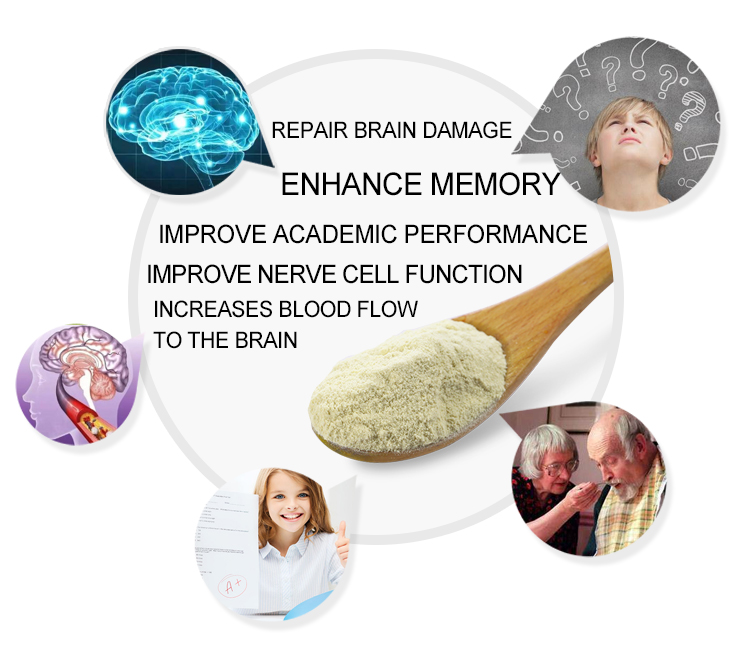
Phosphatidylserine is considered a core phospholipid component of brain cell membranes, playing multiple crucial roles in maintaining brain function. At the cell membrane level, it enhances cell membrane fluidity, essentially injecting vitality into the cell. Imagine a brain cell as a busy information exchange station, with the cell membrane as the network of channels within that station. Phosphatidylserine’s increased fluidity allows neurotransmitters—the “messengers” of information transmission—to travel more quickly and smoothly through the membrane, significantly improving the brain’s information processing speed. In terms of executive function, it participates in regulating the synthesis and release of neurotransmitters. Important neurotransmitters such as acetylcholine and dopamine are released more precisely and efficiently under the influence of phosphatidylserine. For example, acetylcholine is crucial in learning and memory; phosphatidylserine promotes its release, enhancing memory and attention, making people think more quickly and attentively when studying or working. When facing stress, phosphatidylserine can also regulate the damage to hippocampal neurons caused by stress hormones (such as cortisol). The hippocampus plays a crucial role in memory formation and storage, and phosphatidylserine acts as a “protective shield” for the hippocampus, maintaining its normal function and enabling people to maintain good cognitive abilities even under high-pressure environments.
(II) The Role of DHA in the Brain
DHA is equally important for the brain. It is key to ensuring the stability of nerve cell membranes and synaptic structures. The nerve cell membrane acts as a sturdy “shell” encasing nerve cells, and DHA, as an important component, provides the necessary strength and flexibility to ensure its stability during complex physiological activities. Synapses are the key connection points for information transmission between neurons. DHA maintains the integrity of synaptic structures, ensuring the fidelity of nerve signal transmission, just as high-quality electrical wires ensure stable power transmission. During brain development, DHA is crucial for the construction and improvement of neural networks. It promotes neuronal growth, differentiation, and synapse formation, building a sophisticated “information superhighway” for the brain. In the adult brain, DHA continuously maintains the normal function of neural networks, playing an indispensable role in the brain’s higher functions such as learning, memory, and thinking. It is a “behind-the-scenes hero” for the brain’s efficient operation.
(III) Differences in Other Functions
Besides its outstanding performance in brain function, phosphatidylserine may also play a role in mood regulation. It participates in regulating the balance of neurotransmitters such as serotonin. As a neurotransmitter closely related to mood, stable serotonin levels help improve mood, alleviate anxiety, depression, and other negative emotions, making people’s psychological state more stable and positive. DHA, on the other hand, has significant effects on vision development and maintenance. The retina is rich in DHA, which is an important component of retinal photoreceptor cells, much like the key photosensitive material on camera film. DHA ensures the normal function of retinal photoreceptor cells, improves visual sensitivity, promotes normal vision development, and also plays a positive role in preventing eye diseases such as macular degeneration, providing strong support for our clear visual world.
How to Choose Supplements
 How to Choose Supplements
(I) Choosing Based on Age
Different age groups have different needs for phosphatidylserine and DHA. Infancy is the golden stage for brain and vision development. DHA, as an important component of the retina and brain, plays a decisive role in the visual and intellectual development of infants. During this period, breast milk is the best source of DHA for infants; if breastfeeding is not possible, formula milk powder fortified with DHA can be chosen. As children grow older and begin to eat solid foods, deep-sea fish such as salmon and cod, as well as algae-based foods, are excellent sources of DHA. For phosphatidylserine, infants usually obtain a certain amount from breast milk or formula milk powder and generally do not need additional supplementation.
During adolescence, academic pressure gradually increases, and the brain is in a highly active state, leading to a corresponding increase in the need for phosphatidylserine and DHA. Phosphatidylserine helps improve attention and enhance memory, helping teenagers better cope with learning tasks. It can be supplemented by consuming nuts and seeds, and nutritional supplements containing phosphatidylserine can also be considered. DHA is equally indispensable; it maintains normal brain function, promotes the improvement of neural networks, and ensures efficient learning for teenagers. They can consume more deep-sea fish, such as salmon and tuna 2-3 times a week, or choose algae-derived DHA supplements.
Adults face various pressures in work and life, and their brains are constantly working at high intensity. Supplementing with phosphatidylserine and DHA is equally important. Phosphatidylserine helps relieve stress and improve mood, allowing adults to maintain good cognitive abilities in high-pressure environments. It can be supplemented by consuming soy products, meat, and other foods. DHA maintains normal brain function and improves work efficiency; adults can appropriately increase their intake of deep-sea fish or choose suitable DHA supplements based on their individual circumstances.
As people age, brain function gradually declines, and cognitive abilities decrease. Supplementing with phosphatidylserine and DHA is of great significance in delaying brain aging and preventing diseases such as Alzheimer’s disease. Phosphatidylserine can enhance the fluidity of brain cell membranes, regulate the synthesis and release of neurotransmitters, and improve memory and cognitive function. It can be obtained from foods such as animal liver and soybeans, or through phosphatidylserine supplements under the guidance of a doctor. DHA can maintain the stability of nerve cell membranes and synaptic structures, reducing brain function decline. Elderly people can eat more deep-sea fish such as sardines and saury. If sufficient DHA cannot be obtained from food, appropriate supplements can be chosen.
(II) Choosing Based on Health Status
For people with poor memory and difficulty concentrating, phosphatidylserine is a good choice. It participates in regulating the synthesis and release of neurotransmitters and enhances the fluidity of brain cell membranes, effectively improving memory and concentration. For example, students during exam preparation, due to high academic pressure, are prone to memory loss and difficulty concentrating. Appropriate supplementation of phosphatidylserine can help improve learning efficiency. They can choose to eat foods rich in phosphatidylserine, such as nuts and soybeans, or take phosphatidylserine supplements.
For people with certain diseases, such as those with cardiovascular disease, DHA is beneficial to cardiovascular health. It can lower blood lipids and inhibit platelet aggregation, helping to prevent and improve cardiovascular diseases. This can be achieved by consuming deep-sea fish or taking DHA supplements. For patients with neurological diseases such as Parkinson’s disease and Alzheimer’s disease, both phosphatidylserine and DHA have certain auxiliary therapeutic effects. Phosphatidylserine can regulate the balance of neurotransmitters and maintain the stability of nerve cell membranes; DHA can maintain the normal structure and function of nerve cells. The two work synergistically and have a positive effect on alleviating disease symptoms and delaying disease progression, but supplementation should be done under the guidance of a doctor.
Summary and Outlook

Phosphatidylserine and DHA differ significantly in their sources, chemical structures, biosynthetic pathways, and effects on the human body. Phosphatidylserine, primarily derived from animal tissues and plants such as soybeans, plays a crucial role in regulating brain cell membrane fluidity and neurotransmitters, and may also be beneficial in mood regulation. DHA, mainly derived from deep-sea fish oil and algae, is an essential component of the brain and retina, vital for brain development, neural network construction, and vision development and maintenance.
Appropriate supplementation with phosphatidylserine and DHA is of great significance to human health, especially for brain development and functional maintenance. At different ages and health conditions, we should scientifically choose supplementation methods based on our individual needs. In the future, with continued research, we can expect to gain a deeper understanding of their mechanisms of action, develop more functional products based on these two substances, provide more comprehensive and precise support for human health, and play a greater role in areas such as brain health maintenance, disease prevention, and treatment.
