





Aloe-emodin (CAS No. 481-72-1) is a typical anthraquinone compound with the molecular formula C₁₅H₁₀O₅ and a molecular weight of 270.24. Its chemical structure is 1,8-dihydroxy-3-hydroxymethylanthraquinone, appearing as orange needle-shaped crystals (in toluene solvent), with a melting point of 223–224°C and sublimation properties. This component is readily soluble in hot ethanol, ether, benzene, and other organic solvents, shows a crimson color in ammonia water and sulfuric acid, and can be reduced to anthranol and anthrone tautomers under acidic conditions. Its stability is affected by humidity, and it needs to be stored in a cool, dark place.
From a microscopic perspective, the hydroxyl and carbonyl groups in its molecule give aloe-emodin a certain polarity, resulting in good solubility in organic solvents, which is closely related to intermolecular forces. For example, in hot ethanol, intermolecular hydrogen bonding promotes the rapid dissolution of aloe-emodin; under acidic conditions, the quinone structure in its molecular structure changes, forming anthranol and anthrone tautomers. This process involves the rearrangement of electron clouds and dynamic changes in chemical bonds. In practical applications, its sublimation properties are of great significance in drug extraction and separation, and it can be initially purified using sublimation.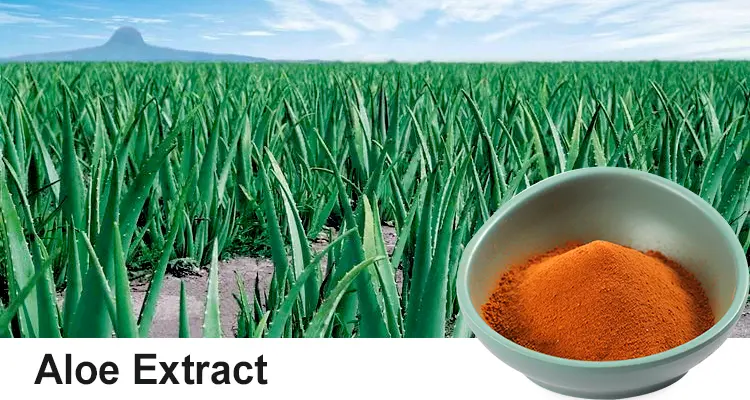
Forms of Existence in Plants
Aloe-emodin exists in free form or as a glycoside in plants such as aloe, rhubarb, and senna leaves. In aloe, it mainly exists in free form as a component of essential oil; while in rhubarb and senna leaves, it is mostly combined with glycosyl groups to form glycoside derivatives (such as aloin), which release active components after hydrolysis by intestinal flora. Natural sources mainly include the rhizomes of Rheum palmatum (Polygonaceae) and the leaves of Aloe vera (Liliaceae), and it is one of the core components that exert pharmacological effects in these plants.
From a plant physiology perspective, the differences in the forms of aloe-emodin in different plants are a self-protection and physiological regulation mechanism formed during the long-term evolution of plants. In aloe vera, it exists in a free state, allowing it to quickly exert its antibacterial and anti-inflammatory effects and defend against external microbial invasion; while in plants such as rhubarb, it exists in glycoside form. On the one hand, this reduces its toxicity to the plant’s own cells, and on the other hand, under specific conditions (such as after entering the human intestinal tract), the active components are released through the action of intestinal flora, thus realizing its medicinal value. For example, when we consume rhubarb containing aloe emodin glycosides, the glycosides are gradually hydrolyzed by the intestinal flora, releasing aloe emodin, which then exerts its laxative and antibacterial effects.
Bioactivity Analysis: From Molecular Mechanisms to Pharmacological Effects
(I) Antitumor Activity: Multi-Target Inhibition of Cancer Cell Proliferation
Aloe-emodin shows significant potential in the field of antitumor research, becoming a focus of in-depth exploration by researchers. It exhibits inhibitory effects on various tumor cells, including neuroectodermal tumors, liver cancer, lung cancer, gastric cancer, and leukemia. At the molecular level, aloe-emodin directly “attacks” the core biosynthetic processes of cancer cells. It acts like a precise “molecular scissor,” interfering with the synthesis of DNA, RNA, and proteins in cancer cells, thus blocking the uncontrolled proliferation of cancer cells at its source. Simultaneously, it cleverly induces the generation of reactive oxygen species (ROS). ROS act like “small bombs” within the cell; when produced in large quantities, they disrupt the mitochondrial membrane potential. Since mitochondria are the cell’s “energy factories,” damage to the membrane potential is like a power failure in the factory’s power supply system, preventing the cell from receiving energy normally, thus triggering apoptosis and leading to the “self-destruction” of cancer cells.
Aloe-emodin also has “tricks” up its sleeve regarding tumor metastasis. By inhibiting the nuclear factor κB (NF-κB) pathway, it’s like cutting off the “signal transmission line” for cancer cell metastasis. The NF-κB pathway plays a crucial regulatory role in cancer cell metastasis; when inhibited, cancer cells cannot receive the “instructions” for metastasis. At the same time, aloe-emodin downregulates the expression of matrix metalloproteinases (MMP-2/-9), which act like “pioneers” used by cancer cells to “clear the way” during metastasis. With reduced expression of MMP-2/-9, cancer cells find it difficult to break through the “defenses” of surrounding tissues, thus blocking tumor metastasis.
Numerous experimental data strongly support the antitumor capabilities of aloe-emodin. For example, studies on P388 leukemia cells showed that aloe-emodin had a very significant inhibitory effect, like applying the “emergency brakes” to the rapidly growing cancer cells. In a tumor-bearing mouse model, treatment with aloe-emodin significantly prolonged the survival time of the mice. The lives of the mice, previously afflicted by tumors, were effectively extended, fully demonstrating the broad-spectrum potential of aloe-emodin in the field of cancer treatment and providing a valuable direction for the future development of cancer treatment drugs.
(II) Antibacterial and Anti-inflammatory Properties: Targeting Microbial Metabolic Pathways
Aloe-emodin performs exceptionally well in the antibacterial field. Within a concentration range of 1.5–25 mg/mL, it acts like an “all-around guardian,” exhibiting strong antibacterial activity against aerobic bacteria such as Staphylococcus, Streptococcus, Corynebacterium diphtheriae, and Shigella, as well as anaerobic bacteria such as Bacteroides fragilis. Particularly noteworthy is its high sensitivity to Gram-positive bacteria, where a low concentration of only 15–25 μg/mL can exert a significant antibacterial effect.
In terms of its mechanism of action, aloe-emodin primarily interferes with the energy metabolism and biosynthesis processes of bacteria. Mitochondrial respiratory chain electron transport is a key link in bacteria’s energy acquisition. Aloe-emodin acts like a “circuit breaker,” inhibiting mitochondrial respiratory chain electron transport, preventing bacteria from producing enough energy to sustain life; at the same time, it can also block the synthesis of bacterial nucleic acids and proteins, like cutting off the “raw material supply line” needed for bacterial growth and reproduction, preventing bacteria from growing and dividing normally. Studies on Staphylococcus aureus have shown that aloe-emodin has a strong inhibitory effect on its nucleic acid and protein synthesis, and its inhibitory effect on Staphylococcus aureus is comparable to that of the commonly used antibacterial drug metronidazole, which undoubtedly provides a new option for clinical antibacterial treatment.
In terms of anti-inflammatory effects, aloe-emodin acts through a unique immunomodulatory mechanism. It can inhibit the function of macrophages. Macrophages, as the “patrol officers” of the immune system, can trigger excessive inflammatory responses when overactivated. Aloe-emodin acts like putting a “tightening spell” on macrophages, preventing them from becoming overly “active”; at the same time, aloe-emodin can also inhibit antibody production, reducing the intensity of the body’s immune response, thereby alleviating inflammatory reactions. In autoimmune diseases, the immune system mistakenly attacks its own tissues. The immunosuppressive effect of aloe-emodin can be useful in this context, helping to regulate the disordered immune system and alleviate inflammatory symptoms. This also gives aloe-emodin potential application value in the treatment of infectious diseases and autoimmune diseases.
(III) Intestinal Regulation and Laxative Effects: Microbiota Metabolism-Driven Physiological Effects
Aloe-emodin plays an important role in regulating intestinal health, and its effects are closely related to the gut microbiota. When we orally ingest plants containing aloe-emodin precursors (such as aloin), these precursors are hydrolyzed by the gut microbiota, acting as a “processing plant,” to produce aloe-emodin, which is then further converted into rhein anthrone.
Rhein anthrone acts like a “vitality stimulant” for the intestines. It stimulates nerve endings in the intestinal mucosa, promoting the release of acetylcholine. Acetylcholine, as an important neurotransmitter, acts like a “stimulant” for intestinal smooth muscle, enhancing intestinal smooth muscle contraction and making intestinal peristalsis more powerful. At the same time, aloe-emodin also increases intestinal fluid secretion, like injecting more “lubricant” into the “transport channels” of the intestines, making the stool wetter, softening the stool, improving intestinal osmotic pressure, and making it easier for waste to be expelled from the body.
Clinical studies provide strong evidence for the intestinal regulatory effects of aloe-emodin. In the treatment of constipation in middle-aged and elderly patients, the use of preparations containing aloe-emodin significantly improved constipation symptoms, making previously difficult bowel movements smoother. For patients with hemorrhoid-related constipation, aloe-emodin is also significantly effective. It achieves a laxative effect by gently stimulating intestinal peristalsis. Compared with traditional laxatives, it greatly reduces the risk of dependence, providing a safer and more effective treatment option for constipation patients.
Diverse Application Fields: Interdisciplinary Value from Medicine to Daily Chemicals
(I) Medical Field: Clinical Potential of Multi-Mechanism Synergy
1. Digestive System Drugs: Aloe emodin holds a significant position in the field of digestive system drugs, especially in the treatment of functional constipation. It is classified as a stimulant laxative, relieving constipation symptoms through a unique mechanism of action. Upon entering the body, aloe emodin stimulates nerve endings in the intestinal mucosa, promoting the release of acetylcholine. This neurotransmitter acts as a “motivational stimulant” for the intestines, enhancing the contraction of intestinal smooth muscles and making intestinal peristalsis more powerful. Simultaneously, it increases intestinal fluid secretion, softens stool, and improves intestinal osmotic pressure, making it easier for stool to be expelled. This is like injecting more “lubricant” into the intestinal “transport channel,” ensuring smooth intestinal transit. In clinical practice, aloe emodin not only effectively solves constipation problems but also has the effect of increasing appetite, which is undoubtedly a great benefit for patients with poor appetite due to constipation. It can also regulate the intestinal microecology, maintaining the balance of beneficial bacteria in the intestines, further promoting intestinal health and providing patients with a more comprehensive intestinal conditioning effect.
2. Anti-tumor Candidate Drugs: Aloe emodin shows immense potential in the field of anti-tumor research, becoming a focus of in-depth research for many scientists. Based on its mechanism of inhibiting DNA synthesis, it can precisely interfere with the core biosynthetic process of cancer cells, effectively putting a “pause button” on the rampant proliferation of cancer cells. Researchers are actively conducting research on targeted preparations for various malignant tumors such as liver cancer and leukemia, hoping that precise targeted delivery will allow aloe emodin to act more effectively on cancer cells and exert its powerful anti-cancer effects. In animal experiments, aloe emodin has already shown good anti-cancer effects, significantly inhibiting tumor growth and extending the survival time of tumor-bearing animals. Although aloe emodin is currently still in the research stage for anti-tumor treatment, the potential it has shown undoubtedly brings new hope for cancer treatment and provides a valuable direction for the development of future anti-cancer drugs. 3. Anti-infective Treatment: The antibacterial properties of aloe emodin make it play an important role in the field of anti-infective treatment. In topical preparations, it is an effective ingredient for treating skin infections. When dealing with boils caused by bacteria such as Staphylococcus aureus, aloe emodin can quickly take effect, inhibiting the growth and reproduction of bacteria, reducing inflammatory reactions, and promoting skin healing. In oral administration, aloe emodin can assist in the treatment of intestinal infectious diseases. By inhibiting the growth of harmful bacteria in the intestines, regulating the balance of intestinal flora, and restoring normal intestinal function, it provides an effective treatment method for patients with intestinal infections, demonstrating multifaceted application value in anti-infective treatment.
(II) Cosmetics and Daily Chemical Raw Materials: The Skin and Hair Care Value of Natural Active Ingredients
Aloe emodin, with its unique biological activity, shines brightly in the field of cosmetics and daily chemical raw materials, providing comprehensive care for skin and hair health. In skincare, its antibacterial, anti-inflammatory, and skin-repairing properties make it an ideal ingredient for acne-fighting and anti-allergic skincare products. When the skin is attacked by Propionibacterium acnes, aloe emodin can precisely inhibit its reproduction, reducing acne at the source; at the same time, for existing inflammatory erythema, it can exert anti-inflammatory effects, reduce erythema symptoms, and promote skin repair and regeneration, allowing the skin to regain smoothness and health. Aloe emodin also performs excellently in hair care products. It acts like a caring “hair manager,” regulating scalp oil secretion and improving dandruff problems. By inhibiting 5α-reductase activity, it reduces excessive scalp oil secretion, keeping the scalp refreshed; at the same time, it can also inhibit the growth of Malassezia, effectively reducing dandruff and making hair cleaner and neater. Aloe emodin can also give hair shine; it forms a protective film on the hair surface, increasing light reflectivity, making the hair look more radiant and attractive. Its antioxidant activity also plays a key role in delaying skin aging. With age and environmental influences, collagen in the skin gradually degrades, leading to skin sagging and wrinkles. Aloe emodin can inhibit the activity of matrix metalloproteinases, acting like a “barrier” to the degradation process of collagen, reducing collagen breakdown, maintaining skin elasticity and firmness, and giving the skin a youthful glow.
(III) Health Foods and Functional Foods: Health Empowerment through Metabolic Regulation
In the field of health foods and functional foods, aloe emodin empowers people’s health with its unique metabolic regulatory functions. As a natural lipid-lowering ingredient, aloe emodin has significant effects in regulating blood lipid levels. It acts like a “blood lipid regulation guardian,” inhibiting intestinal cholesterol absorption and reducing the entry of exogenous cholesterol into the bloodstream; at the same time, it can also promote lipid excretion, accelerating the elimination of excess lipids from the body, thereby assisting in regulating blood lipid levels, lowering the levels of triglycerides, total cholesterol, and low-density lipoprotein cholesterol in the blood, increasing the level of high-density lipoprotein cholesterol, maintaining blood lipid balance, and protecting cardiovascular health. Combined with its laxative effect, aloe emodin also plays an important role in weight management health foods. It can promote intestinal peristalsis, increase stool volume, accelerate the elimination of waste and toxins from the body, and reduce fat accumulation, thus achieving the goal of assisting in weight control. For those suffering from metabolic syndrome, the application of aloe emodin can improve indicators related to metabolic syndrome, such as lowering blood sugar and blood pressure, improving overall metabolic function, and providing strong support for a healthy life.
Safety and Research Prospects
(I) Toxicology and Safety Evaluation
The safety of aloe-emodin is a crucial aspect that receives considerable attention during its application. In terms of acute toxicity, aloe-emodin exhibits low acute toxicity. Animal studies show that its median lethal dose (LD₅₀) is greater than 2000 mg/kg (oral), meaning that the risk of acute poisoning is relatively low under normal usage. However, long-term overuse may lead to a series of health problems. Intestinal electrolyte imbalance is one of the more common risks, because if used improperly, aloe-emodin, in its laxative action, may excessively stimulate the intestines, disrupting the electrolyte balance and leading to electrolyte imbalance. The risk of liver damage should also not be ignored. Although the specific mechanism is not yet fully understood, studies show that long-term, high-dose intake of aloe-emodin may place a burden on the liver’s metabolic and detoxification functions, leading to liver damage. Some toxic effects of aloe-emodin have also been observed in animal experiments, mainly focusing on skin and mucous membrane irritation. According to the Globally Harmonized System of Classification and Labelling of Chemicals (GHS), aloe-emodin is classified as a warning category, with H302 indicating its certain toxicity. This reminds us to strictly follow clinical dosage guidelines when using products containing aloe-emodin to avoid health damage due to improper use.
(II) Structural Modification and Derivative Development
To overcome the limitations of natural aloe-emodin in terms of activity intensity and targeting, researchers are actively conducting research on structural modification and derivative development. By introducing specific groups, such as triazole and piperidine groups, into the molecular structure of aloe-emodin through chemical modification, its activity and properties can be significantly affected. This chemical modification is like giving aloe-emodin “special equipment,” allowing it to retain its original activity while gaining more powerful effects. Studies have found that derivatives modified at the 3-position side chain show excellent performance in the anti-tumor and antibacterial fields. Taking cervical cancer cells (HeLa) and gastric cancer cells (BGC) as examples, these derivatives showed a 30% higher inhibition rate compared to the parent compound, a data point that fully demonstrates the effectiveness of structural modification. By introducing new functional groups, the molecular structure of the derivatives undergoes subtle changes, enabling them to bind more precisely to receptors on the surface of cancer cells, thus enhancing their inhibitory effect on cancer cells. The derivatives also performed excellently in reducing cytotoxicity, providing more favorable conditions for their further development into drugs and demonstrating superior drug development potential.
(III) Future Research Directions
Looking ahead, the research direction of aloe-emodin will mainly focus on optimizing delivery systems and synergistic applications in the field of precision medicine. Regarding delivery system optimization, the poor water solubility and low bioavailability of aloe-emodin limit its clinical application to some extent. Therefore, developing efficient delivery systems is crucial. Liposomes and nanoparticle carriers are currently hot research topics. Liposomes have good biocompatibility and targeting capabilities; they act like “smart packages,” encapsulating aloe-emodin, increasing its solubility in water, and precisely delivering the drug to the diseased site, reducing damage to normal tissues. Nanoparticle carriers, on the other hand, possess unique physicochemical properties that can increase drug stability and extend the drug’s circulation time in the body, thereby improving drug efficacy. In the field of precision medicine, exploring the synergistic mechanisms of aloe-emodin in combination with radiotherapy and chemotherapy is of great significance. Aloe-emodin may enhance the sensitivity of tumor cells to radiotherapy and chemotherapy by regulating the tumor microenvironment, while simultaneously reducing the side effects of radiotherapy and chemotherapy, providing more effective treatment options for cancer patients. As a typical representative of natural anthraquinone compounds, the unique molecular structure and diverse biological activity of aloe-emodin give it broad application prospects in the pharmaceutical, daily chemical, and healthcare fields. With the continuous progress of synthetic biology and drug delivery technologies, the potential of this natural active ingredient will be further unleashed, providing more diversified solutions for human health.
