


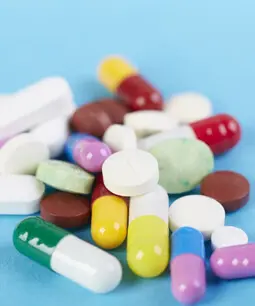


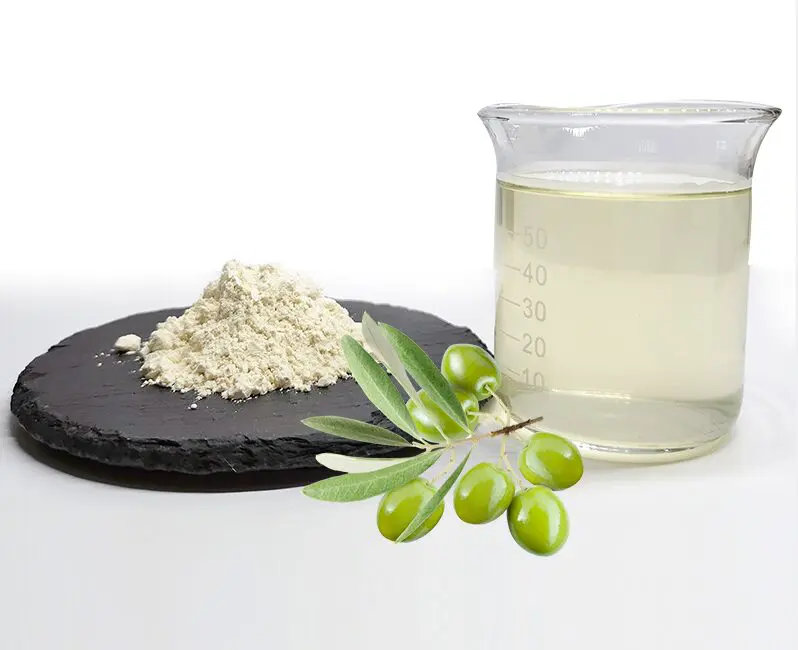
Hydroxytyrosol (CAS No. 10597-60-1), a natural polyphenol compound, is abundant in olive branches, leaves, and fruits, and is one of the core components of olive extract. Its molecular formula is C₈H₁₀O₃, a structure that endows hydroxytyrosol with amphiphilic properties, making it both lipid-soluble and water-soluble. This property is particularly crucial in the complex physiological environment of the human body, ensuring efficient absorption and distribution of hydroxytyrosol in various physiological settings. Whether in the lipid-rich cell membrane environment or the water-rich intracellular fluid, hydroxytyrosol can fully exert its effects.
In the pharmaceutical field, the purity requirements for raw materials are extremely stringent. High-purity raw materials of hydroxytyrosol (≥97%, pharmaceutical grade) undoubtedly lay a solid foundation for the high-end quality of nutritional supplements. Controlling product quality from the source ensures that every serving of hydroxytyrosol meets the highest standards. Furthermore, its natural source meets the stringent requirements of the European Union’s EFSA (European Food Safety Authority) and the United States’ FDA (U.S. Food and Drug Administration) for natural extracts, giving consumers greater peace of mind.
High-quality hydroxytyrosol relies on high-quality raw materials. We use raw materials from EU-certified olive plantations that adhere to strict organic farming standards. From soil selection and fertilizer use to pest and disease control, everything follows natural laws, without using any chemically synthesized pesticides or fertilizers, ensuring the purity and naturalness of the olive fruit and leaves. Olives grown in such an environment are rich in nutrients such as hydroxytyrosol.
In terms of extraction technology, we employ low-temperature extraction and membrane separation technology. Low-temperature extraction effectively avoids the damage of high temperatures to the active structure of hydroxytyrosol, maximizing the preservation of its biological activity. Membrane separation technology precisely removes impurities, ensuring that impurity residues are below 0.1%, guaranteeing the high purity of the product. This process fully complies with the U.S. FDA’s cGMP (current Good Manufacturing Practice) production standards, forming a complete quality control chain from the first step of raw material selection to the final step of finished product testing. During the raw material selection stage, each batch of olive raw materials undergoes rigorous testing to ensure that its quality meets the standards; during the production process, every step is monitored in real time to ensure the stability and consistency of the production process.
 EU and US Dual-Standard Certification System
 EU and US Dual-Standard Certification System
(I) EU Compliance: EFSA Certification and Health Claims
In the EU market, obtaining certification from the European Food Safety Authority (EFSA) is crucial for a product to gain a foothold. Our olive extract, hydroxytyrosol, has successfully passed EFSA’s safety assessment. This is no easy feat; EFSA rigorously examines every aspect of a product, from the source of raw materials to every stage of the production process, and finally to the safety and efficacy of the final product.
EFSA’s scientific evaluation confirmed that daily intake of 5mg or more of hydroxytyrosol can produce antioxidant effects. This conclusion is not arbitrary but based on extensive scientific research and experimental data. In these studies, researchers conducted follow-up surveys of different populations and experiments on cell and animal models in the laboratory, analyzing in detail the metabolic process and antioxidant mechanism of hydroxytyrosol in the body. The results showed that hydroxytyrosol can effectively scavenge free radicals in the body and slow down oxidative damage to cells, thus playing an antioxidant role.
When the daily intake reaches 10mg or more, hydroxytyrosol has a supportive effect on cardiovascular health. This is undoubtedly good news for those concerned about cardiovascular health. In today’s world where cardiovascular disease is prevalent, having a natural ingredient to support cardiovascular health is invaluable. Related studies have shown that hydroxytyrosol can lower cholesterol and triglyceride levels in the blood, inhibit platelet aggregation, and reduce the risk of atherosclerosis, thus protecting cardiovascular health.
In addition to meeting safety assessments, product labeling is also a key focus of EU regulation. Our product labels strictly comply with EU Regulation (EC) No 1924/2006, clearly stating approved health claims such as “helps protect cells from oxidative stress.” This allows consumers to clearly understand the product’s efficacy and effects when purchasing, ensuring informed consumption.
Regarding quality control, we conduct rigorous testing and control of heavy metals and pesticide residues. Specifically, the content of lead is ≤0.1ppm and the content of arsenic is ≤0.05ppm, far exceeding the legal limits. This means the product contains virtually no heavy metals harmful to the human body, making it safe for consumers to use. Regarding pesticide residues, none were detected in any of the 500 tests required by the EU. This is thanks to our strict adherence to organic farming standards during olive cultivation, avoiding the use of chemically synthesized pesticides and fertilizers, thus ensuring product quality and safety from the source.
(II) US Standards: FDA GRAS Certification and Dietary Supplement Regulations
In the US market, obtaining FDA GRAS (Generally Recognized As Safe) certification is a crucial prerequisite for the legal sale of a product. Our olive extract, hydroxytyrosol, has successfully obtained this certification, fully demonstrating the product’s safety and reliability. The FDA conducts a comprehensive evaluation of the product’s ingredients, manufacturing process, and quality control during the GRAS certification process. Only products deemed safe under normal use conditions are granted GRAS certification.
Our product’s raw material purity is ≥99%, meeting the United States Pharmacopeia (USP) standards. This high purity guarantee results in excellent efficacy and stability. The United States Pharmacopeia (USP) is a crucial standard for pharmaceutical standards in the United States, imposing strict regulations on the quality, purity, and potency of medicines and dietary supplements. Our products’ compliance with USP standards demonstrates that they meet the high quality requirements of the US market.
During the production process, we strictly adhere to the FDA’s 21 CFR Part 111 guidelines for the manufacture of dietary supplements. This guideline covers multiple aspects, including requirements for production facilities, personnel training and management, production process control, and quality inspection. By following this guideline, we ensure that every step of the production process meets standards, guaranteeing product quality and safety. Regarding production facilities, our factory has a rational layout and advanced equipment to meet production needs. In terms of personnel management, we provide rigorous training to our employees, ensuring they possess the professional knowledge and skills to correctly operate equipment and execute production processes. Regarding quality inspection, we have established a comprehensive quality control system, conducting strict inspections on each batch of products to ensure they meet quality standards.
In terms of microbiological indicators, our products have a total bacterial count <100 CFU/g and mold/yeast <50 CFU/g, achieving pharmaceutical-grade cleanliness. This high standard of microbial control effectively prevents product contamination, ensuring product safety and stability. Excessive microbial levels in a product can lead to spoilage, off-odors, and even harm to human health. Therefore, we implement strict microbial control measures throughout the production process, from raw material procurement and production environment cleaning to product packaging and storage, ensuring that microbial indicators meet standards.
Regarding labeling compliance, our products clearly indicate the recommended daily dose (30mg) and the source of ingredients (olive leaf extract), complying with the US DSHEA Act’s information disclosure requirements for dietary supplements. The DSHEA Act has clear regulations on the content and format of dietary supplement labeling, requiring companies to provide consumers with accurate and complete information. Following this requirement, we detail the recommended daily dose and source of ingredients on our product labels, allowing consumers to use the product appropriately according to their needs and ensuring they have a clear understanding of the product’s ingredients, avoiding misunderstandings and risks arising from a lack of transparency.
 Scientific Evidence of Nutritional Supplement-Level Efficacy
 Scientific Evidence of Nutritional Supplement-Level Efficacy
(I) Superior Antioxidant Defense System
Hydroxytyrosol’s antioxidant capacity is exceptional, a key reason for its prominence in the nutritional supplement field. In cell experiments, researchers have discovered that when cells are subjected to oxidative stress, they produce large amounts of reactive oxygen species (ROS), such as hydroxyl radicals and superoxide anions. These free radicals cause severe damage to cells, leading to cellular aging and apoptosis. Hydroxytyrosol effectively scavenge these free radicals, reducing intracellular ROS levels by 30%-40% (in vitro experiment, 50μM pretreatment).
How does it achieve this? The phenolic hydroxyl group in the hydroxytyrosol molecule has a strong hydrogen-donating capacity, enabling it to bind with free radicals and convert them into stable substances, thus blocking free radical damage to cells. During this process, hydroxytyrosol itself is oxidized, but it can regain its activity through the cell’s intracellular antioxidant system, continuing to exert its antioxidant effect.
In addition to directly scavenging free radicals, hydroxytyrosol also enhances the cell’s intracellular antioxidant defense system. Glutathione (GSH) is an important intracellular antioxidant that participates in redox reactions, protecting cells from oxidative damage. Hydroxytyrosol can promote GSH synthesis, increasing its content by more than 25%. In an experiment on liver cells, researchers found that treatment with hydroxytyrosol significantly increased intracellular GSH levels, indicating that hydroxytyrosol enhances the antioxidant capacity of cells.
Furthermore, hydroxytyrosol also has a repair effect on DNA oxidative damage. 8-OHdG is a marker of DNA oxidative damage. When cells are subjected to oxidative stress, DNA undergoes oxidative damage, leading to an increase in 8-OHdG expression. Hydroxytyrosol can reduce 8-OHdG expression, repairing the reduction of 8-OHdG expression by 20% (HEK-293 cell model). This finding has significant implications for the prevention and treatment of diseases related to oxidative stress, such as cancer and cardiovascular diseases.
For smokers, the antioxidant effect of hydroxytyrosol offers specific protection. Smoking leads to the production of numerous free radicals in the lungs, triggering oxidative stress damage and increasing the risk of diseases such as lung cancer and chronic obstructive pulmonary disease (COPD). Hydroxytyrosol can scavenge free radicals in the lungs, reducing the risk of oxidative stress damage. In a study of smokers, those given nutritional supplements containing hydroxytyrosol showed a significant reduction in oxidative stress levels and a reduction in inflammatory responses after a period of time, indicating that hydroxytyrosol has a protective effect on lung health in smokers.
(II) Multidimensional Regulation of the Immune System
Regarding the immune system, hydroxytyrosol exhibits multidimensional regulatory effects, providing strong support for human health. At the level of immune cells, hydroxytyrosol has a positive impact on T cells, B cells, and NK cells.
T cells are important cells in the immune system, divided into CD4+ helper T cells and CD8+ cytotoxic T cells. CD4+ T cells can assist in the activation and function of other immune cells, while CD8+ T cells can directly kill cells infected by pathogens or tumor cells. Hydroxytyrosol can promote the proliferation of CD4+/CD8+ T cells, enhancing their activity by 25%-30%. In animal experiments, researchers found that injecting experimental animals with hydroxytyrosol significantly increased the number and activity of CD4+/CD8+ T cells, indicating that hydroxytyrosol can enhance the immune response of T cells.
NK cells are natural killer cells that can directly kill target cells, such as virus-infected cells and tumor cells, without prior exposure to antigens. Hydroxytyrosol can increase the killing activity of NK cells by 20%-25%, enhancing their non-specific killing ability against abnormal cells. In in vitro experiments, co-culturing NK cells with hydroxytyrosol showed a significant enhancement in the killing ability of NK cells against target cells, indicating that hydroxytyrosol can activate NK cells, enabling them to better perform their immune surveillance and defense functions.
B cells can produce antibodies and participate in humoral immune responses. Hydroxytyrosol can stimulate B cells to secrete IgG/IgM antibody levels by 35% (animal model). IgG and IgM are important antibodies in the human body. They can bind to pathogens, neutralize their toxicity, and promote the phagocytosis and clearance of pathogens by phagocytes. In a mouse experiment, feeding mice with a diet containing hydroxytyrosol significantly increased serum IgG/IgM antibody levels, indicating that hydroxytyrosol can enhance the antibody secretion capacity of B cells and improve humoral immunity.
Besides its direct effects on immune cells, hydroxytyrosol also plays an important role in the regulation of inflammatory factors. In preclinical studies, continuous intake of 30 mg/day of hydroxytyrosol for 4 weeks reduced serum pro-inflammatory factors such as IL-6 by 15% and increased anti-inflammatory factor IL-10 by 20%, forming a bidirectional regulatory balance of anti-inflammatory and immune enhancement. IL-6 is a pro-inflammatory cytokine; its overexpression can exacerbate inflammatory responses and trigger various inflammation-related diseases. IL-10, on the other hand, is an anti-inflammatory cytokine that can inhibit inflammatory responses and promote tissue repair and healing. Hydroxytyrosol effectively maintains the body’s inflammatory balance and enhances immunity by regulating the levels of inflammatory factors such as IL-6 and IL-10.
(III) Cardiovascular Health Protection Mechanism
Cardiovascular health is a major concern, and hydroxytyrosol demonstrates excellent performance in this area. It protects cardiovascular health through multiple mechanisms, and its efficacy meets the American Heart Association (AHA) assessment criteria for the cardiovascular benefits of dietary supplements.
Regarding the inhibition of inflammatory pathways, hydroxytyrosol can inhibit the NF-κB inflammatory pathway in vascular endothelial cells. NF-κB is an important transcription factor that plays a crucial regulatory role in inflammatory responses. When vascular endothelial cells are stimulated, NF-κB is activated, enters the cell nucleus, and initiates the expression of a series of inflammation-related genes, leading to an inflammatory response. Hydroxytyrosol can inhibit the activation of NF-κB, thereby reducing the production and release of inflammatory factors. Studies have found that hydroxytyrosol can reduce C-reactive protein (CRP) levels by 12%-18%. CRP is an inflammatory marker, and a decrease in its level indicates a reduction in the inflammatory response. Simultaneously, hydroxytyrosol can increase nitric oxide (NO) production by 20%. NO is an important vasodilator that relaxes vascular smooth muscle, reduces vascular resistance, and thus improves vasodilation. Hydroxytyrosol promotes NO synthesis and increases NO release from vascular endothelial cells by activating endothelial nitric oxide synthase (eNOS). In a study of hypertensive patients, administering nutritional supplements containing hydroxytyrosol significantly reduced blood pressure and improved vasodilation, indicating that hydroxytyrosol can exert its antihypertensive and cardiovascular protective effects by increasing NO production.
Hydroxytyrosol also has significant effects in atherosclerosis models. Atherosclerosis is the main pathological basis of cardiovascular disease, and its occurrence is closely related to the oxidative modification of low-density lipoprotein (LDL) and the proliferation of vascular smooth muscle cells. Hydroxytyrosol can reduce ox-LDL oxidative modification by 30% and inhibit vascular smooth muscle cell proliferation by 15%, thereby delaying plaque formation. ox-LDL is a byproduct of LDL oxidation. It is highly cytotoxic, promoting inflammatory responses and foam cell formation, thus accelerating the progression of atherosclerosis. Hydroxytyrosol, through its antioxidant properties, can inhibit the oxidative modification of LDL, reducing ox-LDL production and thereby lowering the risk of atherosclerosis. Simultaneously, it can also inhibit the proliferation of vascular smooth muscle cells, preventing vascular wall thickening and plaque formation.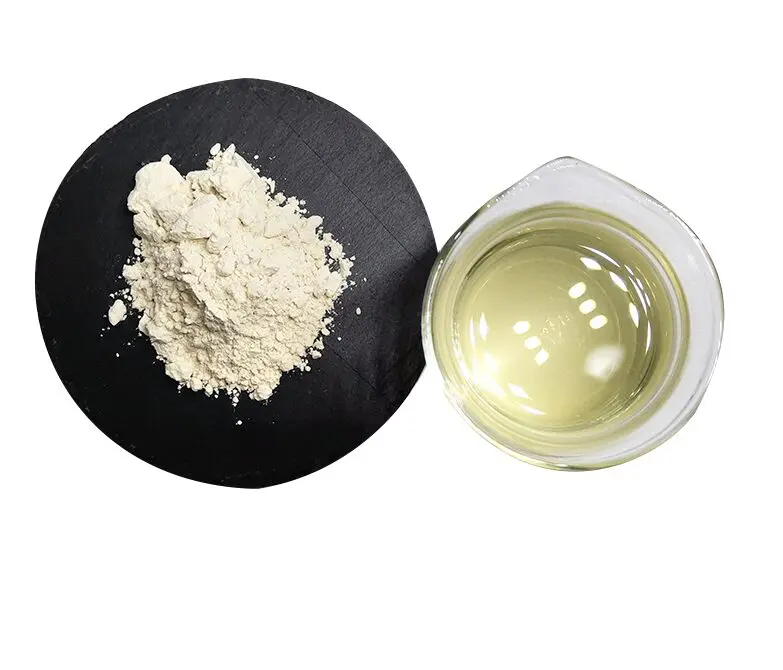
Industry Outlook and Quality Control Prospects
(I) International Standards Leading Industry Upgrading
With the continuous updates to the EU’s New Natural Foods Regulation (NRFS) and the US FDA’s Dietary Supplement Ingredient Database (DSID), the hydroxytyrosol industry has ushered in new development opportunities and challenges. In this era of pursuing high-quality and high-safety products, companies must continuously improve their technological level and break through technological barriers to stand out in the market.
In terms of quality testing, purity testing is one of the key links. Currently, the industry generally uses HPLC (High Performance Liquid Chromatography) for the purity testing of hydroxytyrosol. This method has the advantages of high separation efficiency, fast analysis speed, and high sensitivity, and can accurately detect the content of hydroxytyrosol in products, with a detection limit of 0.01%. Through rigorous purity testing, the content of hydroxytyrosol in products is ensured to meet standards, guaranteeing product quality and efficacy.
Stability studies are also a key focus for companies. To ensure the stability of products during storage and use, companies conduct accelerated testing at 60°C for up to 6 months. During this process, the content of hydroxytyrosol in the product is closely monitored, requiring that the content remain ≥95% after the test. Only by passing such rigorous stability testing can the product maintain good quality and efficacy when sold in the market.
In the future, the industry will focus on the research and application of microencapsulation delivery technology. Microencapsulation delivery technology can encapsulate hydroxytyrosol in tiny capsules, improving its stability and bioavailability in the gastrointestinal tract, increasing the intestinal targeting rate by 30%. This allows hydroxytyrosol to reach the site of action more precisely, exerting its efficacy while reducing its impact on other tissues and organs.
Organic certified raw materials will also become a market hotspot. As consumers increasingly focus on health and environmental protection, organic certified raw materials are becoming more and more popular. Hydroxytyrosol products produced using organic certified raw materials not only have better quality assurance but also meet consumers’ demand for green and healthy products, further satisfying the needs of the high-end market and enhancing the product’s market competitiveness.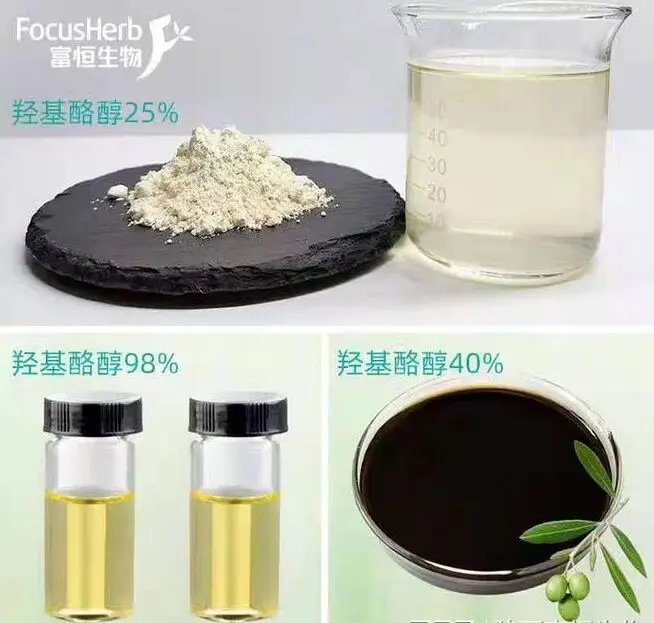
(II) Consumer Education and Compliant Consumption
In the market, there is a wide variety of hydroxytyrosol products, with varying quality. To help consumers choose high-quality, compliant products, we offer the following suggestions: When purchasing hydroxytyrosol products, consumers should choose those labeled with both “EU EFSA Certification” and “US FDA GRAS” markings. These markings indicate that the product has undergone rigorous review by authoritative EU and US agencies, ensuring a high level of safety and quality assurance.
The purchase channel is also crucial. We recommend purchasing through official channels, such as JD.com’s international flagship store. These official channels have stricter quality control, ensuring consumers purchase genuine products. Avoid products from unknown sources to prevent purchasing products made with inferior ingredients. Inferior ingredients often have a purity of <90%, compromising product efficacy and potentially posing health risks. Also, pay attention to the dosage; some products may have insufficient dosage, such as <10mg/capsule, which will not achieve the expected health benefits.
Regarding intake, according to relevant research and data, a daily intake of hydroxytyrosol not exceeding 100mg is the safe upper limit. This value is derived from NOAEL (No Observed Adverse Effect Level) data, ensuring that under normal circumstances, hydroxytyrosol intake will not produce adverse effects in the human body.
However, for special populations, such as pregnant women and those currently taking medication, their individual health conditions may lead to different reactions to hydroxytyrosol, or interactions between hydroxytyrosol and their existing medications. Therefore, these special populations must consult a doctor before using hydroxytyrosol products and use them rationally under the guidance of a physician.
