







Gardenia Blue, also known as Gardenia Fruit, is a natural food coloring extracted from the fruit of the Gardenia jasminoides Ellis plant (family Rubiaceae) and processed through a series of complex steps. Its preparation is quite meticulous. Typically, gardenia fruit is used as the starting material. First, it is extracted with water or edible ethanol to initially extract the active ingredients. Then, it is enzymatically hydrolyzed using β-glucosidase, followed by the addition of edible amino acids for a chemical reaction. Finally, it undergoes refining to obtain the final Gardenia Blue product. Its main components are complex, including carotenoids such as crocin and crocin acid, as well as complex products of geniposide and crocin derivatives.
Gardenia Blue has a pale gray to dark blue appearance and comes in two forms: powder and liquid, depending on the dosage form. Powdered Gardenia Blue has a fine texture, while liquid Gardenia Blue is more uniform. It is odorless or has a slight characteristic gardenia scent, which will not cause unpleasant odor interference in products using it. In terms of solubility, gardenia blue is readily soluble in hydrophilic solvents such as water, aqueous ethanol, and aqueous propylene glycol. When dissolved in water, it forms a uniform, bright blue solution. However, it is insoluble in common organic solvents such as hexane and ether, a characteristic that limits its application range in different systems. Furthermore, gardenia blue exhibits good stability within a pH range of 5-7, maintaining a relatively stable blue color. However, under strong acid or alkaline conditions, structural changes may lead to fading, affecting its coloring effect. It is also relatively sensitive to light and heat; prolonged exposure to light or high temperatures can alter the pigment’s structure, thereby reducing its stability and coloring ability.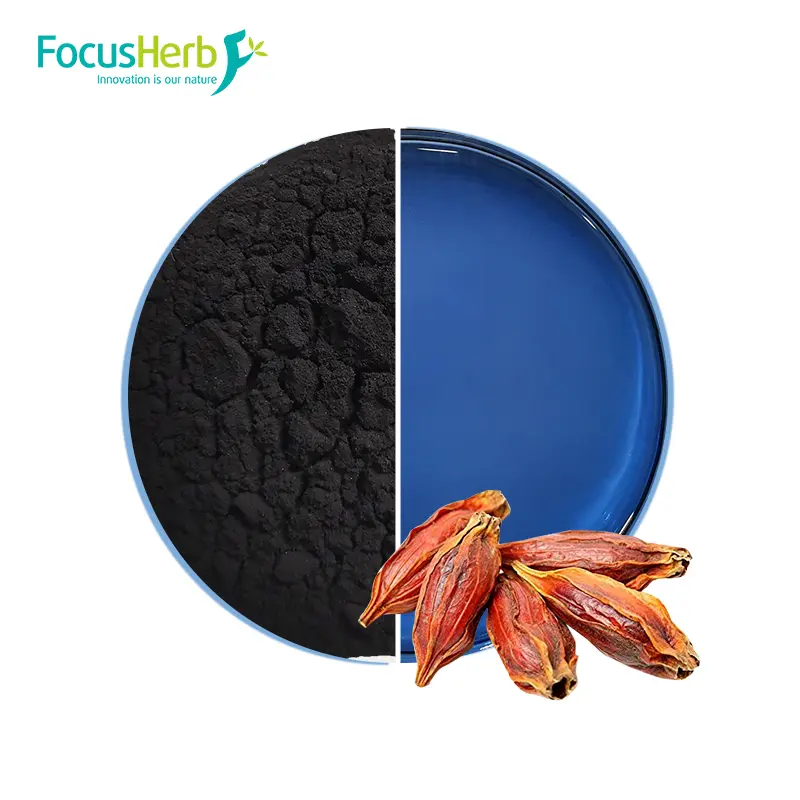
Applications in the Food Industry
In the food industry, Gardenia Blue is an important food coloring widely used in various foods to give products a unique blue or bluish-purple hue, meeting consumers’ diverse needs for food appearance.
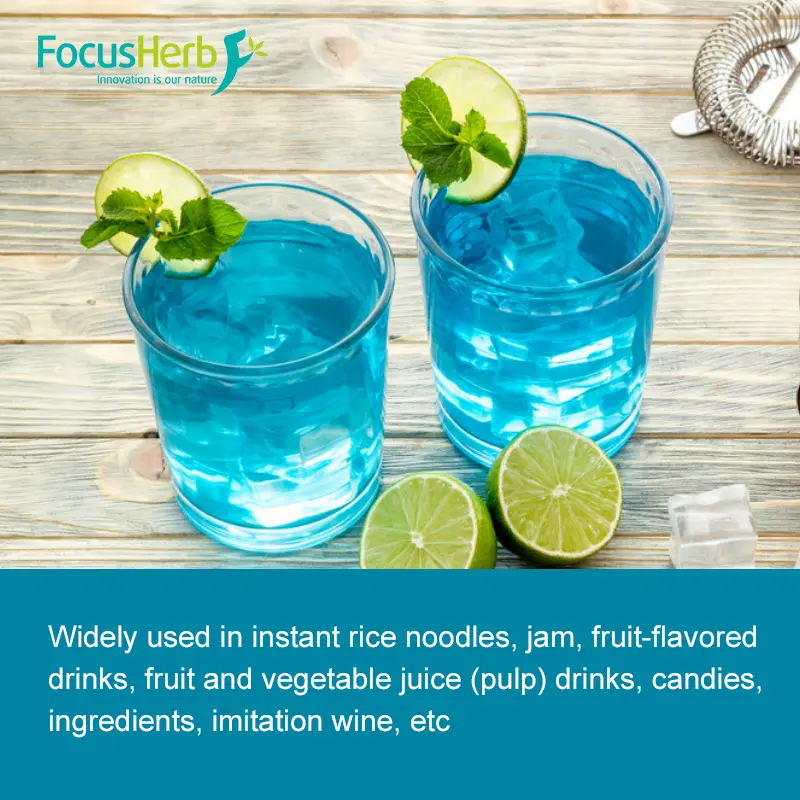
In the beverage industry, Gardenia Blue is commonly used in fruit juices, carbonated drinks, plant-based protein drinks, solid beverages, and formulated wines. Adding an appropriate amount of Gardenia Blue to fruit juices can create unique blue fruit juice drinks, providing consumers with a novel visual and taste experience. In formulated wines, it can give the liquid a captivating blue sheen, enhancing the product’s appeal. For example, some specialty cocktails use Gardenia Blue to create a unique, dreamy blue liquid, increasing product recognition.
In confectionery manufacturing, whether it’s hard candy, soft candy, or chewing gum, Gardenia Blue plays an excellent coloring role, producing blue or bluish-purple candies to satisfy the preferences of children and consumers seeking novelty. For instance, some fruit-flavored hard candies, by adding Gardenia Blue in combination with other colorings, can simulate unique fruit colors, enhancing the product’s fun factor. In baking, gardenia blue can be used for pastry decoration, cake premixes, bread, and cookies. When making birthday cakes, icing containing gardenia blue can be used to decorate and create blue patterns or text, making the cake more attractive. Adding gardenia blue to bread gives it a unique blue appearance, increasing its appeal.
Gardenia blue also has wide applications in the dairy industry, commonly found in milk beverages, yogurt, lactic acid bacteria beverages, milk powder, ice cream, and whipped cream. Adding gardenia blue to yogurt creates blue yogurt, enriching the variety of yogurt flavors and meeting consumer demand for personalized dairy products. In ice cream production, gardenia blue can be used to make blue ice cream, such as blueberry-flavored ice cream. By combining gardenia blue with other pigments, its color becomes closer to real blueberries, enhancing the product’s visual appeal.
Because natural blue pigments are relatively scarce in nature, gardenia blue, as a naturally sourced blue pigment, has unique value in the food industry. Furthermore, it is often used in combination with other natural pigments to create a wider range of hues. For example, by mixing gardenia blue with natural yellow pigments such as gardenia yellow and safflower yellow in certain proportions, green pigments of varying intensities can be formulated. Compared to natural chlorophyll, the hue of these formulated green pigments is easier to control and has better acid resistance, making them suitable for acidic foods. For instance, some acidic fruit juice gummies can utilize this compound pigment to create a refreshing green color. When combined with various natural red pigments, such as strawberry red and grape skin red, different shades of purple can be formulated, applicable to products like jellies, jams, and candies. For example, when making blueberry-flavored jam, adding gardenia blue in combination with other red pigments can make the color more realistic and improve product quality.
Industrial Applications
In the industrial sector, gardenia blue also plays an important role, primarily used for coloring products. It adds a unique blue appearance to various industrial products, enhancing their aesthetics and market competitiveness.
In the textile industry, gardenia blue is used as a natural dye in the dyeing process of textiles. For natural fibers such as cotton, linen, silk, and wool, gardenia blue can impart a natural and unique blue hue. When dyeing cotton fabrics, through specific dyeing processes, such as immersion dyeing, the cotton fabric is soaked in a dye solution containing gardenia blue. By controlling the dyeing time, temperature, and dye concentration, the cotton fabric can be evenly dyed blue. The resulting blue cotton fabric has a soft color and the rustic feel unique to natural pigments, making it suitable for making clothing, bedding, and other items that pursue a natural style. For silk fabrics, gardenia blue dyeing gives them a unique luster and texture, making the blue of silk products more noble and elegant. It is often used to make high-end silk clothing, scarves, and other items. Meanwhile, gardenia blue can also be used to dye synthetic fibers, such as polyester and nylon. Although dyeing synthetic fibers is relatively difficult, good dyeing results can be achieved by optimizing the dyeing process and using appropriate auxiliaries, giving synthetic fiber products a unique blue appearance.
In the plastics industry, gardenia blue is often used as a plastic colorant. When producing blue plastic products, an appropriate amount of gardenia blue can be added during the processing of plastic raw materials. In the injection molding process, gardenia blue is thoroughly mixed with plastic granules. Under high temperature and pressure, the gardenia blue is evenly dispersed in the plastic melt. As the plastic cools and solidifies, the plastic product exhibits a stable blue color. This provides a wide range of blue options for plastic products, such as plastic toys, plastic tableware, and plastic decorations, meeting consumers’ diverse color needs for plastic products. For example, the bright blue appearance of blue plastic toys can attract children’s attention and increase the fun of the toys; blue plastic tableware adds a unique color to the dining table and enhances the dining experience.
In the rubber industry, gardenia blue can also be used to color rubber products. In the rubber compounding process, gardenia blue is added to the rubber raw materials and evenly dispersed in the rubber matrix through mechanical stirring. After subsequent processing such as vulcanization, the rubber products are given a blue hue. Products like rubber shoe soles, rubber sealing rings, and rubber hoses, colored with gardenia blue, not only become more visually striking but also meet the color requirements of different scenarios. For example, blue rubber soles used on athletic shoes serve both a decorative purpose and complement the upper color, enhancing the overall aesthetics of the shoe.
In the paint and pigment manufacturing industry, gardenia blue can be used as a natural blue pigment. By mixing gardenia blue with other pigments, solvents, and additives in a certain proportion and processing it through grinding and dispersion, paints and pigments with specific blue hues can be prepared. These paints and pigments made from gardenia blue can be used in various fields such as architectural decoration, furniture coating, and craft painting. In building exterior decoration, using blue paint containing gardenia blue can bring a unique visual effect to the building, making it stand out from the crowd; in furniture painting, blue pigment can be used to create personalized furniture surfaces, satisfying consumers’ pursuit of personalized home decoration; in handicraft painting, the natural properties of gardenia blue pigment can add an artistic touch to handicrafts, enhancing their quality and value.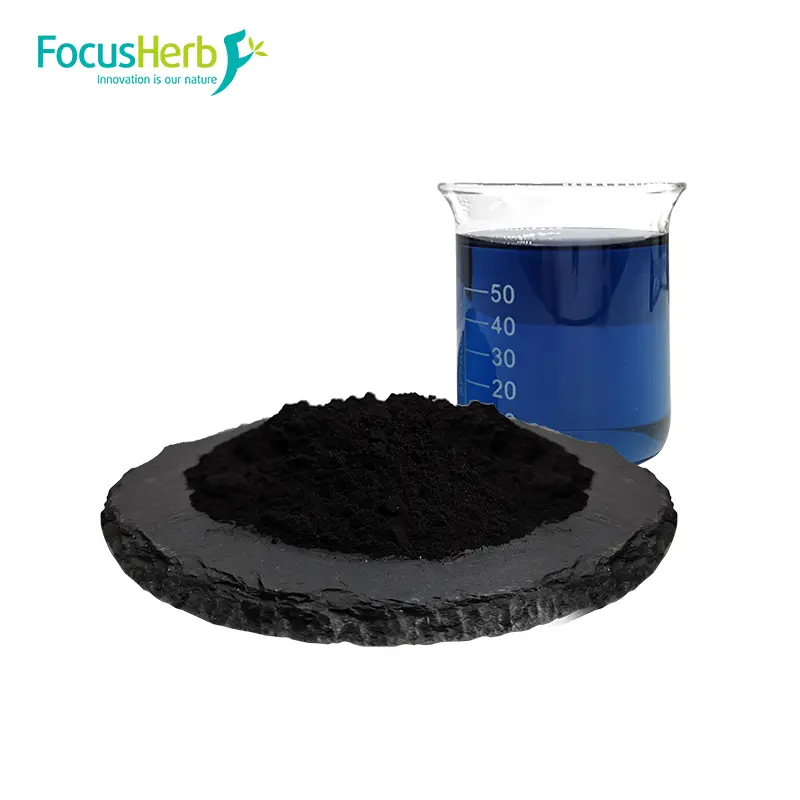
Coloring of Chemical Products
In the chemical industry, gardenia blue is widely used. It can be used as a dye or pigment to give various chemical products a blue hue, and it can also act as an indicator in some chemical reactions to help observe the reaction process.
In ink manufacturing, gardenia blue can be used to produce blue ink. Gardenia blue is thoroughly mixed with other ink components, such as resin, solvent, and additives, and then ground and dispersed to ensure the gardenia blue is evenly dispersed in the ink system. The resulting blue ink can be used to print various packaging materials, books, labels, etc. In food packaging printing, using ink containing gardenia blue not only meets the decorative needs of the packaging but also, due to its natural properties, is more compliant with food safety standards than some synthetic pigment inks, reducing the potential risk of food contamination. In book printing, blue ink can be used to print color illustrations and special markings, enriching the visual effect of books.
Gardenia blue also plays an important role in the coatings industry. It can be added as a blue pigment to paint formulations, mixed with film-forming substances, solvents, fillers, etc., and processed through stirring, dispersion, and grinding to produce paint products with a blue hue. This blue paint can be applied to exterior walls, interior walls, furniture surfaces, and metal products. In architectural decoration, blue paint can create a tranquil and comfortable atmosphere; for example, when used to paint bedroom walls, it can help people relax. Applying blue paint to furniture surfaces can make the furniture more personalized and stylish, meeting the aesthetic needs of different consumers.
In the plastics processing industry, gardenia blue is often used as a colorant for plastics. During plastic molding processes such as injection molding, extrusion, and blow molding, gardenia blue is added to the plastic raw materials. Through mixing and melting processes, the gardenia blue is evenly distributed in the molten plastic. After cooling and molding, the plastic product exhibits a stable blue color. This makes plastic products more diverse in appearance, meeting the market’s demand for diverse colors in plastic products. For example, adding gardenia blue to the production of blue plastic pipes allows the pipes to maintain their practical function while their unique blue appearance makes them easily distinguishable from other pipes during construction, improving construction efficiency. In the manufacture of plastic toys, blue plastic parts increase the toys’ fun and appeal, attracting children’s attention. Gardenia blue can also be used for coloring rubber products. During the rubber mixing stage, gardenia blue is added to a mixer along with rubber, vulcanizing agents, accelerators, and fillers, and thoroughly mixed using mechanical stirring to ensure the gardenia blue is evenly dispersed in the rubber matrix. After subsequent vulcanization and molding processes, the rubber products are given a blue color. Products such as rubber seals, rubber gaskets, and rubber fitness equipment accessories, after being colored with gardenia blue, not only meet the functional requirements of the products but also have a more prominent blue appearance in industrial equipment, making them easier for installation and maintenance personnel to identify and operate.
Furthermore, gardenia blue can also be used as an indicator in certain chemical reactions. In experiments or industrial production processes such as acid-base neutralization reactions and redox reactions, gardenia blue may change color under different chemical environments. By observing these color changes, the progress and endpoint of the reaction can be determined. In certain acid-base titration experiments, the color of gardenia blue will also change accordingly when the pH of the system changes, thus providing researchers with a direct signal as to whether the reaction has reached its endpoint. This helps to accurately control reaction conditions and improve the accuracy and efficiency of experiments or production.
Potential in Pharmaceuticals and Healthcare
Gardenia jasminoides has shown considerable potential in the pharmaceutical and healthcare field, with its medicinal value gradually attracting attention and research. The main ingredient of gardenia jasminoides, gardenia fruit, has been widely used in traditional medicine, possessing effects such as purging heat and relieving irritability, clearing heat and promoting diuresis, cooling blood and detoxifying. Gardenia jasminoides inherits some effective components from gardenia fruit and may possess similar medicinal effects.
Modern research indicates that certain components in gardenia jasminoides may have heat-clearing and detoxifying effects, helping the body eliminate internal heat toxins and reduce inflammatory responses. In some traditional Chinese medicine prescriptions, gardenia jasminoides has begun to be used as an adjunct drug to treat some symptoms caused by heat toxins, such as sore throat and oral ulcers. It can alleviate symptoms and promote recovery by regulating the body’s physiological functions, promoting metabolism, and enhancing the body’s immunity.
Gardenia jasminoides may also have antiviral effects, making it potentially valuable in the prevention and treatment of viral infectious diseases. Preliminary experimental studies have revealed that gardenia blue has an inhibitory effect on the activity of certain viruses, interfering with viral replication and transmission, providing new ideas and directions for the development of novel antiviral drugs. Although current research is still in the exploratory stage, it has already shown promising prospects.
In pharmaceutical development, gardenia blue has the potential to be used in the development of new traditional Chinese medicine or Western medicine preparations. Rational combination of gardenia blue with other drug components may produce synergistic effects, enhancing drug efficacy while reducing side effects. Adding gardenia blue to medications for treating colds, influenza, and other diseases, utilizing its heat-clearing, detoxifying, and antiviral properties, can improve the therapeutic effect. Furthermore, gardenia blue may also be used to develop some health-promoting drugs, such as those that enhance immunity and provide antioxidants, meeting people’s health and wellness needs.
Gardenia blue also has broad application prospects in the health supplement field. With the increasing health awareness of people, the demand for health supplements is growing, and gardenia blue, as a natural ingredient with potential health benefits, can be developed into various forms of health supplements. Gardenia blue can be formulated into capsules, tablets, and oral liquids for daily consumption to help consumers maintain health and prevent disease. For example, health supplements containing gardenia blue may have antioxidant, anti-inflammatory, and immune-regulating functions, making them suitable for middle-aged and elderly people, those with weakened immune systems, and consumers seeking a healthy lifestyle.
Although gardenia blue has shown potential in the pharmaceutical and healthcare fields, its application is currently relatively limited. More scientific research and clinical trials are needed to further explore its medicinal mechanisms, safety, and efficacy. It is believed that in the future, with continued research and technological advancements, gardenia blue will play a greater role in the pharmaceutical and healthcare fields, contributing to human health.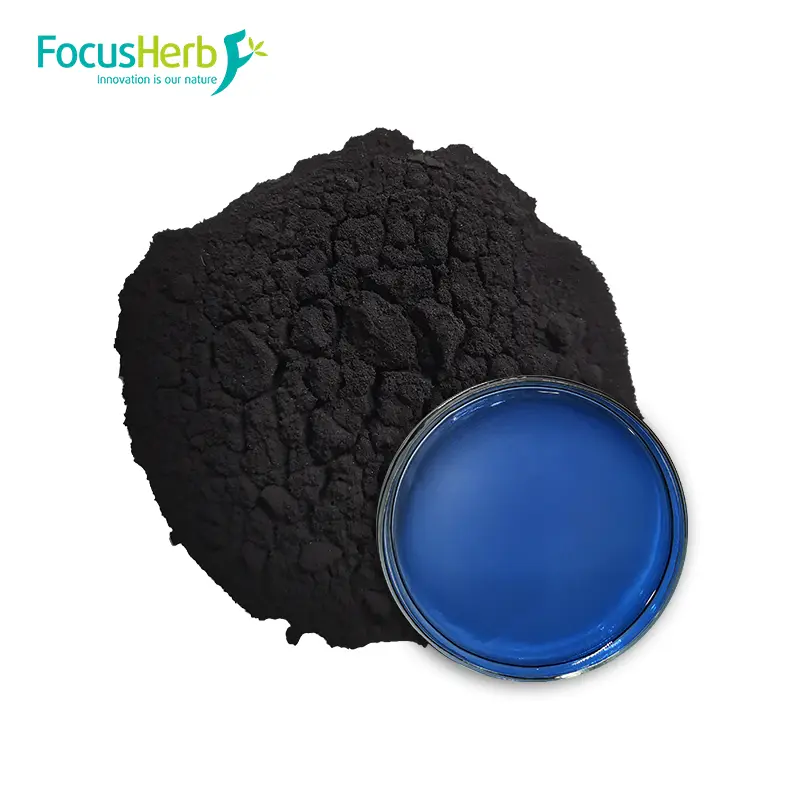
Exploring Other Potential Applications
With ongoing research and technological advancements, gardenia blue has demonstrated potential applications in other fields, providing direction for its further expansion.
In the cosmetics industry, gardenia blue is expected to be used as a natural blue pigment in various cosmetic formulations. Adding gardenia blue to eyeshadow products can create unique blue eyeshadows, meeting consumers’ diverse needs for eye makeup colors; using gardenia blue in nail polish can create blue nail polish, adding a fashionable touch to nails. Furthermore, because gardenia blue is a natural extract, it may have better biocompatibility and safety compared to some synthetic pigments, better aligning with consumers’ pursuit of natural and gentle cosmetic ingredients and helping to reduce potential skin irritation from cosmetics. In addition, gardenia blue may also provide additional skincare functions to cosmetics due to its potential antioxidant and anti-inflammatory effects, further enhancing the product’s value.
In the paper industry, gardenia blue can be used as a colorant for paper. Adding gardenia blue to paper pulp and processing it through papermaking can give paper a blue hue, which can be used to produce blue writing paper, packaging paper, decorative paper, and other products. This naturally pigmented paper not only has a unique color but may also have environmental advantages. Compared to some synthetic dyes, it degrades more easily after the paper is discarded, reducing environmental pollution. In the production of children’s drawing paper, using gardenia blue-dyed paper can provide a unique background for children’s artwork, stimulating their creativity. When packaging specialty products, blue packaging paper can attract consumers’ attention and enhance the product’s perceived value.
In the field of biomedical research, gardenia blue may function as a biomarker or tracer. Due to its unique color and certain chemical stability, it may be used to label specific cells or tissues in certain cell or animal experiments. By observing color changes or distribution, researchers can track cell growth, differentiation, migration, and the distribution and metabolism of drugs within the body. In tumor cell research, gardenia blue is used to label tumor cells and observe their metastatic pathways in vivo, providing more theoretical basis for tumor treatment. This application requires further modification and optimization of gardenia blue to ensure its safety and efficacy in vivo. Although currently in the exploratory stage, once realized, it will bring new tools and methods to biomedical research.
Gardenia blue also shows potential application value in the field of electronic materials. Some studies have shown that natural pigments possess special optical and electrical properties in certain electronic devices. Gardenia blue has the potential to be developed for the preparation of organic light-emitting diodes (OLEDs), sensors, and other electronic components. In OLED fabrication, gardenia blue can serve as a luminescent material or auxiliary material, utilizing its unique optical properties to improve the luminous efficiency and color purity of OLEDs, providing new material options for the development of OLED technology. Although research on gardenia blue in electronic materials is relatively limited at present, with the continuous advancement of materials science, more breakthroughs and applications are expected in the future.
 Gardenia blue, as a natural pigment, boasts unique properties and demonstrates wide-ranging applications in various fields, including food, industry, chemicals, and pharmaceuticals. In the food industry, it adds unique color to various foods, enriching their variety and meeting consumers’ diverse aesthetic demands. It is also frequently blended with other natural pigments to expand the color range of food products. In the industrial sector, gardenia blue imparts a blue appearance to textiles, plastics, rubber, paints, and pigments, enhancing their aesthetics and market competitiveness. In chemical product coloring, gardenia blue plays a role in the production of inks, coatings, plastics, and rubber, and can also serve as an indicator of chemical reactions. In the pharmaceutical and healthcare field, gardenia blue exhibits medicinal potential, including clearing heat and detoxifying, and antiviral properties, and is expected to find wider application in drug development and health product development. Furthermore, gardenia blue has also shown potential application value in cosmetics, papermaking, biomedical research, and electronic materials, providing more possibilities for its future development.
With the increasing demand for natural and safe products and the continuous advancement of related technologies, the innovative applications of gardenia blue in more fields are promising. In the food sector, gardenia blue is expected to lead to the development of more novel food products, further enriching people’s dietary choices. In the industrial and chemical sectors, gardenia blue may drive the development of related products towards a more environmentally friendly and natural direction. In the pharmaceutical and health care sector, in-depth research into the medicinal value of gardenia blue is expected to lead to the development of more effective drugs and health products. It is believed that gardenia blue will play a more important role in promoting the development of related industries and meeting people’s demand for natural and safe products, bringing new development opportunities and changes to various fields.
