








In the pursuit of health and eternal youth, humanity has never ceased its exploration. In recent years, NAD bulk powder, as a highly anticipated ingredient, has gradually entered the public eye, especially occupying a unique position in the field of anti-aging dietary supplements.
NAD, short for Nicotinamide Adenine Dinucleotide, is a coenzyme present in all living cells of the human body and is essential for life activities. Chemically, it consists of nicotinamide, adenine, ribose, and phosphate groups; this intricate combination endows NAD with extraordinary biological functions. Intracellularly, NAD participates in numerous key physiological processes, like an indispensable gear in a precision clock, maintaining the normal operation of life.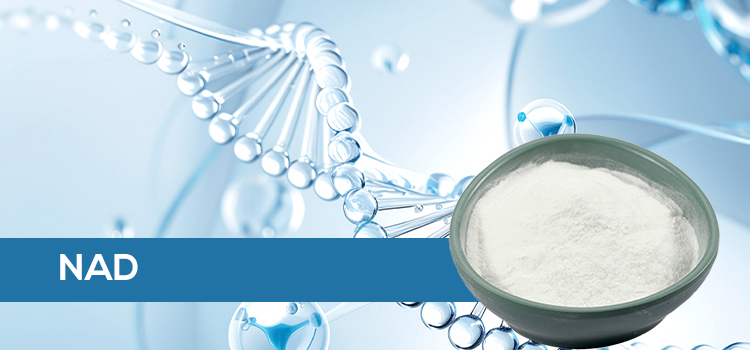
What is NAD?
NAD exists in the human body primarily in two forms: oxidized NAD+ and reduced NAD+ (NADH). These two forms are in dynamic equilibrium and work together to participate in various physiological processes. Like two sides of a coin, they cooperate and are indispensable. NAD is widely distributed in various tissues and organs of the human body, including the brain, heart, liver, muscles, and skin. While the amount and function of NAD vary slightly in different tissues, its importance is self-evident. For example, in the brain, NAD participates in the synthesis and metabolism of neurotransmitters, playing a crucial role in maintaining normal neural function and cognitive abilities; in the heart, it helps supply energy to myocardial cells, ensuring a strong heartbeat.
 The Close Relationship Between NAD and Human Aging
 The Close Relationship Between NAD and Human Aging
There is a complex and intertwined relationship between NAD and human aging. In-depth exploration of this relationship is crucial for understanding the mechanisms of aging and developing effective anti-aging strategies.
(I) The Age-Related Pattern of NAD Levels
Numerous scientific studies consistently demonstrate that NAD levels in the human body exhibit a significant downward trend with age. From youth to old age, NAD levels gradually decline, a physiological phenomenon almost universally observed in all individuals. In 2013, Professor David Sinclair’s research team at Harvard Medical School discovered that in mammals, NAD levels peak around age 20, then gradually decline with age. By age 50, NAD levels are only about half of their peak, and by age 80, they have dropped to about a quarter of their peak. While this age-related decline in NAD levels varies among individuals, the overall trend is consistent. Moreover, this decline is not limited to a single tissue or organ, but is systemic; decreased NAD levels can be observed in various tissues, including the liver, kidneys, muscles, and brain.
(II) The Aging Chain Reaction Triggered by Decreased NAD Levels
A decline in NAD levels is like a domino effect, triggering a series of aging-related chain reactions that have a profound impact on the normal functions of cells and the body.
In terms of cellular energy metabolism, NAD is a core coenzyme in cellular respiration and energy metabolism, participating in key metabolic pathways such as glycolysis and the tricarboxylic acid cycle. It acts as an “energy transporter,” accepting and transferring electrons during the oxidative decomposition of nutrients, converting chemical energy into adenosine triphosphate (ATP), an energy form that cells can directly utilize. When NAD levels decline, energy metabolism is hindered, and cells cannot obtain a sufficient supply of ATP, much like a car engine running out of fuel and gradually losing power. Cellular physiological functions are also affected, leading to a slowdown in energy metabolism, a gradual decline in cellular function, and consequently, a decline in bodily functions, such as reduced physical strength, fatigue, and a decreased metabolic rate—all typical manifestations of aging. DNA repair capacity is also weakened by a decline in NAD levels. Cells are constantly attacked by various internal and external factors in daily life, such as ultraviolet radiation, chemicals, and oxidative stress, all of which lead to DNA damage. To maintain genome integrity, cells initiate DNA repair mechanisms. NAD plays a crucial role in this process; it is an essential coenzyme for DNA repair enzymes such as poly(ADP-ribose) polymerase (PARP), providing energy and substrates for the repair process and helping repair enzymes recognize, bind to, and repair damaged DNA. When NAD levels are insufficient, the activity of repair enzymes such as PARP is inhibited, DNA repair capacity is significantly reduced, and genome instability increases. The continuous accumulation of gene mutations and damage within cells is like the continuous damage to the foundation of a house, ultimately leading to cellular senescence, apoptosis, and even age-related diseases such as cancer.
NAD also regulates the activity of the sirtuins protein family, a class of NAD-dependent deacetylases that play crucial roles in various biological processes such as cellular metabolism, aging, and stress responses. As a substrate for sirtuins, NAD levels directly affect sirtuin activity. When NAD levels decrease, sirtuin activity also decreases, weakening their deacetylation of downstream target proteins and consequently affecting physiological processes such as gene expression, cellular metabolism, and stress responses. For example, sirtuins can regulate transcription factor activity, affecting gene expression. When sirtuin activity decreases, some aging-related genes may be abnormally expressed, accelerating the cellular senescence process. They can also regulate the activity of metabolic enzymes, optimizing cellular metabolic pathways; decreased sirtuin activity can lead to metabolic pathway disorders and impaired cellular metabolic function. Furthermore, sirtuins participate in chromatin remodeling and maintain genome stability; reduced sirtuin activity weakens genome stability, increasing the risk of cellular senescence and disease.
The Amazing Role of NAD in Anti-Aging Dietary Supplements
(I) A Booster of Energy Metabolism
In cellular energy metabolism, NAD plays an indispensable role, like a tireless energy transporter. It is deeply involved in cellular respiration, a process that acts as “energy fuel” for cellular life activities. During the glycolysis stage of cellular respiration, glucose is initially broken down, and NAD⁺ accepts electrons and protons, being reduced to NADH, releasing a small amount of energy. Subsequently, in the tricarboxylic acid cycle, NAD⁺ again plays a crucial role, participating in multiple key steps, stripping hydrogen atoms from substrate molecules, and being reduced back to NADH. The high-energy electrons carried by NADH then enter the subsequent electron transport chain. On the inner mitochondrial membrane, the electron transport chain resembles a sophisticated “energy factory,” where NADH transfers electrons to a series of electron carriers. In this process, protons are continuously pumped out of the mitochondrial matrix, forming a proton gradient, like a dam filled with water, containing enormous energy. Ultimately, protons flow back down their concentration gradient, driving ATP synthase to synthesize ATP, the energy currency that cells can directly utilize.
As we age, our body’s energy metabolism gradually slows down, much like an aging car with diminishing power. We often feel exhausted, our physical strength is much weaker than before, and we become breathless after even slight activity. The decline in NAD levels plays a significant role in this process, greatly reducing the efficiency of cellular respiration and energy metabolism, and decreasing ATP production. At this time, supplementing with dietary supplements containing NAD is like injecting high-quality fuel into this aging car, providing cells with sufficient energy, alleviating the fatigue caused by aging, and revitalizing the body, giving us more energy to cope with daily life and work.
(II) The Loyal Guardian of DNA
Cells constantly face various potential threats, such as ultraviolet radiation, which acts like an invisible “scalpel” and may sever the double helix of DNA; chemical erosion, which acts like a “chemical bomb” and damages the structure of DNA; and free radicals generated by oxidative stress, which act like rampaging “little devils” and attack DNA molecules, leading to DNA damage. To maintain genome stability, cells have evolved a complex and sophisticated DNA repair mechanism, in which NAD plays a crucial role, truly acting as the loyal guardian of DNA.
Poly-ADP-ribose polymerase (PARP) is a key enzyme in the DNA repair process, while NAD is an essential coenzyme for PARP to function. When DNA is damaged, PARP acts like a keen “scout,” quickly identifying the damaged site and, using NAD as a substrate, transferring ADP-ribose groups to itself and other proteins involved in DNA repair. These modified proteins act like special “tags,” recruiting more DNA repair proteins to the damage site to work together to repair damaged DNA. Like a highly efficient repair team, supported by the “tools” and “energy” provided by NAD, they quickly restore damaged DNA to its original state, ensuring the integrity of the genome.
When NAD levels decline, PARP activity also decreases, significantly reducing DNA repair capabilities. This is like a repair team losing its tools and energy, unable to effectively repair damaged DNA. Gene mutations and damage gradually accumulate, severely impacting normal cellular function, accelerating the aging process, and significantly increasing the risk of age-related diseases such as cancer. Supplementing with NAD provides ample “ammunition” for the DNA repair process, enhancing cellular DNA repair capabilities, reducing the risk of gene mutations, protecting cellular health, and slowing down the aging process.
(III) Activators of Cellular “Longevity Proteins”
The Sirtuins family of proteins are a class of “longevity proteins” within cells, playing crucial roles in various biological processes such as cellular metabolism, aging, and stress responses, making them veritable “guardians” of cellular health. NAD, as a substrate of Sirtuins, acts like a magic “key,” activating Sirtuins and unlocking the cellular anti-aging “code.”
Sirtuins regulate the activity and function of numerous downstream target proteins through deacetylation, thereby profoundly impacting cellular physiological processes. In gene expression regulation, Sirtuins can deacetylate transcription factors, altering their binding affinity to DNA and thus affecting gene transcription and expression. For example, SIRT1 can deacetylate histones H3 and H4, making chromatin structure more compact or looser, inhibiting or activating the expression of certain genes, thereby regulating cellular metabolism, stress responses, and aging processes. In the regulation of metabolic enzymes, Sirtuins can optimize cellular metabolic pathways and improve metabolic efficiency. When cells face energy shortages, sirtuins can activate certain metabolic enzymes, promoting the breakdown of fats and sugars to provide more energy for the cells. When cells have sufficient energy, they can inhibit the activity of related metabolic enzymes, preventing excessive energy consumption. Furthermore, sirtuins participate in chromatin remodeling, maintaining genome stability, acting like diligent “gene stewards” to ensure the normal structure and function of the genome.
With age, NAD levels decline, and sirtuin activity decreases accordingly. Their ability to regulate downstream targets weakens, cellular function gradually becomes disordered, and aging-related phenotypes appear. Supplementing with NAD can enhance sirtuin activity, enabling them to function better, delaying cellular aging, and maintaining a youthful cellular state. For example, in animal experiments, supplementing aged mice with NAD precursors significantly activates sirtuins, improves metabolic function, enhances motor and cognitive abilities, extends lifespan, and rejuvenates the aged mice.
How to Choose and Use Bulk NAD Powder
(I) Key Points for Selecting Reliable Products
When selecting bulk NAD powder, several key points cannot be ignored to ensure product quality and safety. Purity is one of the key factors. High-purity bulk NAD powder ensures the content of active ingredients and reduces the potential risks from impurities. Generally speaking, products with a purity of 98% or even 99% or higher are more trustworthy. For example, some brands that have undergone rigorous quality testing and certification often achieve high purity standards in the industry.
Production standards and quality control are also crucial. High-quality bulk NAD powder should be produced in factories that comply with Good Manufacturing Practices (GMP) for pharmaceuticals or national food safety standards. These factories have complete production equipment and strict quality monitoring systems, strictly controlling every step from raw material procurement and production processes to finished product inspection to ensure that the product meets high-quality standards. For example, some well-known companies use advanced production processes and automated equipment to precisely control parameters such as temperature and humidity during the production process, ensuring the stability and consistency of product quality.
Certifications and testing reports are crucial for judging product quality. Whether a product has passed relevant international certifications, such as those from the U.S. Food and Drug Administration (FDA) or relevant EU standards, reflects that its quality and safety have been recognized by authoritative organizations. Furthermore, reviewing third-party testing reports to understand the product’s component analysis, purity testing, heavy metal and microbial limit testing results allows consumers to purchase and use it with greater confidence. For example, some brands regularly send their products for testing and publish the reports on their official websites or product packaging for consumers to view.
Reputation and user reviews are also important factors. By reviewing other consumers’ experiences and evaluations, we can understand the product’s actual effects and potential problems. On major e-commerce platforms, health forums, and social media, we can find user reviews and discussions about different brands of NAD bulk powder. For example, some users share their personal experiences of increased energy and improved sleep after taking NAD products, and also mention details such as the product’s taste and solubility. This information can help us make a better choice.
(II) Correct Usage and Precautions
Correct usage and precautions are crucial for maximizing the efficacy of NAD bulk powder and ensuring safe use. Currently, there is no universally accepted optimal dosage for NAD bulk powder, primarily due to individual differences such as age, gender, health status, and lifestyle habits, all of which affect the body’s need and response to NAD. Generally, some studies and practices recommend a daily NAD intake of 250-1000 mg for adults. For first-time users, it is usually recommended to start with a lower dose, such as 250 mg daily, and observe the body’s reaction. If no discomfort occurs, the dosage can be gradually increased. For example, some consumers start with 250 mg daily for a week; if no adverse reactions occur, the dosage is then increased to 500 mg, allowing the body to adapt.
Regarding the timing of administration, it is generally recommended to take it about half an hour before or after meals. When taken before meals, NAD+ is absorbed into the bloodstream more quickly because there is no food in the stomach. Taking it after meals reduces the irritation of NAD+ to the gastric mucosa, which is especially suitable for people with weak gastrointestinal function. For example, taking NAD+ half an hour before breakfast in the morning allows for rapid absorption on an empty stomach, providing energy support for the day’s activities; taking it half an hour after dinner in the evening helps the body repair and metabolize better during sleep. To ensure optimal absorption, it is recommended to take NAD+ with warm water, avoiding excessively hot or cold water. High temperatures may destroy the activity of NAD+, while excessively cold water may affect gastrointestinal digestion and absorption.
Pregnant women, breastfeeding women, and people with certain medical conditions (such as diabetes, high blood pressure, liver or kidney disease) must consult a doctor before taking NAD+ powder. The bodies of pregnant and breastfeeding women are in a special physiological state, and the intake of any nutritional supplement may have potential effects on the fetus or infant; NAD+ is no exception. For individuals with specific medical conditions, whose metabolism and physiological functions differ from those of healthy individuals, NAD+ may interact with medications they are taking, affecting treatment efficacy or causing adverse reactions. For instance, diabetic patients taking NAD+ may experience impaired blood sugar control, thus requiring a doctor to adjust medication dosages or advise on the suitability of NAD+ use based on their individual circumstances.
Future Prospects: The Limitless Potential of NAD in Anti-Aging
With the rapid development of science and technology and the deepening of research, NAD has demonstrated limitless potential in the field of anti-aging, bringing new hope to humanity’s pursuit of healthy aging.
In future research, we have reason to expect more in-depth exploration of the mechanisms of action of NAD. Scientists will further reveal the complex signal transduction pathways of NAD within cells and its interactions with other biomolecules, thus providing a solid theoretical foundation for developing more precise and effective anti-aging interventions. For example, through in-depth research on the interaction between NAD and the sirtuins protein family, it is hoped that small molecule compounds capable of specifically regulating sirtuins activity can be developed, achieving precise regulation of the cellular aging process; further analysis of the DNA repair mechanisms involved in NAD may uncover new DNA repair targets, opening new avenues for the prevention and treatment of age-related diseases.
The development of NAD-related products will also move towards a more diversified and personalized direction. As people’s health demands continue to rise, future NAD anti-aging products will not be limited to existing dosage forms such as capsules, tablets, and oral liquids. More innovative product forms, such as transdermal patches and oral mucosal absorption preparations, may emerge to meet the diverse needs of consumers. Simultaneously, customized NAD supplementation programs based on individual genetic characteristics, health conditions, and lifestyle habits will become possible. For example, through genetic testing, understanding an individual’s NAD metabolism and needs can provide consumers with precise NAD supplementation dosages and methods, achieving targeted anti-aging and allowing everyone to enjoy the health benefits of NAD.
However, we must also be aware that while NAD has shown enormous potential in the anti-aging field, some problems and challenges remain. For instance, the optimal supplementation dosage and long-term safety of NAD still require further research to determine; the quality of NAD products on the market varies greatly, and there are instances of false advertising, necessitating stronger regulation and standardization. Therefore, while paying attention to the progress of NAD anti-aging research and product development, we must maintain a rational and scientific attitude, relying on scientific research to carefully select and use NAD-related products. It is believed that in the near future, with continuous breakthroughs in research and increasing maturity of technology, NAD will play a greater role in the field of anti-aging, bringing more benefits to human health and longevity.
