











Nervonic acid, a long-chain monounsaturated fatty acid, plays an indispensable role in the formation of brain nerve cell membranes, serving as their “building block.” It accounts for 20%-30% of myelin lipids, and its unique molecular structure, like meticulously designed building blocks, provides crucial support for the construction of nerve cell membranes. At the molecular level, the unsaturated bonds in nervonic acid endow it with special physical properties, enhancing membrane fluidity. This characteristic is essential for the normal function of neurons because it optimizes the efficiency of neuronal signal transduction. When nervonic acid is incorporated into the nerve cell membrane, it’s like widening the lanes of a signal transmission highway, allowing nerve signals to be transmitted more smoothly and quickly.
Synaptic plasticity, the physiological basis of cognitive functions such as learning and memory, is also closely related to nervonic acid. Synapses are key sites for information transmission between neurons, and their plasticity determines the strength and efficiency of connections between neurons. Clinical studies have provided strong evidence for the positive effects of nervonic acid on nerve conduction. Related experiments have shown that nervonic acid supplementation can increase nerve conduction velocity by 15%-20%, a figure that vividly demonstrates the significant effect of nervonic acid in improving information processing efficiency. This means that after nervonic acid supplementation, the brain can receive, process, and transmit information more quickly, thus laying a solid physiological foundation for improving cognitive abilities.
The “Accelerating Engine” of Neurotransmitter Transmission
Nervonic acid not only plays a crucial role in the construction of nerve cell membranes but also acts as an “accelerating engine” in the process of neurotransmitter transmission. Neurotransmitters are chemical messengers that transmit information between neurons. Key nervonic acids such as acetylcholine and dopamine can promote the synthesis and release of these neurotransmitters, thereby directly enhancing neural communication between the hippocampus (memory center) and the prefrontal cortex (decision center).
In the hippocampus, nervonic acid increases acetylcholine levels by 25% through a series of complex physiological mechanisms. Acetylcholine plays a crucial role in memory and learning; it can enhance synaptic plasticity, making the connections between neurons more stable and efficient. This is analogous to organizing bookshelves in a memory library, making it easier to retrieve and access memory resources, thus improving the efficiency of converting short-term memories into long-term memories. For middle-aged and elderly people, as they age, brain function gradually declines, and the synthesis and transmission of neurotransmitters are also affected. Supplementing with nervonic acid can effectively improve this situation, with particularly significant effects on memory consolidation. It’s like injecting high-performance fuel into the aging brain’s engine, revitalizing the brain’s memory function.
A Neuroprotective “Defense System”
In the complex environment of the brain, nervonic acid also shoulders the important responsibility of neuroprotection, acting like a robust “defense system.” It possesses powerful antioxidant properties, acting like a valiant guardian to eliminate neurotoxic substances such as β-amyloid protein (Aβ) and free radicals. These neurotoxic substances are like “destructive molecules” in the brain, causing severe damage to nerve cells and leading to apoptosis.
Experimental data clearly reveal the protective ability of nervonic acid; it can reduce oxidative stress damage by 40%, indicating that nervonic acid can effectively mitigate the attack of free radicals on nerve cells and protect their integrity. Nervonic acid also plays an important role in delaying the hyperphosphorylation of tau protein associated with Alzheimer’s disease. Hyperphosphorylation of tau protein is one of the important pathological features of Alzheimer’s disease, leading to neurofibrillary tangles and disrupting the normal function of nerve cells. Nervonic acid provides strong protection for brain health by inhibiting this process. For people with mild cognitive impairment (MCI), nervonic acid has a particularly significant effect, slowing the rate of cognitive decline by up to 30%, providing important support for their quality of life, enabling them to maintain cognitive function for longer and enjoy life better.
The Multidimensional Enhancement of Cognitive Abilities by Nervonic Acid

(I) Memory Enhancement: Comprehensive Optimization from Short-Term to Long-Term
For students, memory is a key factor in the learning process. Intervention experiments targeting this group have yielded remarkable results. After three consecutive months of nervonic acid supplementation, the accuracy of word memorization increased significantly by 22%, and working memory capacity expanded by 15%. This result indicates that nervonic acid can significantly improve students’ memory abilities, making them more efficient in learning new knowledge. From a neurobiological perspective, nervonic acid can promote the growth of dendrites in hippocampal neurons, like adding more branches and leaves to the tree of memory, enabling it to better receive and transmit information. It can also enhance the long-term potentiation effect (LTP), a key neural mechanism in the brain’s formation of long-term memory, like adding a strong lock to the chain of memory, making the memory more robust.
In clinical cases, patients with mild amnesia also showed significant improvement due to nervonic acid supplementation. After supplementation with nervonic acid, their episodic memory scores increased by an average of 18%. Episodic memory refers to the memory of events personally experienced. An improvement in this score means that patients can better recall past life fragments, resulting in a significant improvement in quality of life. For students, whether dealing with daily learning tasks or preparing for exams, the memory enhancement brought by nervonic acid can make them more confident and at ease. It helps students better absorb knowledge in their studies, improve their academic performance, and lay a solid foundation for future development.
(II) Focused Attention: Improved Efficiency in Complex Tasks
In modern society, people who use their brains intensively, such as programmers and designers, often need to maintain a high level of attention in complex tasks. Nervonic acid provides strong support for them by enhancing the stability of neural circuits in the prefrontal cortex, effectively improving their ability to maintain attention. Electroencephalography (EEG) monitoring is a technology that can directly reflect the brain’s electrical activity. Monitoring using this technology revealed that after nervonic acid supplementation, alpha waves (distraction state) decreased by 30%, and beta waves (focus state) increased by 25%. This data clearly demonstrates the positive regulatory effect of nervonic acid on the brain’s attention state. In multitasking, nervonic acid’s advantages are even more pronounced, reducing the error rate by 20%. For programmers, who often need to develop multiple functional modules simultaneously, even slight distractions can lead to errors. Nervonic acid helps them maintain high levels of focus, reducing errors and improving efficiency. Designers also need to concentrate during creative work, selecting the most suitable solution from numerous inspirations. Nervonic acid provides them with more stable attention support, allowing them to better unleash their creativity and produce superior work. Whether at work or in study, nervonic acid helps people better handle complex tasks, improve efficiency, and achieve better results.
(III) Advanced Learning Ability: “Network Upgrade” of Neural Connections
Infancy and early childhood are critical periods for neural development, during which nervonic acid plays a particularly important role. It can increase neuronal synapse density by 40%, essentially laying more information highways in the brain’s neural network, making information transmission between neurons more convenient. Simultaneously, nervonic acid accelerates myelination, increasing the conduction speed of learning-related neural pathways by 30%. Myelin acts like an insulating layer surrounding nerve fibers, accelerating the transmission speed of nerve signals and ensuring rapid and accurate information transmission.
Children’s cognitive tests have shown that those who consistently ingest nervonic acid score 15%-20% higher than their peers in spatial reasoning and verbal logic abilities. Spatial reasoning is crucial for children’s understanding of spatial relationships and geometric shapes, while verbal logic is the foundation for children’s self-expression and understanding of others. Nervonic acid intake provides ample nutrition for children’s brain development, promoting a “network upgrade” of neural connections and giving them a head start in cognitive development. This not only helps children achieve better academic results in school but also lays a solid foundation for their future career development and life, enabling them to cope more calmly with various challenges.
(IV) Delaying Cognitive Decline: Combating Age-Related Brain Function Degeneration
As people age, brain function gradually declines, and cognitive abilities are also affected. A controlled study of healthy elderly individuals aged 60-75 showed that the group supplementing with nervonic acid performed exceptionally well in maintaining cognitive abilities. Their MMSE (Minor Intelligence State Examination) scores declined by 50% less per year compared to the control group, a data that clearly demonstrates the significant effect of nervonic acid in delaying cognitive decline. The supplementation group showed particularly significant advantages in executive functions (such as planning and decision-making) and delayed recall. Executive functions are among the higher functions of the brain, involving the planning, organization, and execution of various tasks, while delayed recall reflects the brain’s long-term storage and retrieval of information.
Nervonic acid can inhibit the atrophy of neurons in the hippocampus, essentially injecting vitality into the neurons of the hippocampus, maintaining their good morphology and function. It also maintains the integrity of white matter, which acts like a communication network in the brain, connecting different brain regions and ensuring smooth information flow. Through these two mechanisms, nervonic acid provides strong protection for the brain health of older adults, slowing the progression of cognitive decline. This allows older adults to maintain their independent living abilities for longer, continue to enjoy a rich and fulfilling life, reduce the inconvenience and psychological stress caused by cognitive decline, improve their quality of life, and enjoy a happy and fulfilling later life.
Strategies and Recommendations for Scientifically Supplementing Nervonic Acid
(I) Natural Food Sources: “Brain Power” Reserves in Daily Diet
In the pursuit of improved cognitive abilities, natural foods are an important source of nervonic acid, acting as a treasure trove for “brain power.”
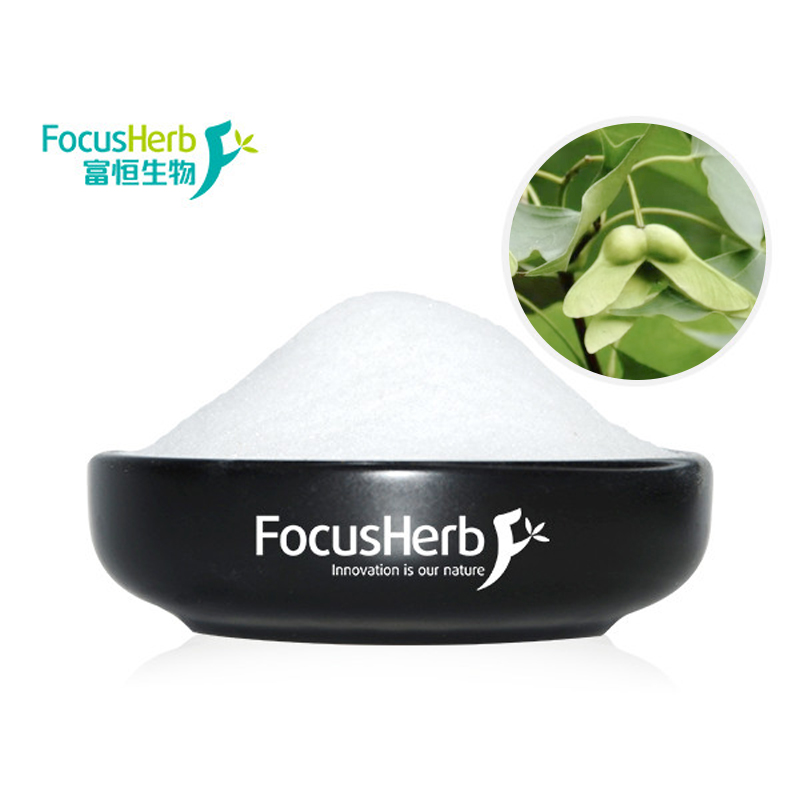
Acer truncatum seed oil is a rich source of nervonic acid, containing 500-800 mg per 100 grams. Consuming 5-10 grams daily can provide a considerable amount of nervonic acid to the brain. Acer truncatum seed oil can be used in cooking, whether in salads, stir-fries, or soups, offering both delicious flavor and nutritional benefits.
Salmon, tuna, and other deep-sea fish are not only delicious but also excellent sources of nervonic acid, containing 80-150 mg per 100 grams. It is recommended to consume them 2-3 times per week to satisfy the taste buds while providing ample nutritional support for the brain. Salmon can be steamed to retain its original flavor and nutrients; tuna can be made into delicious sushi, making the enjoyment of food an opportunity to nourish the brain. Flaxseed, hemp seeds, and other nuts and seeds are also rich in nervonic acid, containing 50-80 mg per 100 grams. Consuming 20-30 grams daily as a snack can satisfy cravings and provide energy for the brain. Flaxseed can be ground into powder and added to yogurt or oatmeal to enhance the taste and nutrition; hemp seeds can be eaten directly or used to make nutritious nut milk. Animal sources such as shark brain and bovine brain contain over 1000 mg/100g of nervonic acid. Although rich in nervonic acid, their high cholesterol content necessitates limited consumption. Occasionally, it can be enjoyed, but the amount consumed should be carefully controlled to avoid adverse health effects.
(II) Nutritional Supplement Selection: Key Points for Precise Supplementation
When choosing nutritional supplements to precisely supplement nervonic acid, several key points need to be considered. Dosage form and purity are crucial. Prioritize high-purity (≥98%) plant-derived preparations, such as Acer truncatum seed oil extract. Plant-derived preparations not only provide highly effective nervonic acid supplementation but also avoid the risks of cholesterol and heavy metals that may arise from animal-derived products. This choice is like selecting a pure and reliable guardian for the brain, ensuring safe and effective nervonic acid supplementation.
Synergistic formulation is also key to enhancing the effectiveness of nutritional supplements. Combining with DHA promotes synapse formation, like building more bridges in the brain’s information transmission network, making information transmission smoother; phosphatidylserine enhances memory retrieval, helping the brain better retrieve and utilize memories; and vitamin B12 protects the myelin sheath, providing a good insulating environment for nerve signal transmission. Studies have shown that such synergistic formulations can improve cognitive function by 40%, providing comprehensive support for brain health.
Dosage guidelines provide a scientific basis for our supplementation. In terms of health maintenance, supplementing with 200-300 mg of nervonic acid daily is like injecting stable power into the brain’s daily operation, maintaining normal brain function; for people who need cognitive improvement, 500-600 mg daily (as directed by a doctor, for a period of 3-6 months) can more effectively enhance cognitive abilities, help the brain overcome cognitive obstacles, and restore vitality.
(III) “Full-Link” Management of Cognitive Enhancement
The efficacy of nervonic acid requires synergistic management with lifestyle changes to form a “full-link” approach to cognitive enhancement.
Sleep optimization is a crucial aspect of cognitive enhancement. Ensuring 7-9 hours of sufficient sleep, especially focusing on deep sleep, is essential as it’s the golden period for neural repair. During deep sleep, the brain functions like a highly efficient repair factory, repairing and regenerating nerve cells damaged during the day, and storing sufficient energy for the new day. Establishing a regular sleep schedule, creating a quiet and comfortable sleep environment, and avoiding the use of electronic devices at night can improve sleep quality, allowing the brain to fully rest and repair itself.
Cognitive training can promote the “targeted action” of nervonic acid. Engaging in 20 minutes of memory games daily, such as the Schulte Grid, can improve attention and memory; logic puzzles can stimulate the brain’s thinking abilities, making it more flexible. These exercises are like gymnastics for the brain, enabling nervonic acid to act more precisely on different areas of the brain, enhancing brain function. You can take a few moments during your free time each day to do these fun exercises, allowing your brain to get a workout in a relaxed and enjoyable atmosphere.
Vascular protection is equally important. By controlling blood sugar, limiting salt intake, and engaging in regular exercise (150 minutes of moderate-intensity exercise per week), you can improve cerebral blood flow and enhance the bioavailability of nervonic acid. Controlling blood sugar can prevent damage to blood vessels and nerve cells from high blood sugar, limiting salt intake can maintain stable blood pressure, and regular exercise can promote blood circulation, delivering more oxygen and nutrients to the brain. These measures are like comprehensive maintenance of the brain’s blood supply system, ensuring that nervonic acid can smoothly reach every corner of the brain and exert its maximum effect.
Precautions: A Rational View of the “Boundaries” of Nervonic Acid’s Capabilities
(I) Applicable Population and Contraindications
Key Population: Individuals with mild cognitive impairment, whose brain nerve cell connections and signal transmission have already shown initial abnormalities. Nervonic acid can specifically repair nerve fibers, enhance nerve conduction, and improve cognitive performance. Students preparing for exams are in a high-intensity brain-using phase; nervonic acid can help them improve memory and attention, and absorb knowledge more efficiently during learning. Middle-aged and elderly individuals maintaining brain health; as brain function gradually declines with age, nervonic acid helps maintain normal brain function and prevent further development of cognitive impairment.
Populations to Use with Caution: Patients with liver disease already have impaired liver metabolic function. Although nervonic acid can improve cognition, high doses may increase the metabolic burden on the liver, requiring strict dosage control. Patients with hemorrhagic diseases, nervonic acid may affect the activity of clotting factors or the clotting process, increasing the risk of bleeding; careful evaluation is required before use.
Contraindications: Statins mainly lower cholesterol levels by inhibiting cholesterol synthase, while the metabolic pathway of nervonic acid in the body is related to cholesterol metabolism. Taking them simultaneously may interfere with the cholesterol-regulating effects of statins and may also cause adverse reactions such as muscle pain and an increased risk of rhabdomyolysis. Therefore, they should be taken 2 hours apart to ensure the proper efficacy of each drug and medication safety.
(II) Expected Effects and Cycle
Cognitive improvement is “gradual”:
1-2 months: Nervonic acid begins to act on the membranes of brain nerve cells, initially enhancing their fluidity and optimizing the basic transmission environment of neurotransmitters, resulting in an initial improvement in concentration. Users can clearly feel a reduction in distractions when focusing on tasks.
3-6 months: Nervonic acid continues to participate in the repair of nerve fibers and the regulation of neurotransmitter synthesis, significantly improving memory efficiency and learning ability. For example, students will find it easier to memorize texts and formulas during this period, and learn new knowledge faster.
Long-term (1 year+): Long-term supplementation with nervonic acid continues to exert a neuroprotective effect, reducing the level of oxidative stress in the brain, inhibiting nerve cell apoptosis and brain atrophy, and reducing the risk of Alzheimer’s disease by 15%-20%. This data is based on a large-scale epidemiological survey, providing strong evidence for the significance of long-term nervonic acid supplementation.
(III) Avoiding Three Major Misconceptions
Alternative Medicine: While nervonic acid is beneficial for cognitive improvement, it cannot replace ADHD medication or dementia treatment. For example, in ADHD patients, the imbalance of neurotransmitters in the brain is complex. Drug therapy is the primary treatment, and nervonic acid can only assist in improving nerve function to a certain extent; it cannot replace medication in precisely regulating neurotransmitter levels. For dementia patients, nervonic acid cannot reverse the severely damaged neural structure and function; it is only part of comprehensive treatment to help slow disease progression.
Issues of Quick Results:Nervonic acid is not a “smart drug” and will not immediately enhance intelligence. It requires long-term, consistent supplementation to continuously provide nutrition to brain nerve cells and participate in their metabolism and repair. Simultaneously, combining it with cognitive training, such as reading and puzzle-solving, can better stimulate brain activity, synergistically enhancing the effects of nervonic acid and promoting improved brain function.
Excessive Supplementation:Daily intake exceeding 1000mg may exceed the body’s metabolic capacity, causing gastrointestinal discomfort such as nausea and diarrhea. Long-term excessive intake may also cause potential damage to liver and kidney function. Regular monitoring of liver and kidney function is recommended to ensure nervonic acid supplementation is within safe limits and avoid health risks from inappropriate supplementation.
Nervonic acid, as a “bioengine” of brain cognitive function, is valuable not only for supplementing a single component but also for promoting holistic health management encompassing nutrition, neurology, and behavior. Through scientific intake, precise intervention, and lifestyle optimization, nervonic acid is opening up a new dimension for brain health maintenance for people of all ages—from preventing cognitive decline to improving learning efficiency. It witnesses the deep integration of nutritional science and neuroscience, providing a reliable biological solution for unleashing human cognitive potential.
