








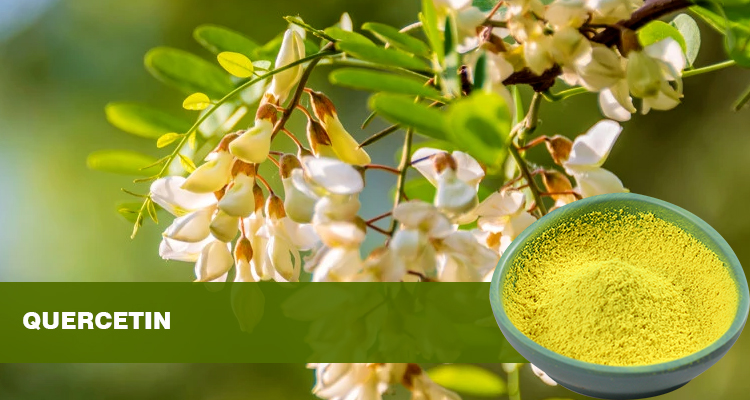
Quercetin, chemically known as 3,3′,4′,5,7-pentahydroxyflavone, with the molecular formula C₁₅H₁₀O₇, is a typical representative of flavonoid compounds. Its molecular structure consists of two benzene rings (A ring and B ring) connected by an oxygen-containing pyran ring (C ring), forming a planar conjugated system. It contains five hydroxyl groups, which give it unique polarity and chemical reactivity. Its physical properties include yellow needle-shaped crystals (dihydrate), a melting point of 313–314°C, poor solubility in water, and good solubility in organic solvents such as methanol and ethanol. Its alkaline solution is yellow, and its ethanol solution tastes bitter.
Discovery Process and Naming Origin
In 1936, Hungarian physiologist Albert Szent-Györgyi first isolated quercetin from plants. Its English name “Quercetin” originates from the Latin word “Quercus” (oak tree), as it was first discovered in oak bark. The International Union of Pure and Applied Chemistry (IUPAC) confirmed its structure as pentahydroxyflavone, establishing its classification in natural products.
 Quercetin Extraction Process: From Traditional Methods to Technological Optimization
 Quercetin Extraction Process: From Traditional Methods to Technological Optimization
(I) Comparison and Application of Classic Extraction Methods
1. Maceration Method: Basic Control Process
Maceration is a basic method for quercetin extraction. It involves completely immersing plant materials in an organic solvent such as ethanol, and soaking them for a long time at room temperature or a specific temperature. During this process, the solvent slowly penetrates into the plant cells through molecular diffusion, dissolving quercetin and other components, and then diffusing back into the external solution. For example, in an extraction experiment on *Lespedeza cuneata* medicinal material, using 70% ethanol as the solvent and macerating for 12 hours, the quercetin content obtained was only 4.71 μg/g. This method is simple to operate and requires minimal equipment, only ordinary containers and stirring devices. However, its disadvantages are also obvious: the extraction time is long, the solvent consumption is large, and the extraction rate is low, making it difficult to meet the needs of large-scale production. Currently, it is mainly used in control experiments in methodological research, providing a comparative reference for other efficient extraction methods.
2. Alkaline Extraction and Acid Precipitation Method: Targeted Extraction of Flavonoid Glycosides
The alkaline extraction and acid precipitation method utilizes the differences in acid-base solubility of flavonoid glycosides for extraction. The phenolic hydroxyl groups in the flavonoid glycoside molecule are weakly acidic, and under alkaline conditions, they can react with alkali to form salts, thereby increasing their solubility in water. Taking the extraction of quercetin from *Sophora japonica* as an example, *Sophora japonica* crude powder is first added to a 0.4% boric acid aqueous solution, and the pH is adjusted to 8-9 with lime milk. The mixture is stirred and extracted under slightly boiling conditions for 30 minutes. At this time, rutin (a glycoside form of quercetin) and other flavonoid glycosides are dissolved in the alkaline extraction solution; then, the filtrate is adjusted to a pH of 2-3 with concentrated hydrochloric acid. The solubility of flavonoid glycosides decreases in an acidic environment, and they precipitate out of the solution. After centrifugation, washing, and drying, crude rutin is obtained; finally, the rutin is hydrolyzed to convert it into quercetin. This method is highly targeted and can effectively extract flavonoid glycosides, but the operation involves multiple pH adjustments and precipitation separations, making it quite cumbersome. Furthermore, the extraction rate is significantly affected by the precision of pH control; improper control can easily lead to the loss of target components.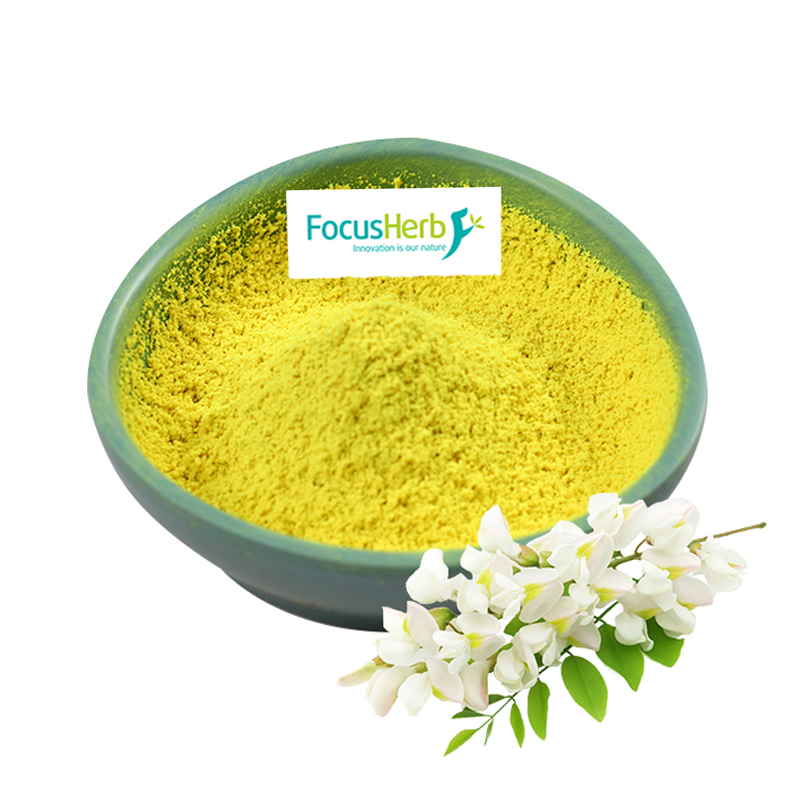
3. Reflux Method: A Classic Choice for High-Efficiency Extraction
The reflux method involves placing the medicinal material and the selected solvent in a reflux apparatus, heating the solvent to boiling, and then cooling the resulting vapor through a condenser, which then returns to the reaction vessel. This cycle is repeated, continuously providing heat to the extraction process and accelerating the diffusion of quercetin from plant cells into the solvent. In a study on the extraction of quercetin from cactus, orthogonal experiments showed that using 95% methanol as the solvent, 10g of dried cactus powder (passed through a 60-mesh sieve) was added to 200ml of solvent and refluxed for 3 hours, resulting in a quercetin content of 0.2423 mg/g, significantly higher than the 0.2018 mg/g obtained by the maceration method. However, this method uses organic solvents, many of which are toxic, and there are safety risks such as fire and explosion during the heating process. Therefore, complete safety protection and exhaust gas treatment equipment are required in practical applications.
4. Ultrasonic Extraction Method: A Green and Efficient New Technology
The ultrasonic extraction method utilizes the cavitation effect, mechanical effect, and thermal effect of ultrasound to enhance the extraction process. When ultrasound propagates in a liquid, it generates a large number of tiny bubbles. When these bubbles burst instantaneously, they release enormous energy, forming strong shock waves and microjets, which can effectively destroy plant cell structures, making it easier for quercetin inside the cells to be released into the solvent. Experiments using Houttuynia cordata as raw material showed that ultrasonic extraction for 30 minutes can achieve a similar extraction rate to the reflux method, with no significant difference. In addition, the ultrasonic extraction method has the advantages of safety, non-toxicity, and simple operation. It can significantly shorten the extraction time and reduce energy consumption, showing great advantages in the preliminary industrial extraction of quercetin, and is gradually becoming a hot technology for research and application.
(II) Emerging Technologies and Process Optimization
Microwave-assisted extraction is a novel extraction technique that has been developed in recent years. Microwaves are electromagnetic waves with frequencies ranging from 300 MHz to 300 GHz. They can penetrate plant materials, causing polar molecules within the cells (such as water molecules) to vibrate and rub rapidly, generating internal heat, which promotes cell rupture and accelerates the dissolution of quercetin. In the extraction experiment of quercetin from Sophora japonica, the optimal conditions were determined to be: particle size 60-90 mesh, moisture content 25%, power 350W, and extraction time 10 minutes. The extraction time was only 1/12 of that of ordinary heating reflux and 1/144 of that of room temperature maceration, and the extraction rate was approximately 65.5% and 213.8% higher than the other two methods, respectively. This method can significantly shorten the extraction time and improve extraction efficiency, and is particularly suitable for raw materials with fewer heat-sensitive components. However, during the extraction process, the microwave power and time must be strictly controlled to avoid the degradation of heat-sensitive components such as quercetin due to excessive temperature, which would affect product quality.
Physiological Functions: From Basic Mechanisms to Diverse Applications
(I) Antioxidant and Free Radical Scavenging
Quercetin possesses exceptional antioxidant capabilities, making it an extremely potent antioxidant in nature. Its antioxidant efficacy is 50 times that of vitamin E and 20 times that of vitamin C. This powerful effect stems from its unique molecular structure, particularly the 3,7-hydroxyl structure, which plays a crucial role. In the complex biological environment of the body, oxidative stress is the root cause of many health problems. Superoxide anions, hydroxyl radicals, and other free radicals are produced in large quantities, attacking lipids, proteins, and DNA within cells, leading to cell damage and aging. Quercetin can effectively scavenge these free radicals through multiple pathways. On the one hand, it can chelate with metal ions, reducing the metal ion-catalyzed production of free radicals, thus reducing the generation of free radicals at the source; on the other hand, the phenolic hydroxyl groups in the quercetin molecule can directly react with free radicals, providing hydrogen atoms and converting free radicals into stable molecules, interrupting the chain reaction initiated by free radicals. For example, in the process of lipid peroxidation, quercetin can quickly capture peroxy radicals, inhibiting the spread of lipid peroxidation, thereby protecting the integrity of cell membranes and maintaining normal cellular physiological functions. This is of great significance in delaying aging and preventing chronic diseases.
(II) Cardiovascular System Protection
Quercetin performs excellently in protecting the cardiovascular system. It can dilate coronary arteries, increase blood supply to the heart, ensure that myocardial cells receive sufficient oxygen and nutrients, and maintain normal cardiac contraction and relaxation functions, playing a positive role in preventing myocardial ischemia and angina pectoris. At the same time, quercetin can also reduce the fragility of capillaries, enhance their resistance, and reduce the risk of vascular rupture and bleeding, which is crucial for maintaining the normal structure and function of blood vessels.
Regulating blood lipids is also one of the important mechanisms by which quercetin protects the cardiovascular system. It can inhibit the absorption of cholesterol in the small intestine, reduce the entry of exogenous cholesterol into the blood, and also interfere with the esterification process of cholesterol, lowering the level of low-density lipoprotein cholesterol (LDL-C) in the blood and increasing the content of high-density lipoprotein cholesterol (HDL-C). HDL-C acts like a “scavenger” in the blood vessels, transporting cholesterol from the arterial walls to the liver for metabolism, thus reducing cholesterol deposition in the blood vessel walls and lowering the risk of atherosclerosis. Clinical studies have shown that long-term consumption of quercetin-rich foods or supplements can help improve the condition of patients with cardiovascular diseases such as hypertension and coronary heart disease, reduce the incidence of cardiovascular events, and provide comprehensive protection for cardiovascular health.
(III) Metabolic Regulation and Disease Intervention
1. Blood Sugar Lowering Effect
In the field of blood sugar regulation, quercetin exhibits unique efficacy. For diabetic patients, stable blood sugar control is crucial. Quercetin can inhibit the activity of α-amylase, delaying the digestion and breakdown of carbohydrates and reducing the rapid release of glucose; at the same time, it can also inhibit the function of glucose transporters, hindering glucose from entering cells, thereby slowing down the rate of blood sugar increase. Related animal experiments and clinical studies have found that after dietary intervention with quercetin-rich foods, the postprandial blood glucose peak of experimental animals or patients was significantly reduced, and blood glucose fluctuations were effectively improved. Long-term intervention can also improve insulin sensitivity and enhance the body’s ability to regulate blood sugar, providing a natural auxiliary method for the prevention and treatment of diabetes.
2. Anti-Gout Efficacy
Gout is a disease caused by excessively high uric acid levels in the body, leading to the deposition of urate crystals in the joints and surrounding tissues. Quercetin has a significant effect in combating gout. Its mechanism of action is mainly through tightly binding to the active center of xanthine oxidase (XO), forming stable hydrogen bonds, thereby inhibiting the activity of XO. XO is a key enzyme in the process of uric acid production. When its activity is inhibited, hypoxanthine and xanthine cannot be successfully converted into uric acid, thus reducing the amount of uric acid produced from the source. Research data shows that in hyperuricemia animal models, after quercetin intervention, blood uric acid levels decreased significantly, and joint inflammation and swelling were significantly relieved, indicating that quercetin has potential application value in the prevention and treatment of gout. 3. Anti-inflammatory Properties
Chronic inflammation is an important pathological basis for the development of many diseases, and quercetin plays a key role in combating inflammation. It can inhibit the release of inflammatory mediators such as tumor necrosis factor-α (TNF-α) and interleukin-6 (IL-6), which act as “triggers” in the inflammatory response, initiating a series of inflammatory cascade reactions. By regulating relevant signaling pathways, quercetin prevents the activation and aggregation of inflammatory cells, reducing inflammation-induced damage to tissues and organs. For patients with chronic bronchitis, quercetin can reduce airway inflammation and alleviate symptoms such as cough and phlegm; for patients with allergic rhinitis, it can reduce the inflammatory response of the nasal mucosa and alleviate discomforts such as nasal itching, sneezing, and runny nose, providing new ideas and methods for the treatment of inflammation-related diseases.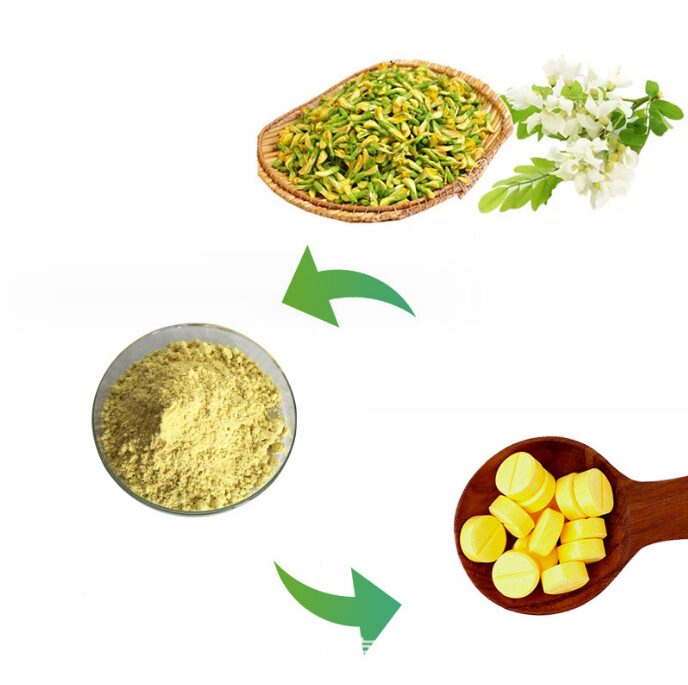
Natural Sources and Application Transformation
(I) Abundant Plant-Based Distribution
Quercetin is widely present in various plants in nature, like a hidden key to health in the plant world. Among everyday foods, onions are a “rich source” of quercetin, especially purple onions, which contain over 100 milligrams of quercetin per 100 grams. The outer skin is particularly rich in quercetin, reaching 140 mg/100g, making it an excellent source of quercetin in the daily diet. The quercetin in apples is mostly concentrated in the peel, containing 10-40 milligrams per 100 grams. Eating apples without peeling them allows for better quercetin intake. Blueberries and broccoli are also good sources of quercetin, with blueberries containing 5-10 milligrams per 100 grams and broccoli containing 10-30 milligrams. These colorful fruits and vegetables not only add vibrant colors to the table but also provide natural protection for health.
In the field of medicinal plants, the quercetin content in Sophora japonica is approximately 4%, making it an important raw material for extracting quercetin in traditional Chinese medicine. Ginkgo leaves and Thuja orientalis leaves also contain a certain amount of quercetin. They are often used in traditional medicine to treat various diseases, and their medicinal value is inseparable from the effects of quercetin. In these plants, quercetin mostly exists in the form of glycosides such as rutin and hyperoside. Through hydrolysis, it can be converted into biologically active quercetin monomers, thus exerting its medicinal effects.
(II) Applications in Health Products and Pharmaceuticals
1. Development of Functional Health Products
Based on quercetin’s powerful antioxidant, anti-inflammatory, and cardiovascular protective effects, it has been widely used in the field of functional health products. Antioxidant preparations are a major application direction for quercetin. By scavenging free radicals in the body and reducing oxidative stress damage to cells, these products help delay aging and enhance immunity, becoming a popular choice for people pursuing a healthy lifestyle. In anti-inflammatory health supplements, quercetin can inhibit inflammatory responses and alleviate inflammatory symptoms, providing relief for patients with chronic inflammatory diseases such as arthritis and asthma, helping them reduce pain and improve their quality of life. Quercetin is also essential in cardiovascular health supplements; it can regulate blood pressure and blood lipids, improve vascular elasticity, and reduce the risk of cardiovascular diseases, safeguarding cardiovascular health and making it an ideal health ingredient for middle-aged and elderly people to prevent cardiovascular diseases.
2. Pharmaceutical Preparation and Safety
In the pharmaceutical preparation process, after extracting quercetin from plant raw materials, multiple purification steps are required. Taking ethanol reflux purification as an example, this process effectively removes impurities and improves the purity of quercetin, but the amount of residual solvent must be strictly controlled to ensure compliance with drug safety standards. However, the poor water solubility and low bioavailability of quercetin limit its application in the pharmaceutical field. To address this problem, researchers have used nanotechnology to encapsulate quercetin in nanoscale carriers, increasing its solubility in water and promoting its absorption by the body; they have also modified the molecular structure of quercetin to improve its biological activity.
In terms of safety, quercetin is relatively safe at normal doses, but excessive intake may cause gastrointestinal discomfort, such as nausea, vomiting, abdominal pain, and diarrhea. Pregnant women, breastfeeding women, and people taking other medications should exercise extra caution when using quercetin, as it may interact with certain medications, affecting their efficacy or even causing adverse reactions. It is essential to consult a doctor or professional pharmacist before use to ensure safe medication.
Research Outlook: From Technological Bottlenecks to Innovative Directions
Although quercetin exhibits many remarkable physiological activities and application potential, its practical application still faces a series of challenges, requiring researchers to seek breakthroughs and innovations in future research.
Low bioavailability is a major obstacle to the application of quercetin. Due to its poor water solubility, its absorption efficiency in the gastrointestinal tract is low, and it is easily and rapidly metabolized in the liver and intestines, resulting in effective concentrations detectable in plasma far below the dose required to exert physiological effects. The bioavailability of quercetin when taken orally in the traditional way is usually less than 5%. To improve bioavailability, nano-delivery systems have become a research hotspot. Liposomes, as a nanoscale drug carrier, are composed of phospholipid and other materials to form a bilayer membrane, which can encapsulate quercetin, increasing its dispersibility in water, protecting quercetin from damage by gastrointestinal enzymes and gastric acid, and promoting its absorption. Animal experiments have shown that liposome encapsulation can increase the bioavailability of quercetin by 7 times. Polymer micelles also have unique advantages. They use amphiphilic polymers as materials, self-assembling in aqueous solutions to form nanoscale micelle structures, which can effectively solubilize quercetin, achieve targeted delivery, increase the concentration of the drug in target tissues, and enhance the therapeutic effect.
Poor stability is also a challenge for quercetin. Multiple phenolic hydroxyl groups in its chemical structure are easily oxidized. Under light, high temperature, high humidity, and acidic or alkaline environments, the structure is prone to change, leading to reduced or even lost activity. In solution formulations, low solubility may lead to drug precipitation, affecting stability and efficacy; in oral formulations, low water solubility leads to incomplete gastrointestinal absorption. Structural modification is one feasible strategy. Glycosylation modification can introduce glycosyl groups onto the quercetin molecule, improving its water solubility and stability, and potentially altering its pharmacokinetic properties and extending its duration of action; esterification modification, on the other hand, regulates the lipophilicity of the molecule by introducing ester groups, improving its stability in lipophilic environments, enhancing its affinity with cell membranes, and promoting cellular uptake. The study of compound formulations is also of great significance. Combining quercetin with other natural active ingredients or drugs in a rational manner, utilizing synergistic effects, can not only improve efficacy but also reduce the dosage of individual components, thereby minimizing potential adverse reactions. For example, the combined use of quercetin and vitamin C allows vitamin C to inhibit the metabolism of quercetin, increasing its bioavailability, and the two synergistically enhance antioxidant capacity; combining it with curcumin, which has anti-inflammatory effects, may exert a stronger effect in anti-inflammatory applications, providing a more effective solution for the treatment of inflammation-related diseases.
In terms of extraction technology, future research can focus on precise extraction techniques. By leveraging cutting-edge technologies such as artificial intelligence and machine learning, the parameters in the extraction process can be optimized to achieve efficient and precise extraction of quercetin, reducing the introduction of impurities, improving product purity and quality stability, and lowering production costs. This will lay a solid foundation for large-scale industrial production. With continuous research and technological innovation, quercetin is expected to find broader and deeper applications in functional foods, pharmaceuticals, and other fields, making a greater contribution to human health.
