






Spermidine is a naturally occurring polyamine compound with the chemical formula C₇H₁₉N₃, produced by the metabolism of putrescine and S-adenosylmethionine. Structurally, it resembles a meticulously constructed chemical chain, with three amino groups arranged in an orderly fashion on the carbon chain, giving spermidine its unique biological activity. This structural characteristic allows it to act like a series of delicate keys, precisely inserting into the “keyholes” of various biochemical reactions within cells, participating in key life processes such as nucleic acid and protein synthesis, and cellular homeostasis regulation. At room temperature, spermidine is a colorless liquid, as clear and transparent as pure water, but it has strong hygroscopic properties, acting like a moisture-loving sponge, rapidly absorbing moisture from the surrounding air upon exposure. In terms of solubility, it is like a “universal solvent friend,” readily dissolving in water and freely dispersing in ethanol and ether. This excellent solubility facilitates its transport and function within organisms.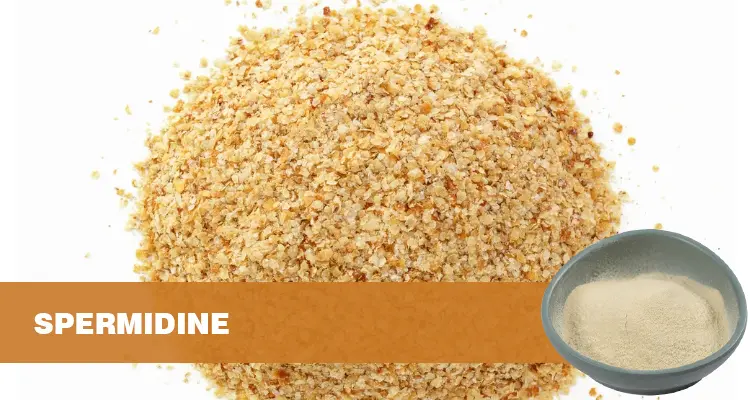
Widespread Imprints of Life
Spermidine is widely distributed in nature, forming an invisible network that tightly connects numerous organisms. In the plant world, oats, tomatoes, and soybeans are all “habitats” for spermidine. It exists in a free state, freely moving within plant cells, or combines with fatty acids to form stable complexes, silently protecting the plant’s growth and development. Take oats, for example; spermidine plays a crucial role in its growth process, consistently participating in energy supply during seed germination, cell division and differentiation during seedling growth, and nutrient accumulation during maturity, providing a solid guarantee for the robust growth of oats.
In animals, spermidine also exhibits unique distribution characteristics. The heart, as the “engine” of life, beats constantly to maintain bodily functions. It is rich in spermidine, acting like a loyal “guardian,” protecting the heart’s normal function and ensuring its rhythmic contraction and relaxation, delivering sufficient blood to the entire body. In reproductive cells, sperm and eggs also contain abundant spermidine, which plays a crucial role in the maturation of reproductive cells, fertilization, and early embryonic development, acting like a “mysterious key” to unlocking the journey of new life. Furthermore, spermidine can be found in some fermented foods, such as cheese and miso. These fermented foods produce spermidine under the action of microorganisms, adding not only unique flavor but also certain health benefits.
Scientists, through in-depth research on human dietary intake, have discovered a close link between spermidine and human health. When the level of spermidine ingested by the human body is low, the risk of cardiovascular disease increases significantly. Diseases such as heart disease and stroke, which seriously threaten human health, seem to be intricately linked to spermidine deficiency. This discovery is like a beacon in the darkness, drawing greater attention to the important role of spermidine in maintaining human health and pointing the way for further in-depth research into the physiological functions and mechanisms of action of spermidine.
 Spermine Activates Autophagy: The Molecular Mechanism of the Cellular “Scavenger”
 Spermine Activates Autophagy: The Molecular Mechanism of the Cellular “Scavenger”
(I) The Core Regulatory Network of the Autophagy Pathway
In the microscopic world of the cell, autophagy acts like a diligent “scavenger,” constantly maintaining the cleanliness and stability of the intracellular environment. Spermine, as a powerful activator of autophagy, operates through a complex and sophisticated molecular mechanism.
Spermine’s activation of autophagy is primarily manifested in its inhibition of mTOR phosphorylation. mTOR, the “mammary target of rapamycin,” is a key “brake” in the autophagy pathway. When cells are well-nourished and energetic, mTOR acts like a highly phosphorylated “commander,” effectively inhibiting the initiation of autophagy, as if telling the cell, “Supplies are plentiful; no need to clear inventory.” However, the arrival of spermine acts like a “de-stressing” operation on this “commander.” Spermine cleverly induces mTOR dephosphorylation, significantly reducing its activity. Once mTOR activity is inhibited, its binding to the ULK1/2-Atg13 complex is released. Like a rope being untied, the ULK1/2-Atg13 complex is instantly activated, initiating a crucial step in autophagy formation and setting the stage for a major cellular cleanup.
Besides regulating mTOR, spermidine also plays a vital role in histone modification. Histones, the tightly wound “spools” of DNA, directly influence gene expression through their modification status. Spermine acts like a magical “modification master,” positively altering the expression of autophagy-related genes by inhibiting the activity of the acetyltransferase EP300. EP300 acts as an “acetylation messenger,” promoting acetylation modifications in autophagy-related genes such as Atg5 and Atg7. This modification often reduces the transcriptional activity of these genes, acting like a “lock” on gene expression. The presence of spermidine successfully inhibited EP300 activity, allowing autophagy-related genes to deacetylate. Deacetylated genes act like an “open door” to expression, significantly enhancing transcriptional activity and providing ample “raw materials” for autophagosome formation.
Simidine also plays a crucial role in accelerating HDAC4 nuclear translocation. HDAC4, histone deacetylases 4, plays a vital role in regulating autophagy by shuttling between the cytoplasm and nucleus. When intracellular spermidine levels rise, it acts as a “navigator,” guiding HDAC4 rapidly into the nucleus. As the amount of HDAC4 translocated into the nucleus increases, the amount of HDAC4 in the cytoplasm decreases accordingly. This seemingly small change triggers an unexpected chain reaction. The decrease in cytoplasmic HDAC4 significantly weakens its degradation of microtubule-associated protein 1S (MAP1S). MAP1S, a key component in the autophagy process, acts as a crucial “part” in the construction of autophagosomes. Its enhanced stability provides a solid guarantee for the successful formation of autophagosomes.
On the “stage” of cellular energy metabolism, the activation of the AMPK-FoxO3 pathway is another key “plot” in spermidine-activated autophagy. AMPK, an “adenosine monophosphate-activated protein kinase,” is like a “sensitive sensor” of cellular energy status. When cells face energy deprivation, such as starvation or hypoxia, AMPK is rapidly activated, as if a “start button” has been pressed. The addition of spermidine further enhances AMPK’s activation, like “adding fuel to the fire.” Activated AMPK quickly transmits signals to the FoxO3 transcription factor. FoxO3 acts like a “gene expression commander,” rapidly entering the nucleus under the guidance of AMPK and binding tightly to the promoter regions of autophagy-related genes, thereby inducing their expression. This series of signal transduction processes resembles a precise relay race, forming a complete “energy stress – autophagy initiation” regulatory loop from cellular energy sensing to the initiation of autophagy-related gene expression. In this loop, spermidine acts as a key “catalyst,” ensuring that autophagy can be initiated promptly when cellular energy is insufficient, providing crucial support for cellular survival and stability.
(II) Precise Mechanism of Targeted Removal of Damaged Components
In the microscopic world of the cell, spermidine not only activates the autophagy pathway but also possesses a remarkable ability—precisely targeting and removing damaged cellular components. Like a super cleaner with “eagle eyes,” it can quickly identify and clean up “waste” within the cell.
The key to this precise removal mechanism lies in spermidine’s enhanced efficiency in ubiquitination labeling. Ubiquitination is like attaching a “discard label” to damaged proteins and organelles, allowing them to be precisely recognized by autophagosomes. The presence of spermidine acts like pressing the “accelerator button” for this “labeling” process. When damaged organelles such as mitochondria and endoplasmic reticulum appear within a cell, spermidine rapidly activates, promoting the activity of related enzymes and enabling ubiquitin molecules to bind more quickly and accurately to the surface of the damaged organelles. This is like giving these damaged organelles a conspicuous “warning coat,” allowing autophagosomes to easily spot them in the vast cellular environment.
Mitophytaphagy is a classic example of spermidine’s precise clearance mechanism. Mitochondria, as the cell’s “energy factory,” play a crucial role in providing energy to the cell. However, when mitochondria are damaged, such as by oxidative stress, toxins, or age-related functional decline, they become “time bombs” within the cell, not only failing to provide energy but also potentially releasing harmful substances that threaten cellular survival. At this point, spermidine steps in, acting as a “mitochondrial savior.”
Under normal circumstances, the PINK1 protein resides quietly within the inner membrane of the mitochondria, like a dormant “guardian.” However, when mitochondria are damaged, the mitochondrial membrane potential changes, a signal that acts like a loud alarm, activating PINK1. PINK1 is rapidly activated and recruits Parkin protein. Parkin protein, like a well-trained “carrier,” quickly aggregates on the surface of the damaged mitochondria under the direction of PINK1. The addition of spermidine acts as a powerful boost to this recruitment and aggregation process, enabling PINK1/Parkin protein to be recruited to the damaged mitochondrial membrane more quickly and efficiently.
Once PINK1/Parkin protein successfully aggregates, they begin a series of “operations.” Parkin protein undergoes ubiquitination modification, attaching more and denser “discard tags” to the damaged mitochondria, further enhancing the autophagosome’s ability to recognize them. Subsequently, the autophagosome acts like a giant “package,” tightly encasing the damaged mitochondria. This encapsulation process is like carefully packing a precious item, ensuring that the damaged mitochondria do not cause further damage to the surrounding cellular structures.
Finally, the autophagosome encapsulating the damaged mitochondria successfully fuses with the lysosome. Lysosomes, like the “digestive factories” within cells, possess a variety of powerful hydrolytic enzymes. When autophagosomes fuse with lysosomes, these enzymes rapidly function to thoroughly break down and digest damaged mitochondria, converting them into smaller molecules. These smaller molecules can then be reused by the cell, participating in cellular metabolism, thus achieving true “mitochondrial quality control.” Through this series of precise and orderly processes, spermidine successfully maintains cellular energy homeostasis, ensuring normal cell function and providing a solid guarantee for cellular health and survival.
Lifespan Extension Effect: Scientific Evidence from Model Organisms to Human Health

(I) The Longevity Code Across Species
The lifespan extension effect of spermidine acts like a magical “key,” unlocking the door to longevity across species and leaving a significant mark on research in numerous model organisms.
In the microscopic world of yeast, spermidine exhibits an astonishing ability to extend lifespan. Researchers, through carefully designed experiments, discovered that when yeast is given appropriate amounts of spermidine, its lifespan can be extended by up to 400%! This result is like pressing the “slow-motion” button on the yeast’s life journey, significantly extending its survival time. Delving into the underlying mechanism, we found that spermidine acts like a diligent “cellular scavenger,” effectively clearing abnormal protein aggregates accumulated within yeast cells by activating autophagy. These abnormal protein aggregates are like “waste” within the cell; if not cleared in time, they gradually accumulate, affecting normal cell function and even leading to cell death. The presence of spermidine successfully initiates the cell’s “autophagy cleanup program,” allowing yeast cells to maintain a healthy state, thereby extending their lifespan.
Nematodes and fruit flies, as classic model organisms in biological research, also provide strong evidence for the life-extending effect of spermidine. Studies have shown that when nematodes and fruit flies ingest spermidine, their median lifespan is significantly extended, with an increase of 15%-30%. In this process, spermidine acts as a powerful “antioxidant guardian,” effectively inhibiting the damage of oxidative stress to cells. Oxidative stress, like an “invisible killer” of cells, constantly attacks various biomolecules within cells, such as DNA, proteins, and lipids, leading to cellular aging and death. The addition of spermidine successfully resists the attack of oxidative stress, allowing cells to remain young and vibrant. At the same time, spermidine also acts as a “cellular senescence inhibitor,” suppressing the process of cellular senescence, allowing the cells of nematodes and fruit flies to maintain good function, thereby extending their lifespan.
Mice, as representatives of mammals, share many similarities with humans in physiological structure and function. In studies on mice, spermidine has also shown a significant life-extending effect. When spermidine was used to intervene in middle-aged mice (800 days old, equivalent to middle age in humans), researchers were surprised to find that the mitochondrial function of the mouse heart was significantly improved. Mitochondria, as the cell’s “energy factories,” directly affect the cell’s energy supply and metabolic levels. Spermine acts like a powerful “vitality source” for mitochondria, enabling them to produce energy more efficiently and providing sufficient power for the normal functioning of the heart. Simultaneously, spermidine reduced the occurrence of age-related pathological phenotypes in mice, such as decreased inflammation levels and improved organ function. These positive changes ultimately extended the median lifespan of the mice by approximately 10%. This result indicates that spermidine also has a significant life-extending effect in mammals, providing important reference for our research on healthy aging in humans.
(II) Potential Links to Human Health
The potential links between spermidine and human health are like a mysterious treasure, attracting numerous scientists to continuously explore and excavate. Epidemiological studies, as an important means of exploring disease and health-related factors, have revealed the remarkable connection between spermidine and healthy aging in humans. Researchers, through surveys and analyses of large populations, discovered that centenarians had spermidine levels as high as 30.6% in their blood, compared to only 13.2%-14.1% in the general elderly population. This significant difference acts as a bright “health signal,” suggesting a positive correlation between spermidine and healthy aging. Centenarians, as exemplars of human health and longevity, may have higher levels of spermidine in their bodies as a key reason for their ability to maintain health and delay aging.
Although clinical trials of spermidine in humans are still in their early stages, the fruitful results from animal experiments have painted a promising picture. In animal studies, spermidine acts as a versatile “health guardian,” demonstrating multiple health benefits by improving autophagy function.
Regarding kidney protection, spermidine acts as a “kidney repair master,” effectively slowing the progression of renal fibrosis. Renal fibrosis is a common pathological feature of many late-stage kidney diseases, leading to the gradual loss of kidney function. Spermine acts like a powerful “repairing force” for damaged kidney cells. By activating autophagy, it clears damaged organelles and protein aggregates from kidney cells, reducing inflammation and effectively slowing the progression of renal fibrosis, thus protecting normal kidney function.
In the field of cardiovascular protection, spermine also performs exceptionally well. It acts like a “cardiovascular health maintainer,” increasing nitric oxide (NO) synthesis to maintain proper vasodilation, lowering blood pressure, and reducing the risk of cardiovascular disease. Simultaneously, spermine can reverse arterial endothelial aging, keeping arterial endothelial cells young and vibrant, maintaining the integrity and normal function of the vascular endothelium. This series of effects acts like a strong “defense line” for the cardiovascular system, effectively protecting the health of the heart and blood vessels.
In terms of neuroprotection, spermine acts like a “neuroprotective messenger,” inhibiting the deposition of β-amyloid protein (Aβ protein). Aβ protein deposition is a key pathological feature of neurodegenerative diseases such as Alzheimer’s disease, leading to neuronal death and cognitive decline. The presence of spermidine successfully inhibited the aggregation and deposition of Aβ protein, reducing damage to neurons, thus providing a new target and hope for the prevention and treatment of neurodegenerative diseases.
Dietary Sources and Supplementation Strategies: Safe Intake and Scientific Application
(I) “Longevity Treasures” in Natural Foods
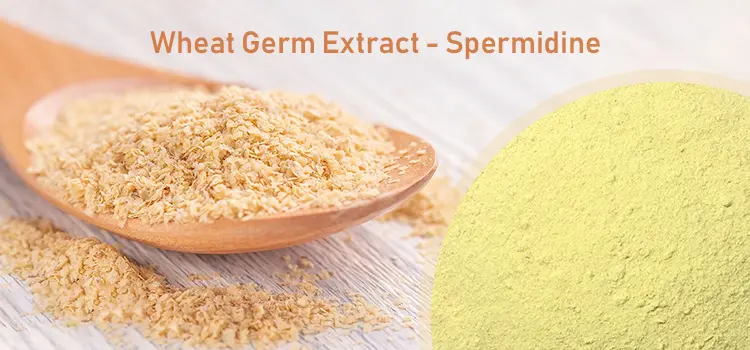
Spermidine is widely found in various natural foods, like “longevity treasures” carefully hidden by nature, waiting to be discovered and explored. Among plant-based foods, wheat germ is a veritable “rich mine” of spermidine, containing approximately 100-200 mg of spermidine per 100 grams. This high content makes it an excellent choice for spermidine supplementation. Imagine making bread with whole wheat flour rich in wheat germ for breakfast; every bite provides you with precious spermidine, laying the foundation for a vibrant day. Walnuts and almonds, among nuts, are also good sources of spermidine. The rich nutritional value of walnuts is already well-known, and the spermidine they contain further enhances their health benefits. Walnuts contain a considerable amount of spermidine per 100 grams. Enjoying a few walnuts in your leisure time satisfies your cravings while also providing a spermidine boost. Almonds are similarly rich, containing approximately 15-30 mg of spermidine per 100 grams. These spermidines play a crucial role in almond seed germination and early growth, and now contribute to our health. Soybeans and chickpeas are also significant sources of spermidine. During soybean growth, spermidine participates in key physiological processes such as protein and nucleic acid synthesis during seed development, with approximately 50-100 mg of spermidine per 100 grams. Whether consuming soybeans directly or enjoying soy products like tofu and soy milk, we ingest a certain amount of spermidine. Shiitake mushrooms, a type of mushroom, contain 40-90 mg of spermidine per 100 grams. This delicious fruit, grown in the mountains, not only adds a unique flavor to our meals but also contributes to our health.
Among animal-derived foods, fermented dairy products hold a unique appeal. Blue cheese, with its distinctive texture and rich flavor, is impressive. It boasts a high spermidine content of 262 nmol/g per 100 grams, making it an excellent source of spermidine. Aged cheddar cheese is also noteworthy, containing 80-150 micrograms of spermidine per 100 grams. When enjoying these cheeses, don’t forget the health benefits they offer. Animal offal, such as liver and heart, is also rich in spermidine. For example, beef liver contains approximately 50-80 micrograms of spermidine per 100 grams. While some may not enjoy the texture of offal, its nutritional value is undeniable. Loach, a type of seafood, also contains a certain amount of spermidine, providing more options for obtaining spermidine from animal-derived foods.
Fermented foods play a significant role in the sources of spermidine. Sauerkraut, a vegetable product fermented with lactic acid bacteria, is not only refreshingly tangy but also rich in spermidine. During fermentation, the nutrients in the vegetables are broken down and transformed by microorganisms, and the spermidine content increases accordingly, with approximately 5-15 mg of spermidine per 100 grams of sauerkraut. Miso, a traditional Japanese fermented condiment, is rich in spermidine due to the metabolic activity of microorganisms during soybean fermentation. It is often used to make miso soup, and its rich umami flavor is enhanced by the health benefits of spermidine. Natto, another traditional Japanese food made from soybeans fermented with Bacillus subtilis, contains approximately 30-50 mg of spermidine per 100 grams. These fermented foods, through metabolism by intestinal flora, can further enhance the bioavailability of spermidine in the body, acting like an “accelerator” for its absorption and utilization, allowing it to better exert its positive health effects.
(II) Research and Challenges of Spermidine Supplements
As people gain a deeper understanding of the health benefits of spermidine, exogenous spermidine supplementation is gradually gaining public attention. Research results show that exogenous spermidine supplementation exhibits good safety. In mouse experiments, researchers intervened with spermidine supplementation in mice, and no significant toxic reactions were found, providing a certain safety basis for the application of spermidine in humans. Currently, clinical research is focusing on the effects of spermidine on cognitive function and metabolic syndrome, and these studies serve as guiding lights for our exploration of spermidine’s application in human health.
However, the application of spermidine supplements also faces some challenges. Regarding dosage optimization, the recommended intake for humans is not yet clearly defined, which is like groping in the dark without clear guidance. Although animal experiments have found an effective dose of 5-20 mg/kg/day, directly applying animal experimental doses to humans is not scientifically sound because humans and animals differ in physiological structure and metabolic pathways. Furthermore, the potential interactions between spermidine supplements and other drugs must be considered. For example, anticoagulants play a crucial role in inhibiting blood clotting in the human body. However, when spermidine is used concurrently with anticoagulants, it may interfere with the normal metabolic process of the anticoagulants, affecting their efficacy and potentially increasing the risk of adverse reactions such as bleeding. Therefore, it is essential to consult a doctor or pharmacist before using spermidine supplements to ensure safe use.
Regarding delivery systems, improving the bioavailability of spermidine and reducing gastrointestinal irritation are pressing issues. The emergence of nanocarriers offers new hope for solving this problem. Nanocarriers act like tiny “transport spacecraft,” precisely delivering spermidine to target cells, significantly improving its bioavailability. For instance, liposome encapsulation technology encapsulates spermidine within liposomes. Utilizing the similarity between liposomes and cell membranes, spermidine is more easily taken up by cells, thereby enhancing its efficacy in vivo. Enteric-coated formulations are also an effective delivery method. Through special coating technology, spermidine remains stable in the acidic environment of the stomach and is only released after entering the intestines. This not only reduces the irritation of spermidine to the gastrointestinal tract, but also ensures that spermidine is fully absorbed in the intestines, providing a strong guarantee for the safe and effective use of spermidine supplements.
Redefining the Science of Aging
The discovery of spermidine reveals the molecular logic behind how natural compounds slow aging by regulating autophagy networks. From cellular-level “waste removal” to overall lifespan extension, its cross-species effectiveness and relative safety open new avenues for anti-aging research. Despite the complexity of human aging regulation mechanisms, the story of spermidine proves that the secrets to longevity may lie hidden within these seemingly tiny natural molecules.
