




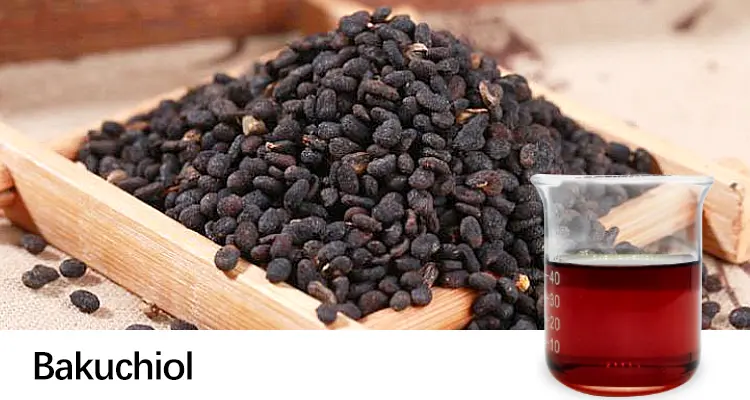
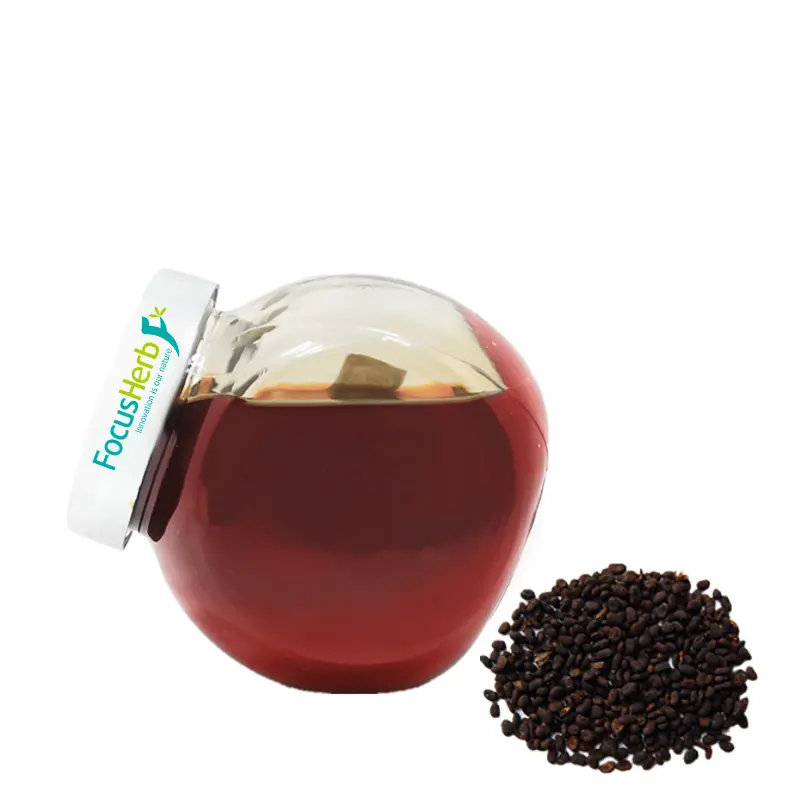
Bakuchiol is a natural phenolic compound extracted from the fruit of the legume *Psoralea corylifolia* L. Its chemical name is 4-(3,7-dimethyl-3-vinyl-1,6-octadiene)-phenol, with the molecular formula C₁₈H₂₄O. It is a pale yellow oily liquid at room temperature, highly lipid-soluble, and readily soluble in organic solvents. Its core advantage lies in its ability to regulate gene expression profiles, exhibiting anti-aging effects similar to retinol, while retaining its natural, low-irritant properties, making it an ideal choice for anti-aging in sensitive skin.
Structurally, while bakuchiol differs from retinol, their basic molecular frameworks share certain similarities. Studies have shown that bakuchiol can act on the same receptors as retinol, regulating retinoic acid receptors and related genes, thereby promoting collagen production, inhibiting inflammatory responses, and achieving anti-aging and acne-reducing effects. This similarity in mechanism of action provides a theoretical basis for bakuchiol to replace retinol in the cosmetics field.
 Sources and Characteristics: Unveiling the Core Advantages of Natural Active Ingredients
 Sources and Characteristics: Unveiling the Core Advantages of Natural Active Ingredients
(I) Plant-Based Extraction and Industrial Production
Psoralen is primarily derived from the mature fruit of *Psoralea corylifolia*, a plant widely cultivated in southern my country, with India and Myanmar also being major production areas. In these regions, *Psoralea corylifolia* enjoys ideal growing conditions, with ample sunshine and suitable climate, resulting in plump fruits rich in psoralen.
Currently, the extraction process of psoralen from *Psoralea corylifolia* fruit is relatively mature, mainly employing solvent extraction combined with HPLC purification technology. In the solvent extraction stage, suitable organic solvents, such as ethanol and petroleum ether, are selected to fully dissolve the active ingredients in *Psoralea corylifolia*. Subsequently, HPLC purification technology is used to finely separate and purify the extract, removing impurities, ultimately yielding monomeric components with a purity ≥98%. This high-purity psoralen provides a strong guarantee for its precise application in the cosmetics field.
The wide cultivation range of *Psoralea corylifolia* and the mature extraction process ensure a stable supply of raw materials, meeting the needs of large-scale modern cosmetic production. Moreover, its natural origin aligns with current consumer demand for natural and sustainable cosmetic ingredients, giving the product a green and healthy label from the outset. Compared to chemically synthesized retinol, bakuchiol has a smaller environmental impact during extraction and production, requiring no complex chemical synthesis steps, reducing chemical waste, and better conforming to environmental protection principles, giving consumers greater peace of mind when using it.
(II) Advantages in Mildness and Stability
While retinol performs excellently in the anti-aging field, its volatile nature deters many. During use, it easily causes skin irritation; first-time users often experience discomfort such as redness, stinging, and peeling, as if the skin is strongly protesting. Furthermore, retinol is photosensitive; exposure to sunlight after use increases the risk of sunburn and premature aging, limiting its use to nighttime.
Bakuchiol, on the other hand, is completely different. It does not require complex transformation within the skin and can directly act on skin cells to exert its effects, like a well-trained special forces soldier capable of quickly and accurately executing a mission. Furthermore, bakuchiol is not activated by ultraviolet light, making it safe to use both day and night, providing great convenience for users. Clinical research is an important standard for verifying truth, and related studies have shown that bakuchiol’s irritation to the skin barrier is only 1/3 that of retinol. This data clearly demonstrates bakuchiol’s gentle nature and means that more people can tolerate it. Pregnant women have more sensitive skin and need to pay extra attention to the safety of ingredients; people with sensitive skin have “zero tolerance” for the irritation of skincare products; and for consumers seeking gentle anti-aging, bakuchiol is an ideal choice, achieving anti-aging while minimizing damage to the skin.
Core Efficacy: Multi-dimensional Mechanism of Action Against Skin Aging
(I) Collagen Regeneration: Reshaping the Skin’s Elastic Structure
As we age, collagen in the skin is gradually lost, much like a dilapidated house whose supporting structure deteriorates, leading to loss of elasticity, sagging, and wrinkles. Bakuchiol acts like a skilled craftsman, repairing and reinforcing this “house.”
In the microscopic world of the skin, fibroblasts are the “main force” in collagen synthesis. Bakuchiol activates the TGF-β signaling pathway in fibroblasts, like giving these “main forces” a shot in the arm, allowing them to work energetically and promoting the synthesis of type I and type III collagen. These two types of collagen are crucial for skin elasticity; they are like the steel bars and cement of a house, supporting the skin’s structure and keeping it firm and elastic.
In addition to promoting synthesis, bakuchiol also inhibits the degradation of collagen by matrix metalloproteinases (MMP-1). MMP-1 acts like a “destructive molecule,” constantly eroding collagen, while bakuchiol effectively inhibits its destructive behavior, protecting collagen in the skin from excessive breakdown.
Clinical studies are crucial for verifying the efficacy of bakuchiol. Clinical trials have shown that skincare products containing 0.5% bakuchiol, used continuously for 12 weeks, can improve skin elasticity by 23% and reduce wrinkle depth by 19%. This data vividly demonstrates the significant effects of bakuchiol in promoting collagen regeneration, improving skin laxity, and reducing fine lines and wrinkles, showcasing its enormous potential in the anti-aging field.
(II) Antioxidant and Anti-inflammatory: Dual Protection Against Aging Factors
In daily life, the skin is constantly subjected to various “attacks.” Ultraviolet radiation, environmental pollution, and life stress all generate a large number of free radicals. These free radicals are like rampaging “little monsters,” triggering lipid peroxidation reactions, causing severe oxidative damage to skin cells, and accelerating the skin aging process. Bakuchiol is a powerful “antioxidant warrior” that can scavenge DPPH free radicals and hydroxyl free radicals, effectively inhibiting lipid peroxidation, reducing UV-induced oxidative damage, and protecting skin cells from free radical damage.
Inflammation is also a major cause of skin aging. When the skin is stimulated by external factors, it triggers an inflammatory response, releasing inflammatory factors such as IL-6 and TNF-α. These inflammatory factors further exacerbate skin damage, leading to problems such as acne and contact dermatitis, while also accelerating skin aging. Bakuchiol inhibits the release of these inflammatory factors by downregulating the NF-κB inflammatory pathway, essentially pressing a “pause button” on the inflammatory response, alleviating inflammation-related skin problems, and blocking the process of inflammatory aging at its source.
In a study on inflammatory skin problems, after using skincare products containing bakuchiol, the levels of inflammatory factors in the patients’ skin were significantly reduced, and the inflammatory symptoms were significantly improved. This fully demonstrates the excellent antioxidant and anti-inflammatory capabilities of bakuchiol, providing comprehensive protection for the skin and resisting various factors that induce aging.
(III) Skin Texture and Tone Optimization: Multi-Target Improvement of Skin Condition
When keratinocyte differentiation is abnormal, old keratinocytes accumulate on the skin surface, making the skin rough and pores enlarged. Bakuchiol regulates keratinocyte differentiation, acting like a diligent “cleaner,” promoting the metabolism of old keratinocytes and maintaining a normal renewal rate of the stratum corneum, thereby refining pores, improving skin smoothness, and making the skin feel more delicate.
UV radiation, endocrine disorders, and other factors can lead to increased activity of melanocytes in the skin, producing excessive melanin, resulting in age spots and uneven skin tone. Bakuchiol inhibits tyrosinase activity and melanosome transport, effectively creating obstacles to melanin production and transport, reducing melanin deposition, and improving uneven skin tone and age spots caused by photoaging.
In actual use, many consumers have reported that after using skincare products containing bakuchiol for a period of time, not only have their wrinkles decreased, but their skin tone has also become more even and radiant, and the overall condition of their skin has been significantly improved. It truly achieves the triple effect of “anti-wrinkle + brightening + oil control”, allowing the skin to radiate a healthy glow.
Differentiation from Retinol: The Core Competitive Advantage of Natural Alternatives
(I) Similarity of Mechanism of Action and Enhanced Safety
Both bakuchiol and retinol have demonstrated excellent performance in the anti-aging field, sharing many similarities in their mechanisms of action. Both influence gene expression by regulating transcription factors such as AP-1 and RAR/RXR. In this process, they act as a tacit partnership, jointly promoting collagen synthesis and providing solid support for skin elasticity and firmness; simultaneously, they inhibit matrix degradation, effectively reducing wrinkles and delaying the skin aging process.
However, bakuchiol represents a significant upgrade in safety. It does not directly bind to the retinol receptor (RAR), a unique mode of action that cleverly avoids skin irritation caused by receptor overactivation. For those with sensitive skin, the redness, stinging, and peeling associated with retinol often deter them from skincare, while bakuchiol offers a gentler alternative, making anti-aging less of a painful experience.
Retinol, due to its photosensitivity, increases the risk of sunburn and premature aging when exposed to sunlight after use, limiting its use to nighttime – much like a “night owl.” Bakuchiol, however, overcomes this limitation. It doesn’t require sun protection and can provide skincare anytime, whether in bright sunshine or quiet night, offering users great convenience and truly achieving all-day skincare.
(II) Expanded Application Scenarios and Target Groups
Bakuchiol and retinol differ significantly in their applicable scenarios and target populations, as detailed below:
|
Comparison Items
|
Bakuchiol
|
Retinol
|
|
Irritation
|
Low (Tolerable for sensitive skin) |
High (Prone to redness, swelling, and peeling)
|
|
Photosensitivity
|
None (Can be used for daytime care)
|
Strong (Requires strict avoidance of sunlight)
|
|
Suitability During Pregnancy
|
No explicit contraindications (Natural plant source)
|
Contraindicated (Potential teratogenic risk)
|
|
Suitable Skin Type
|
All skin types (Especially sensitive and acne-prone skin)
|
Only for tolerant, healthy skin
|
The comparison clearly shows that bakuchiol, with its low irritation and lack of photosensitivity, has a greater advantage in terms of applicable scenarios and target populations. People with sensitive skin are often very sensitive to the irritation of skincare products. The high irritation of retinol makes them hesitant to try it, while the gentle properties of bakuchiol allow those with sensitive skin to safely perform anti-aging care.
People with acne-prone skin often face skin inflammation and frequent breakouts. While retinol can improve acne, it may exacerbate inflammation. Bakuchiol, on the other hand, not only has anti-acne properties but also effectively alleviates inflammation through its anti-inflammatory effects, allowing those with acne-prone skin to achieve anti-aging goals while fighting acne.
For pregnant women, choosing skincare products is often extremely cautious. The potential teratogenic risks of retinol make them hesitant to use it. Bakuchiol, as a natural plant-derived ingredient with no known contraindications, offers pregnant women a safe anti-aging option, allowing them to maintain healthy and beautiful skin during this special time.
Cosmetic Formulation Applications: Innovative Practices from Raw Materials to Products
(I) Diverse Formulation Forms and Technological Innovations
The lipophilic nature of bakuchiol allows it to present itself in a rich variety of forms in cosmetic formulations. Essence oils, with their high oil content, provide an excellent dissolving environment for bakuchiol, allowing it to fully exert its efficacy. When bakuchiol is incorporated into essence oil, the skin feels its silky texture upon application, and it is quickly absorbed, providing deep nourishment to the skin. The cream texture is lighter and more delicate, suitable for all skin types. It combines bakuchiol with various moisturizing ingredients to form a stable and easily applicable formula that forms a protective film on the skin’s surface, continuously providing the skin with nutrients and moisture. Liposome technology encapsulates bakuchiol in tiny lipid particles that mimic the structure of cell membranes, making it easier for the skin to absorb and thus increasing the utilization rate of bakuchiol.
In formulations, bakuchiol is often used in combination with ingredients such as hyaluronic acid and ceramides. Hyaluronic acid acts like a powerful “moisture sponge,” absorbing hundreds of times its weight in water, replenishing moisture to the skin and keeping it hydrated and plump. Ceramides are an important component of the skin barrier; they strengthen the skin’s barrier function, prevent moisture loss, and repair damaged skin barriers. When bakuchiol works synergistically with these ingredients, it not only enhances moisturizing and repairing effects but also further improves the overall health of the skin.
To improve the transdermal absorption rate of bakuchiol and reduce the risk of oxidative inactivation, micro- and nano-encapsulation technology has emerged. This technology acts like an “invisible armor” for bakuchiol, encapsulating it in tiny nanoscale particles. These particles can more easily penetrate the stratum corneum of the skin, precisely delivering bakuchiol to the deeper layers of the skin, increasing its bioavailability. At the same time, micro- and nano-encapsulation technology effectively protects bakuchiol from oxidation, extending its shelf life and ensuring the stability and effectiveness of the product during use.
In actual products, bakuchiol essence with a concentration of 0.2%-1% is a common dosage form. It can be used alone to provide gentle yet effective anti-aging care for the skin. For consumers seeking higher efficacy, bakuchiol can also be combined with ingredients such as vitamin C and proxylane. Vitamin C has powerful antioxidant capabilities, scavenging free radicals and brightening skin tone; proxylane promotes the production of glycosaminoglycans, increasing skin elasticity and firmness. When these ingredients are combined with bakuchiol, they produce a synergistic effect, further enhancing the anti-aging effect and providing comprehensive care for the skin.
(II) Target Audience and Product Positioning Strategy
With the increasing sophistication of skincare needs, targeted products for different skin types and needs have become the new market favorites. For people with sensitive skin, anti-aging has always been a challenge because their skin barrier is relatively fragile and cannot tolerate the irritation of traditional anti-aging ingredients. The emergence of bakuchiol has brought them hope, and many brands have keenly captured this market demand, launching “gentle anti-aging” product lines. These products feature the concept of “natural retinol alternative,” emphasizing the gentleness and safety of bakuchiol, allowing people with sensitive skin to enjoy the benefits of anti-aging with peace of mind.
People with acne-prone skin often face the dual problems of frequent breakouts and skin aging. The antibacterial and anti-inflammatory properties of bakuchiol make it an ideal choice for anti-aging in acne-prone skin. Brands have combined this characteristic to develop oil-controlling, anti-acne + anti-aging two-in-one products. These products can inhibit acne growth while reducing inflammation, promoting skin repair and regeneration, and improving the overall condition of acne-prone skin, allowing people with acne to achieve their anti-aging goals simultaneously with acne treatment.
Daytime protection is also an important part of skincare; however, retinol cannot be used during the day due to its photosensitivity. Bakuchiol fills this gap, and some brands have added bakuchiol to their daytime protective creams. It can provide antioxidant protection to the skin during the day, preventing photodamage caused by ultraviolet rays and environmental pollution. At the same time, bakuchiol can also work synergistically with other sunscreen ingredients to enhance the sun protection effect, building a strong protective barrier for the skin, allowing the skin to remain healthy and beautiful even in the sun.
Usage Precautions: Key Principles of Scientific Skincare
(I) Concentration and Tolerance Management
Managing concentration and tolerance is crucial when using bakuchiol skincare products. For first-time users, it is recommended to start with a low concentration of 0.1%-0.3%. This is similar to learning to run; you can’t sprint at the beginning, but rather start with a slow jog to allow your body to gradually adapt. Test on a small area of skin behind the ear or on the face first, and observe for 24-48 hours. If no redness, swelling, itching, or other discomfort occurs, then gradually expand the application area.
During use, follow the principle of gradual progression, increasing the frequency and concentration according to your skin’s tolerance. For example, you can use it every two days in the first week, and if there is no discomfort in the second week, you can switch to daily use. Also, avoid using it simultaneously with high-concentration acids (such as glycolic acid and salicylic acid) or alcohol-based ingredients. These ingredients are irritating, and using them in combination with bakuchiol may place an excessive burden on the skin, like asking someone to carry multiple heavy loads simultaneously—it’s easy to become overwhelmed. Chemical reactions may occur between them, reducing the efficacy of bakuchiol and even causing adverse reactions.
(II) Product Selection and Combination Strategies
Choosing bakuchiol skincare products from reputable brands is key to ensuring safety and effectiveness. Prioritize products that have passed skin sensitivity tests. These products have undergone rigorous testing and are less irritating to the skin, acting like high-quality products that have passed multiple screenings, giving users greater peace of mind. Also, pay attention to whether the product clearly states the purity (≥98%) and source of bakuchiol. High-purity bakuchiol guarantees better efficacy; clear source information allows us to understand the origin of the raw materials and assess its quality.
When combining with other skincare products, avoid mixing with photosensitive ingredients (such as bakuchiol). Although bakuchiol itself is not photosensitive, mixing it with photosensitive ingredients may trigger a photosensitivity reaction, making the skin more susceptible to sun damage. Consider combining it with ingredients that have synergistic effects, such as hyaluronic acid and ceramides. Hyaluronic acid replenishes the skin’s moisture, while ceramides enhance the skin’s barrier function. When used together with bakuchiol, they enhance moisturizing and repairing effects, providing comprehensive care for the skin. Like a team, each component leverages its strengths to work together to protect the skin’s health.
Industry Prospects and Challenges: From Emerging Ingredients to Mainstream Anti-Aging
(I) Market Trends and Technological Outlook
With the continuous upgrading of consumers’ skincare needs, the market demand for “natural” and “low-irritant” anti-aging products is growing rapidly. Bakuchiol, as a natural and gentle anti-aging ingredient, perfectly aligns with this market trend, and its market size is expected to expand rapidly at a CAGR of 25%. In the future, research on bakuchiol will focus on breakthroughs in sustained-release technology. Through advanced sustained-release technology, bakuchiol can be slowly released within the skin, continuously exerting its anti-aging effects, like providing the skin with a long-lasting “energy replenishment station,” reducing the frequency of use and improving the effectiveness.
Plant synergistic ingredient formulations are also an important future research direction. Synergistically combining bakuchiol with plant ingredients such as asiaticoside and ferulic acid can leverage their synergistic effects, further enhancing efficacy and safety. asiaticoside has powerful repairing effects, accelerating skin cell regeneration and enhancing the skin’s barrier function; ferulic acid is a highly effective antioxidant that can scavenge free radicals and protect the skin from UV damage and environmental pollution. When combined with bakuchiol, these ingredients provide comprehensive care for the skin, achieving multiple benefits such as anti-aging, repair, and anti-oxidation, meeting consumers’ higher expectations for skincare products.
(II) Scientific Validation and Regulatory Standards
Although existing research has confirmed the potential of bakuchiol in the anti-aging field, long-term safety data still needs further accumulation. Currently, research on the long-term use of bakuchiol is relatively limited, and its potential effects on the human body require further clinical trials for verification. To promote the healthy development of bakuchiol in the cosmetics industry, it is recommended that the industry accelerate the establishment of concentration standards, efficacy evaluation systems, and allergen warning mechanisms for bakuchiol. The optimal concentration of bakuchiol in different types of skincare products should be clearly defined, and a scientific efficacy evaluation system should be established to accurately assess its anti-aging, moisturizing, and repairing effects, providing consumers with accurate and reliable product information. At the same time, clear warnings should be issued regarding potential allergens, ensuring consumers fully understand the potential risks of the product before use and ensuring safe use.
With its dual advantages of “natural and highly effective + gentle and hypoallergenic,” bakuchiol is redefining the selection criteria for anti-aging ingredients. With ongoing research and development and continuous formula innovation, this natural retinol alternative is poised to evolve from a niche favorite into a mainstream ingredient in the anti-aging field, providing safer and more sustainable anti-aging solutions for different skin types. Whether for those with sensitive skin or consumers seeking natural skincare, bakuchiol will become a powerful ally in achieving youthful skin, leading a new trend in anti-aging skincare.
