










Genistein, like a dazzling pearl, radiates a unique brilliance. It primarily originates from legumes, such as soybeans, locust trees, and genistein (also known as broom), which are familiar to us. During the growth of these plants, genistein is quietly formed as a secondary metabolite, waiting to be discovered and utilized by humankind.
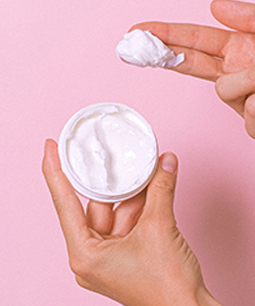
For a long time, people have never stopped exploring genistein, discovering its many remarkable effects. In the pharmaceutical field, it is made into suppositories, lotions, injections, tablets, and capsules to combat various diseases; in the health supplement field, it has become a powerful aid for women’s beauty, prevention of blood diseases, and cancer; in the cosmetics industry, its antioxidant and anti-inflammatory properties help the skin resist aging and maintain youthful radiance. However, among its many properties, genistein’s antibacterial ability is particularly noteworthy. Like a loyal guardian, it silently protects our health and resists the invasion of harmful microorganisms. Let’s delve into its antibacterial secrets.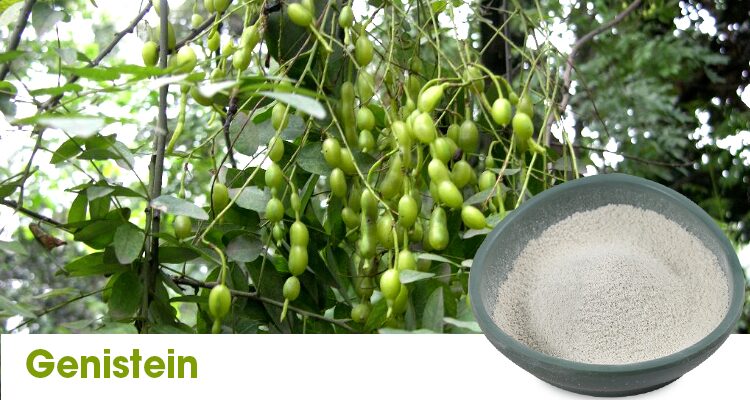
A Preliminary Exploration of the Antibacterial Effects of Genistein
Genistein exhibits significant antibacterial effects, standing out in numerous experimental studies. In experiments inhibiting Staphylococcus aureus, researchers used a microwell dilution method to co-culture Staphylococcus aureus with different concentrations of genistein. The results showed that when genistein reached a certain concentration, the growth and reproduction of Staphylococcus aureus were significantly inhibited, and its minimum inhibitory concentration (MIC) was precisely determined. This value directly demonstrates the powerful inhibitory ability of genistein against this bacterium. It’s as if multiple obstacles have been set up along the bacterial growth path, making it difficult for them to proliferate unchecked.
Similarly, numerous experiments have been conducted to explore the effects on Escherichia coli. In some studies, E. coli was inoculated into a culture medium containing genistein. After a period of cultivation, the number of viable E. coli was counted using the plate count method. The results were surprising; compared to the control group without genistein, the number of E. coli in the experimental group was significantly reduced, clearly indicating that genistein can effectively inhibit the growth of E. coli. In practical applications, such as food preservation, adding an appropriate amount of genistein may extend the shelf life of food contaminated with E. coli and ensure food safety.
Furthermore, genistein also exhibits excellent inhibitory effects on plant pathogens. Taking *Fusarium oxysporum* as an example, experiments using the mycelial growth rate method involved inoculating *Fusarium oxysporum* mycelia onto culture media containing different concentrations of genistein and observing the mycelial growth. Experimental data showed that genistein significantly inhibited the mycelial growth of *Fusarium oxysporum*, with a low half-maximal inhibitory concentration (EC50), meaning that only a small amount of genistein is needed to exert a powerful antibacterial effect. In agricultural production, early blight of tomatoes often causes headaches for growers, and this characteristic of genistein provides new ideas and methods for controlling early blight, potentially reducing the use of chemical pesticides and contributing to the development of green agriculture.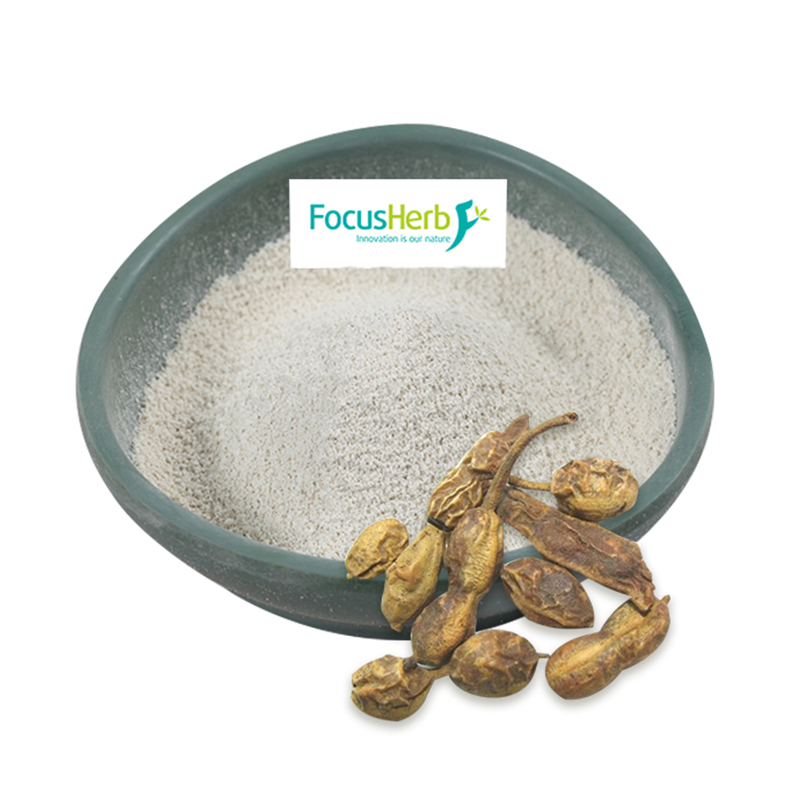
In-depth Analysis of the Antibacterial Mechanism
The powerful antibacterial ability of genistein stems from a complex and sophisticated mechanism. At the cellular level, the cell wall and cell membrane are crucial defenses against external invasion, and genistein effectively attacks these defenses. Scanning electron microscopy reveals that after 24 hours of genistein treatment, Staphylococcus aureus exhibits wrinkled, vesicular, or irregular protrusions on its surface. Transmission electron microscopy further shows that after 4 hours of genistein treatment, the cytoplasm of Staphylococcus aureus begins to shrivel; after 14 hours, significant plasmolysis occurs, resulting in cavities; and after 24 hours, the cell wall and cell membrane rupture, releasing cytoplasmic contents. This series of changes demonstrates that genistein can disrupt the integrity of bacterial cell walls and cell membranes, depriving them of their protective barrier and thus preventing them from maintaining normal physiological functions. Just as the walls of a castle are destroyed, bacteria within cannot survive. In bacterial life processes, the tricarboxylic acid (TCA) cycle is crucial, a key step in cellular respiration that provides energy. However, genistein precisely inhibits the TCA cycle in Staphylococcus aureus. This is akin to cutting off the bacteria’s energy supply, preventing them from obtaining enough energy to support their growth and reproduction. When energy is scarce, various physiological activities of bacteria are affected, growth slows, reproductive capacity decreases, and ultimately, they struggle to proliferate in suitable environments.
Proteins are like the “bricks” of a bacterium’s body, participating in the formation of various structures and enzymes, playing an indispensable role in bacterial life processes. Researchers, through SDS-PAGE protein banding analysis, discovered that genistein inhibits protein synthesis in Staphylococcus aureus, causing a decrease in total protein levels, especially a significant reduction in the content of larger molecular weight proteins, with a 90.1% decrease. This means that genistein interferes with the bacterial protein synthesis process, preventing bacteria from properly constructing their structural and functional components. Just as construction workers lack sufficient bricks to build a house, bacteria naturally struggle to survive and reproduce normally.
Factors Affecting Antibacterial Efficacy
The antibacterial effect of genistein is not static; it is influenced by a combination of factors, much like a delicate balancing act. Changes in any one factor can have a subtle or significant impact on its antibacterial ability.
Concentration is one of the key factors affecting the antibacterial effect of genistein. Within a certain range, its antibacterial ability significantly increases with increasing genistein concentration. Taking the inhibition experiment on *E. coli* as an example, when the concentration of genistein is low, although it can inhibit the growth of *E. coli* to some extent, the effect is not very significant, and *E. coli* can still grow slowly in the culture medium. However, when the concentration gradually increases to a certain threshold, the antibacterial effect undergoes a qualitative leap; the growth of *E. coli* is greatly inhibited, and the number of viable bacteria decreases sharply. This is analogous to increasing troops on the battlefield; sufficient troops are needed to more effectively resist the enemy’s attack. But when the concentration exceeds a certain limit, the rate of increase in the antibacterial effect gradually slows down, and may even reach saturation. Further increasing the concentration will not bring a more significant antibacterial effect and may even lead to a waste of resources.
Environmental factors also play a significant role in the antibacterial effect of genistein. pH is one crucial environmental factor; different microorganisms exhibit varying pH preferences during growth, and the stability and activity of genistein differ under different pH conditions. In acidic environments, the antibacterial effect of genistein may be enhanced for certain bacteria, as its molecular structure allows for better binding to bacterial targets, thus more effectively inhibiting bacterial growth. However, in alkaline environments, the structure of genistein may change, leading to reduced antibacterial activity and rendering it less effective than in acidic environments. Temperature also affects the antibacterial effect of genistein. Within a suitable temperature range, genistein maintains good activity and effectively inhibits microbial growth. When the temperature is too low, the molecular motion of genistein slows down, reducing its binding efficiency to bacterial targets and weakening its antibacterial effect, much like a machine becomes slow and inefficient at low temperatures. Conversely, excessively high temperatures may damage the molecular structure of genistein, rendering it inactive and unable to inhibit microorganisms, just as high temperatures denature proteins.
Furthermore, the synergistic effect of genistein with other substances also affects its antibacterial efficacy. Some studies have found that when genistein is used in combination with certain antibiotics, a synergistic antibacterial effect is produced. For example, when combined with penicillin, they act like a well-coordinated team, attacking bacteria through different pathways. Penicillin primarily acts on bacterial cell wall synthesis, inhibiting cell wall formation, while genistein disrupts bacterial cell membrane integrity, interfering with bacterial energy metabolism and protein synthesis. The combined effect makes it difficult for bacteria to resist, significantly enhancing the inhibitory effect. This synergistic effect provides new insights for developing novel antibacterial drug combinations.
Application Areas and Future Prospects
Denigne, with its excellent antibacterial properties, has shown broad application prospects in multiple fields and is gradually becoming a focus of attention for researchers and industry.
In the pharmaceutical field, the antibacterial effect of genistein has brought new hope to the development of novel antibacterial drugs. Currently, the treatment of bacterial infectious diseases in clinical practice faces severe challenges, with the problem of drug resistance to traditional antibiotics becoming increasingly serious. Genistein’s unique antibacterial mechanism provides a new direction for solving this problem. Researchers are actively exploring the development of genistein into novel antibacterial drugs, for example, by rationally combining it with other drug components to optimize its antibacterial effect in order to combat the threat of drug-resistant bacteria. In some laboratory studies, novel antibacterial agents containing genistein have been successfully synthesized and have achieved good results in animal experiments, potentially providing more effective means for clinical treatment in the future.
Food preservation and antiseptic applications also present a significant stage for genistein. As consumers’ attention to food safety and health continues to increase, the demand for natural and safe food preservatives is also growing. Genistein, as a natural antibacterial agent, can effectively inhibit the growth of harmful microorganisms in food and extend its shelf life without introducing harmful chemicals. In some fruit juice preservation experiments, the addition of appropriate amounts of genistein significantly controlled the number of bacteria and molds in the juice, while maintaining its color, taste, and nutritional components. This not only improves food safety but also reduces waste caused by spoilage, which has significant economic and social implications.
Genistein also has enormous application potential in agricultural production. Plant diseases have always been a major factor affecting crop yield and quality. While traditional chemical pesticides can effectively control diseases, long-term use can pollute the environment and may lead to drug resistance in pathogens. Genistein has an inhibitory effect on various plant pathogens. Developing it into a biological pesticide for disease control in agricultural production can reduce the use of chemical pesticides, lower negative environmental impacts, and ensure the quality and safety of agricultural products. In today’s booming organic agriculture, genistein biological pesticides are expected to become an important tool for green agricultural production, contributing to the sustainable development of agriculture.
Looking to the future, with the continuous advancement of science and technology, the research and application of genistein in the field of antibacterial activity will achieve even greater breakthroughs. On the one hand, in-depth research into the antibacterial mechanism of genistein will provide a theoretical basis for its more precise application. By further revealing the molecular details of its interaction with microorganisms, it is hoped that more efficient and specific antibacterial products can be developed. On the other hand, with the continuous improvement of extraction and preparation technologies, the production cost of genistein will gradually decrease, while its purity and yield will increase, creating favorable conditions for its large-scale industrial application. Simultaneously, the integrated development of genistein with other technologies is also promising. For example, combining it with nanotechnology to prepare nanocomposite materials with special properties will further expand its antibacterial effects and application scope. It is foreseeable that in the near future, genistein will play a more important role in the field of antibacterial activity, bringing greater benefits to human health and life.
The Limitless Potential of Genistein’s Antibacterial Properties
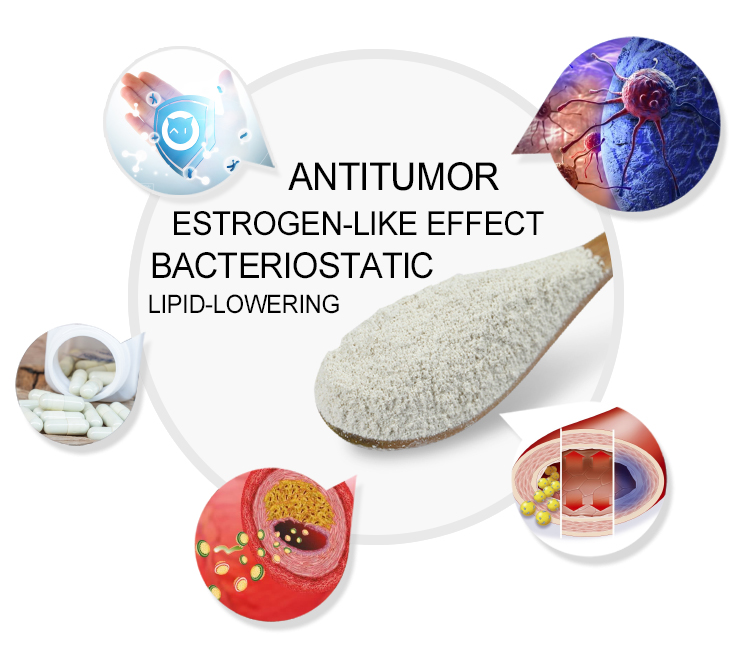
The exploration of genistein, a natural plant component, in the field of antibacterial research has already demonstrated remarkable achievements. From the initial discovery of its inhibitory effects on various pathogens, to in-depth analysis of its mechanism of action, revealing its precise targeting of bacteria at the cellular level, metabolic pathways, and protein synthesis; from studying the concentration and environmental factors affecting its antibacterial effect, to comparing it with traditional antibacterial agents, highlighting its unique advantages in safety and resistance to drug resistance, this series of studies has gradually unveiled the mystery of genistein’s antibacterial properties. Today, the application practices and future prospects of genistein in medicine, food, and agriculture paint a promising picture of the future. In the pharmaceutical field, it brings hope to overcoming the challenge of drug-resistant bacterial infections; in food preservation, it ensures food safety while aligning with healthy consumption concepts; in agricultural production, it contributes to the development of green agriculture and reduces dependence on chemical pesticides. It is foreseeable that with the continuous deepening of scientific research and the continuous innovation of technology, genistein will release greater energy in the field of antibacterial properties, making more outstanding contributions to human health, food safety and ecological environmental protection. Its development potential is immeasurable and its future is full of infinite possibilities.
