







Pigments are an indispensable key component in coloring applications in the food, cosmetics, and pharmaceutical industries. Among them, blue pigments have attracted much market attention due to their scarcity and unique visual effects. Phycocyanin, as a typical representative of natural blue pigments, differs significantly from synthetic blue dyes in terms of source, characteristics, safety, and application scenarios.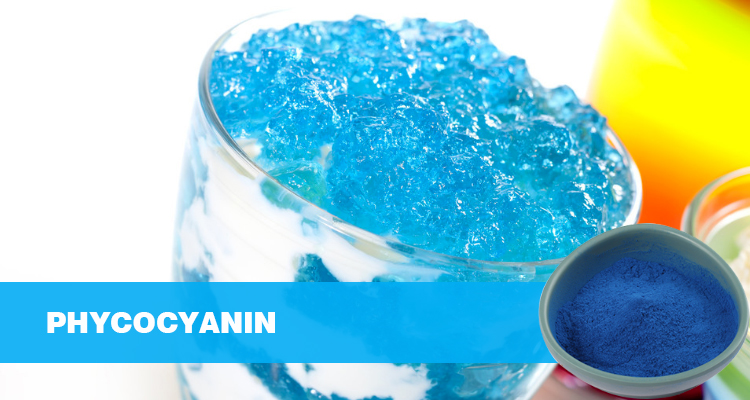
Core Differences: Source and Preparation Principles
(I) Phycocyanin: A “Blue Treasure” from Nature
Phycocyanin is a natural, water-soluble protein-bound pigment, primarily derived from cyanobacteria (such as Spirulina and Platensis) and red algae. Its preparation process uses natural algae as raw materials, extracting them through gentle processes such as physical crushing, centrifugation, and ultrafiltration purification, without involving any chemical synthesis reactions. As a key antenna pigment for algal photosynthesis, phycocyanin is formed as a result of natural biological metabolism; its chemical structure is a combination of a pyrrole ring and a protein, belonging to natural bioactive substances.
This preparation process emphasizes “naturalness” and “gentleness” to preserve its original biological activity. Therefore, the purity of the raw materials and the cultivation environment (such as unpolluted water and suitable light and temperature) have a significant impact on the final product quality. High-quality phycocyanin raw materials mostly come from ecologically controlled, large-scale algae cultivation bases, avoiding the risk of residual heavy metals and pollutants in the natural environment.
(II) Synthetic Blue Dyes: “Artificial Products” of Chemical Synthesis
Synthetic blue dyes are artificial pigments prepared through chemical synthesis reactions. Their raw materials are mostly petrochemical derivatives (such as aromatic compounds like benzene, naphthalene, and anthracene). The preparation process involves multiple chemical reactions (such as nitration, reduction, coupling, and sulfonation), introducing chromophores and auxochromes by altering the molecular structure to achieve a stable blue coloring effect. Common synthetic blue dyes include Brilliant Blue (E133), Indigo (E132), and Acid Blue.
The synthesis process has clearly defined stoichiometric ratios and controlled reaction conditions. Product purity can be precisely controlled through subsequent purification processes. However, byproducts may be generated during production, requiring rigorous separation and purification for removal. Its core advantages are high preparation efficiency, low cost, and the ability to artificially optimize color vibrancy and stability through molecular design.
 Key Characteristics Comparison: Safety vs. Functional Value
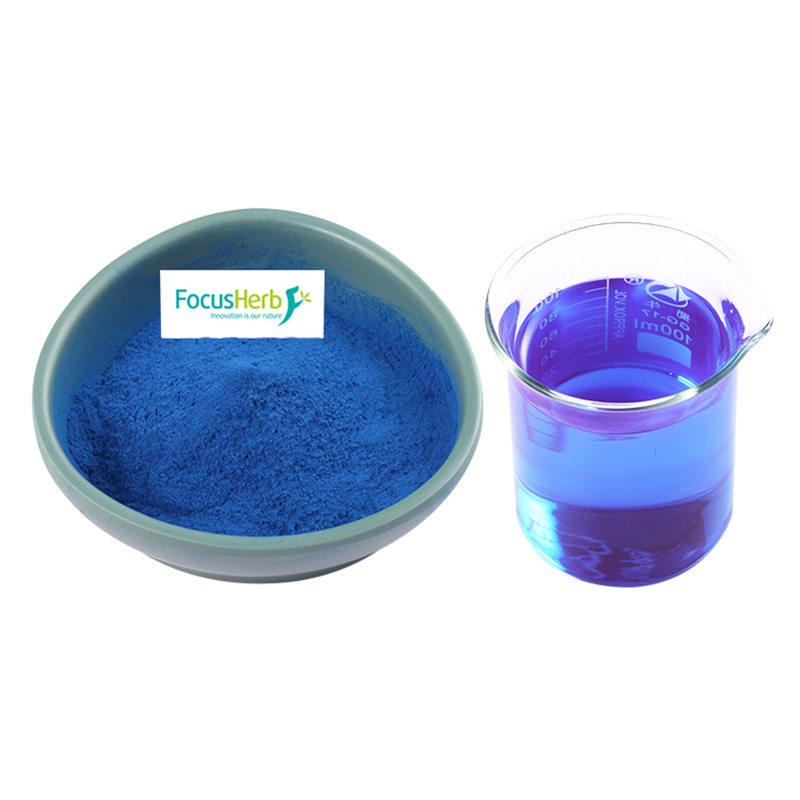 Key Characteristics Comparison: Safety vs. Functional Value
(I) Safety: Natural Product vs. Chemical Residue Risk
The safety of phycocyanin stems from its natural properties. Multiple toxicological studies have shown that phycocyanin has no acute or chronic toxicity, is not mutagenic, carcinogenic, or teratogenic, and is well-tolerated by the human body. As a natural protein, phycocyanin can be normally metabolized and broken down into small molecules such as amino acids in the body, and will not accumulate. Furthermore, it has been listed as a “Generally Recognized As Safe (GRAS)” substance in many countries and regions, allowing its addition to food and health products as needed.
The safety of synthetic blue dyes, on the other hand, relies on strict dosage limits. Some synthetic blue dyes themselves have certain toxicity; for example, the earlier Basic Yellow O has been banned. Even with currently permitted synthetic blue dyes (such as Brilliant Blue), excessive intake may affect human health, such as causing allergic reactions, intestinal irritation, and metabolic disorders. Therefore, food safety standards in various countries have strict regulations on the scope of use and maximum addition amount of synthetic dyes, which must be clearly indicated on product labels. Furthermore, trace amounts of residual chemical raw materials (such as aromatic compounds) from the synthesis process may also pose potential safety hazards.
(II) Functional Value: Single Coloring vs. Dual Attributes of “Coloring + Nutrition”
The greatest advantage of phycocyanin lies in its dual function of “coloring + nutrition.” Besides its vibrant sky-blue color, it is rich in various bioactive components, possessing clear nutritional and health benefits: Firstly, it has strong antioxidant activity, scavenging free radicals in the body, reducing oxidative stress damage, and delaying aging; secondly, it can enhance the body’s immunity, promoting lymphocyte proliferation and macrophage activity; thirdly, some studies have shown that phycocyanin also has anti-inflammatory, liver-protective, and lipid-regulating effects. Therefore, phycocyanin is not only a colorant but also a functional nutrient, widely used in functional foods and health products.
Synthetic blue dyes, on the other hand, have a relatively singular function, used only for coloring, and possess no nutritional or health benefits. Their molecular structure is stable and difficult to metabolize and break down in the body; excessive intake may even increase the body’s metabolic burden. Some synthetic dyes may also react with other substances in the body, producing harmful substances and further reducing their safety.
(III) Coloring Performance: Differences in Stability and Compatibility
In terms of coloring stability, synthetic blue dyes have a significant advantage. Their molecular structure is stable, highly resistant to changes in light, temperature, and pH, and they are not prone to fading or discoloration. They have a wide range of compatibility and can be used in various environments, including acidic, alkaline, and high-temperature processing. Furthermore, synthetic dyes have high color vibrancy and strong tinting strength; a small amount is sufficient to achieve the desired coloring effect, resulting in a significant cost advantage.
Phycocyanin, on the other hand, has relatively weak coloring stability. As a protein-bound pigment, it is sensitive to light, high temperature, and strong acid/alkali environments: prolonged exposure to light can cause fading; temperatures exceeding 60℃ can denature the protein structure, leading to loss of pigment activity; and stability also decreases significantly in environments with pH values below 4 or above 10. Therefore, phycocyanin is more suitable for products processed at low temperatures and stored away from light, such as frozen drinks, yogurt, oral liquids, and cosmetics. However, its color is natural and soft, without the “glaring” feeling of artificial pigments, giving it an advantage among products that pursue “natural and pure” qualities.
Application Scenarios Comparison: Industry Adaptation and Market Positioning
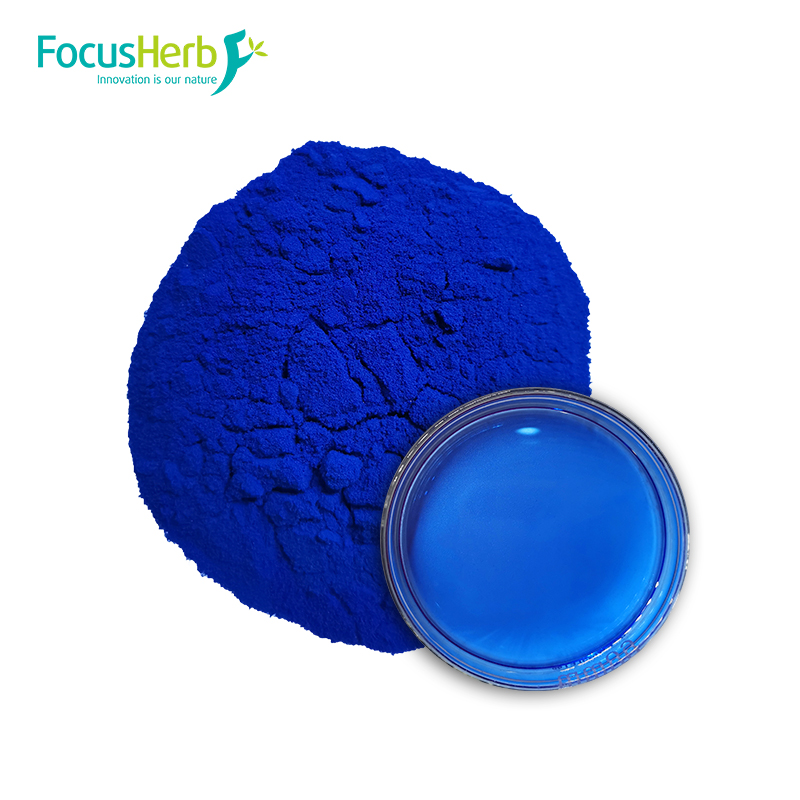 Application Scenarios Comparison: Industry Adaptation and Market Positioning
(I) Core Application Areas of Phycocyanin
1. Functional Foods and Health Products: Such as natural blue beverages, yogurt, jelly, protein powder, and nutritional oral liquids, utilizing its dual attributes of “natural coloring + nutritional health benefits” to meet consumer demand for healthy foods;
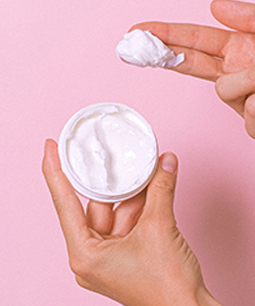
2. Cosmetics: Used in natural skincare products and makeup (such as lipstick and eyeshadow), its gentle properties are non-irritating to the skin, and its antioxidant activity can help improve skin condition;
3. Pharmaceutical Field: Used as a natural colorant in the coating of capsules and tablets, or as a biological reagent (such as a fluorescent probe) for medical testing, with high safety and no side effects.
(II) Core Application Areas of Synthetic Blue Dyes
1. General Food Industry: For products requiring long-term storage or high-temperature processing, such as candy, pastries, carbonated beverages, and canned goods, synthetic blue dyes offer advantages in terms of high stability and low cost.
2. Textile and Dyeing Industry: Used for coloring textiles and paper, offering strong environmental adaptability and high color uniformity.
3. Other Industrial Sectors: For industries such as plastics, coatings, and inks, where there is a demand for large quantities of inexpensive colorants, synthetic blue dyes can meet the needs of large-scale production.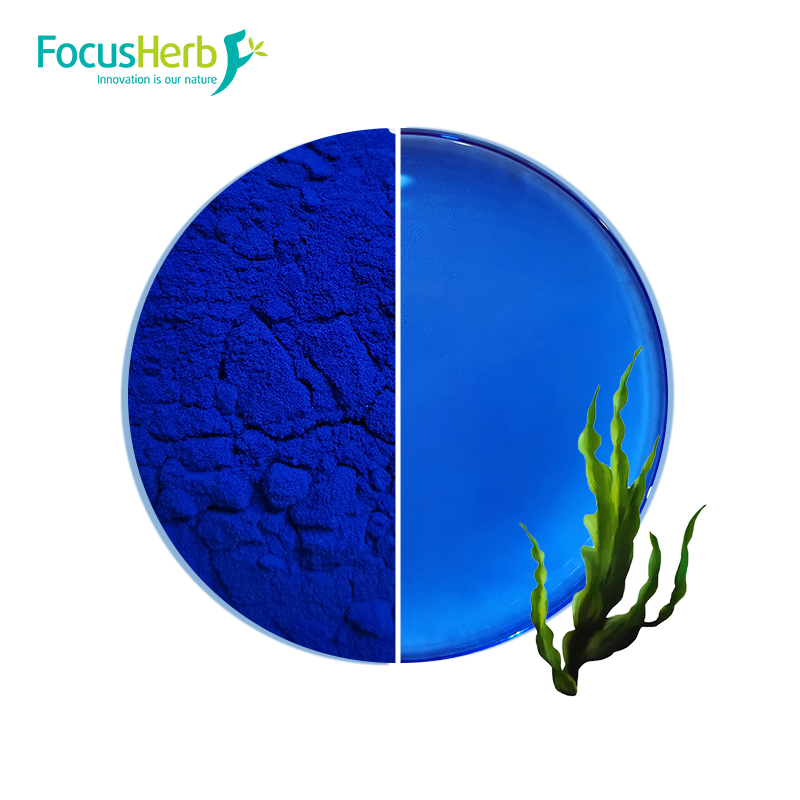
Market Prospects and Development Trends Comparison
With the increasing health awareness of consumers and the popularization of the “natural and green” consumption concept, the market demand for phycocyanin is showing a rapid growth trend. Currently, phycocyanin is widely used in health foods and cosmetics in developed countries such as Europe, America, and Japan, and the domestic market is also gradually emerging. Although its production cost is relatively high (approximately 5-10 times that of synthetic dyes), its safety and functional advantages give it irreplaceable competitiveness in the high-end market. In the future, with the optimization of algae cultivation technology and the upgrading of extraction processes, the production cost of phycocyanin is expected to further decrease, and its market penetration rate will continue to increase.
Synthetic blue dyes, due to their low cost and high stability, will continue to dominate in the fields of ordinary food and industrial coloring in the short term. However, due to safety concerns and consumers’ preference for natural products, their application scope may gradually be limited. In the future, the development direction of synthetic dyes will focus on new low-toxicity and environmentally friendly synthetic technologies to reduce residue risks, while developing biodegradable synthetic pigments to cope with changes in environmental policies and market demands.
