







Quercetin dihydrate, with CAS number 6151-25-3, is a natural flavonoid compound with the molecular formula C₁₅H₁₄O₉. It appears as a yellow solid with a melting point exceeding 300°C, meaning it remains a stable solid at normal ambient temperatures. Its water solubility is poor, a property that influences its absorption and mechanism of action in vivo.
Structurally, quercetin dihydrate contains multiple phenolic hydroxyl groups, which endow it with rich biological activity. Studies have shown that it can activate SIRT1, a protein that plays a crucial role in cellular senescence and metabolic regulation. The activation of SIRT1 by quercetin dihydrate may help delay cellular senescence and maintain normal cellular function. It can also inhibit the PI3K family, with IC50 values of 2.4 μM, 3.0 μM, and 5.4 μM for PI3K γ, PI3K δ, and PI3K β, respectively. The PI3K family participates in various biological processes such as cell proliferation, differentiation, and apoptosis. The inhibitory effect of quercetin dihydrate on these processes may regulate related cellular processes, thereby exerting a series of effects such as antioxidation and anti-inflammation, making it a highly anticipated plant active ingredient.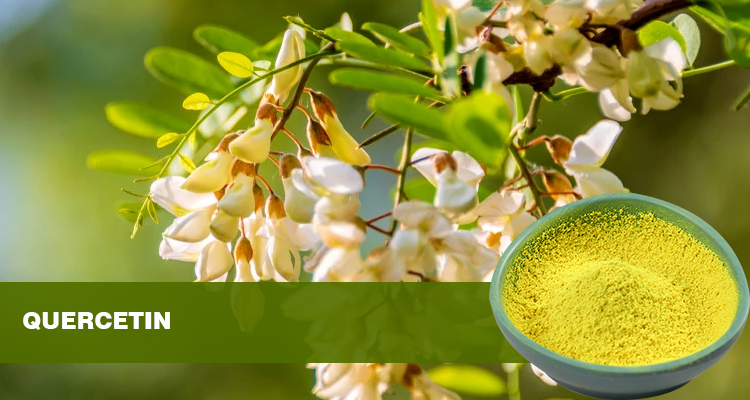
Natural Sources and Extraction Processes
Quercetin dihydrate is widely found in various plants in nature. For example, the bark and wood of Siberian larch contain this component; apples, which are commonly consumed, contain quercetin dihydrate in their peel and pulp; onions, especially their epidermis, are also a source of it; and various berries, such as blueberries and strawberries, also contain a certain amount of quercetin dihydrate. During their growth, these plants synthesize quercetin dihydrate through their own metabolic pathways, enabling it to play a role in their physiological processes, such as resisting oxidative stress from the external environment and combating pathogen attacks.
Currently, commercially available quercetin dihydrate powder mostly employs high-purity extraction processes. Taking Siberian larch as an example, the raw material is first pretreated to remove impurities and other unwanted components. Then, using a suitable solvent, quercetin dihydrate is dissolved from the raw material through extraction. Next, solid-liquid separation is performed using methods such as filtration and centrifugation to remove insoluble impurities. A series of purification steps, such as column chromatography and crystallization, further purify the quercetin dihydrate to obtain a high-purity product. Throughout this process, its active structure is preserved as much as possible to ensure product quality and efficacy.
The final product is usually a pure powder without any additives, a form that facilitates storage, transportation, and use. Regarding the methods of intake, common methods include dissolving in boiling water, adding an appropriate amount of quercetin dihydrate powder to boiling water, stirring well, and then drinking. This method is simple, convenient, and suitable for most people. Sublingual administration is another method. Sublingual administration allows quercetin dihydrate to be rapidly absorbed through the rich capillaries under the tongue, avoiding the first-pass effect of the gastrointestinal tract and improving bioavailability. However, this method requires relatively high dosage control.
In-depth Decoding: The Core Antioxidant Mechanism of Quercetin Dihydrate Powder
1 Direct Antioxidant: Targeted Scavenging of Free Radicals, Blocking the Oxidation Chain Reaction
The powerful antioxidant capacity of quercetin dihydrate powder is closely related to its unique molecular structure. In its molecular structure, the catechol hydroxyl group and the C-ring ketone group act as the “vanguard” of antioxidant activity. These structures endow quercetin dihydrate with the ability to act as an electron/hydrogen atom donor, enabling it to directly “fight” various reactive oxygen species (ROS).
Superoxide anions, free radicals generated during physiological processes such as cellular respiration, can damage cells if accumulated in large quantities. Quercetin dihydrate can precisely capture superoxide anions, blocking free radicals generated during abnormal mitochondrial respiratory chain processes, reducing “byproduct damage” during oxidative phosphorylation, acting like a diligent “scavenger” to maintain the stability of the intracellular environment.
Hydroxy free radicals, with extremely high reactivity, are one of the main causes of DNA oxidative damage. Quercetin dihydrate can directly react with hydroxyl radicals, reducing the levels of oxidative markers such as 8-hydroxydeoxyguanosine (8-OHdG), thereby effectively protecting DNA from oxidative damage and safeguarding the integrity of genetic information.
Peroxynitrosoanions, produced in large quantities during inflammatory responses, are highly oxidizing and can cause protein nitration damage. Quercetin dihydrate can neutralize peroxynitrosoanions, reducing protein nitration damage and alleviating the destructive effects of inflammation on cells.
In lipid environments such as cell membranes and low-density lipoprotein (LDL), quercetin dihydrate also plays a crucial role in inhibiting lipid peroxidation. When lipids undergo peroxidation, lipid peroxidation free radicals (such as LOO·) are generated. These free radicals trigger chain oxidation reactions, continuously damaging lipid structures. Quercetin dihydrate preferentially reacts with lipid peroxidation free radicals, blocking the chain oxidation process. Taking animal experiments using an atherosclerosis model as an example, quercetin dihydrate can reduce serum malondialdehyde (MDA, a lipid peroxidation product) levels by 20%-30%, effectively protecting the integrity of cell membranes, LDL, and other lipid structures, and reducing the risk of cardiovascular diseases and other health problems caused by lipid peroxidation.
2 Indirect Antioxidant: Activating the Endogenous Antioxidant System and Strengthening the Body’s Defense Network
In addition to directly scavenging free radicals, quercetin dihydrate also has the ability to activate the endogenous antioxidant system, enhancing the body’s antioxidant defense capabilities from within the cells. It acts like a “commander,” able to penetrate the cell membrane and bind tightly to the Keap1 protein.
The Keap1 protein originally inhibits nuclear factor E2-related factor 2 (Nrf2), preventing Nrf2 from performing its proper function. Quercetin dihydrate, upon binding to Keap1, relieves this inhibition, allowing Nrf2 to enter the cell nucleus and initiate the Nrf2-ARE signaling pathway.
Once the Nrf2-ARE signaling pathway is activated, the expression and activity of a series of antioxidant enzymes are upregulated. Superoxide dismutase (SOD) converts superoxide anions into hydrogen peroxide, thereby reducing free radical concentration; glutathione peroxidase (GPx) uses glutathione (GSH) to scavenge hydrogen peroxide and organic peroxides, further reducing the damage of oxidative products to cells; heme oxygenase-1 (HO-1) degrades heme to produce bilirubin (a natural antioxidant) while releasing carbon monoxide (CO) to regulate inflammation, playing a role in both antioxidant and anti-inflammatory processes.
In a mouse model of liver injury, quercetin dihydrate demonstrated significant effects, increasing liver SOD activity by 50% and GPx activity by 35%, greatly enhancing endogenous antioxidant capacity.
Quercetin dihydrate also regulates the glutathione (GSH) system. It promotes the expression of glutamate-cysteine ligase (GCL, the rate-limiting enzyme in GSH synthesis) and increases intracellular GSH reserves. GSH is an important intracellular antioxidant, and quercetin dihydrate, as a cofactor of GSH reductase, maintains the reduced state of GSH/GSSG (oxidized glutathione), enhancing the cell’s redox buffering capacity and making cells more resistant to oxidative stress, thus strengthening the body’s antioxidant defense network at the cellular level.
Extended Antioxidant Effects: The Multiple Health Benefits of Quercetin Dihydrate Powder
1 Skin Anti-aging: Slowing Down the Aging Process and Revitalizing Skin
As the organ that directly contacts the external environment, the skin is constantly exposed to various external factors such as ultraviolet radiation and air pollution, as well as oxidative stress generated by its own metabolism. These factors accelerate the skin aging process. Quercetin dihydrate powder has demonstrated remarkable efficacy in the field of skin anti-aging.
From a molecular mechanism perspective, quercetin dihydrate, with its powerful antioxidant capacity, can effectively eliminate reactive oxygen species (ROS) within skin cells, such as superoxide anions and hydroxyl radicals. These free radicals are the “culprits” causing oxidative damage to the skin. They attack lipids, proteins, and DNA within skin cells, causing lipid peroxidation, protein denaturation, and DNA damage, thereby accelerating skin aging. Quercetin dihydrate acts like a loyal “guardian,” promptly eliminating these free radicals and reducing the damage of oxidative stress to skin cells.
In a related in vitro cell experiment, researchers exposed skin fibroblasts to ultraviolet (UV) radiation, inducing oxidative stress in the cells to simulate the process of photoaging. Then, they treated the cells with different concentrations of quercetin dihydrate. The results showed that with increasing quercetin dihydrate concentration, intracellular ROS levels significantly decreased, and the content of malondialdehyde (MDA), a lipid peroxidation product, also significantly decreased, indicating that quercetin dihydrate can effectively alleviate UV radiation-induced oxidative damage.
Matrix metalloproteinases (MMPs) play a crucial role in skin aging, degrading collagen and elastin fibers, leading to skin laxity and wrinkles. Quercetin dihydrate can inhibit the activity of MMPs, reducing the degradation of collagen and elastin fibers. Simultaneously, it can promote the synthesis of new collagen by fibroblasts, strengthening the structural support of the dermis, restoring skin elasticity, and improving laxity and wrinkles. In animal experiments, after applying a preparation containing quercetin dihydrate to mice for a period of time, histological analysis revealed a significant increase in collagen content and a reduction in wrinkle depth in the mouse skin.
Inflammation is also a significant factor accelerating skin aging. Ultraviolet radiation and environmental pollution can trigger inflammatory responses in the skin. Quercetin dihydrate, by inhibiting the NF-κB inflammatory pathway, reduces the release of inflammatory factors such as tumor necrosis factor-α (TNF-α) and interleukin-6 (IL-6), alleviating redness and sensitivity caused by ultraviolet radiation and friction. It also promotes the proliferation and differentiation of keratinocytes, enhances the skin barrier function, reduces moisture loss, and improves signs of aging such as dryness and roughness, resulting in plumper and more hydrated skin.
Skin aging is often accompanied by slowed keratin metabolism and pigment deposition, leading to dull skin tone. Quercetin dihydrate can brighten skin tone and improve dullness by promoting epidermal cell renewal and accelerating the shedding of dead skin cells, while inhibiting tyrosinase activity and reducing melanin production, thus making the skin more translucent and radiant.
2 Liver Protection: Reducing Oxidative Damage and Supporting Liver Metabolism
In today’s fast-paced life, people face various challenges from unhealthy lifestyle habits and environmental factors. High-fat diets, staying up late, and drinking alcohol are increasingly common, all of which place a heavy burden on the liver and easily lead to oxidative damage to liver cells. Quercetin dihydrate powder, as a natural antioxidant, plays an important role in liver protection.
The liver is an important metabolic and detoxification organ in the human body. When subjected to oxidative stress, the level of transaminases in liver cells increases, which is an important marker of liver cell damage. Quercetin dihydrate can lower transaminase levels and reduce the degree of liver cell damage. Studies have shown that in a mouse model of alcoholic liver injury, intervention with quercetin dihydrate significantly reduced serum alanine aminotransferase (ALT) and aspartate aminotransferase (AST) levels, indicating that quercetin dihydrate can effectively alleviate alcohol-induced hepatocyte damage.
Liver metabolic function is also affected by oxidative stress. Quercetin dihydrate can promote bile secretion, assisting the liver in detoxification, metabolism, and lipid regulation. In studies of non-alcoholic fatty liver disease (NAFLD), quercetin dihydrate was found to regulate the expression of genes related to liver lipid metabolism, reducing liver fat accumulation. Researchers at the Army Medical University conducted a randomized, double-blind, placebo-controlled crossover clinical trial involving 41 NAFLD patients. Half of the patients received 500 mg of quercetin daily, while the other half received a placebo for 12 weeks. The two groups then switched interventions for another 12 weeks. The results showed that in just three months, the liver fat content of patients in the quercetin group decreased significantly, with an average reduction of 17.4%, while the placebo group only saw a reduction of 0.9%.
Quercetin dihydrate possesses strong antioxidant capabilities, reducing free radical damage to liver tissue. It can activate the Nrf2-ARE signaling pathway, upregulate the expression of antioxidant enzymes such as superoxide dismutase (SOD) and glutathione peroxidase (GPx), and enhance the liver’s antioxidant defense system. In acetaminophen-induced liver injury experiments, quercetin dihydrate increased the activity of SOD and GPx in mouse livers, reduced malondialdehyde (MDA) levels, and alleviated oxidative damage to the liver. For those in a chronically sub-healthy state and whose liver burden is increased due to unhealthy lifestyle habits, quercetin dihydrate provides a natural liver protection pathway.
3 Cardiovascular Protection: Improving Vascular Condition and Assisting in Blood Pressure Regulation
Cardiovascular health is closely related to people’s quality of life and lifespan, and oxidative stress plays a crucial role in the development and progression of cardiovascular diseases. Quercetin dihydrate powder provides comprehensive protection for cardiovascular health through its antioxidant and other mechanisms of action.
The health of blood vessels is fundamental to the normal functioning of the cardiovascular system. Quercetin dihydrate can enhance capillary resilience, improve vascular permeability, and prevent lipid deposition and plaque formation on the vascular wall. It can inhibit the oxidative modification of low-density lipoprotein (LDL) and reduce the production of oxidized LDL (ox-LDL). ox-LDL is easily phagocytosed by macrophages, forming foam cells, which in turn leads to the formation of atherosclerotic plaques. In animal experiments using atherosclerosis models, administration of quercetin dihydrate significantly reduced lipid deposition on the vascular wall and shrunk plaque area.
Quercetin dihydrate also has a blood pressure regulating effect. It inhibits the activity of angiotensin-converting enzyme (ACE) and reduces the production of angiotensin II. Angiotensin II is a potent vasoconstrictor that causes elevated blood pressure. Quercetin dihydrate lowers angiotensin II levels by inhibiting ACE activity, thus gently regulating blood pressure. Compared to traditional antihypertensive drugs, quercetin dihydrate, as a natural plant ingredient, has fewer side effects and is more suitable for long-term use. Some patients with mild hypertension have achieved some degree of blood pressure control after supplementing their daily diet with foods or nutritional supplements rich in quercetin dihydrate, without experiencing significant adverse reactions.
In a study targeting high-risk individuals for cardiovascular disease, participants ingested a certain amount of quercetin dihydrate supplements daily. After a period of time, tests revealed improvements in their vascular endothelial function, enhanced vasodilation, and reduced levels of inflammatory factors in their blood. This indicates that quercetin dihydrate has a positive protective effect on the cardiovascular system, providing strong support for the prevention of chronic cardiovascular and cerebrovascular diseases.
4 Lung Health Maintenance: Anti-inflammatory and Antioxidant, Improving Respiratory Microcirculation
As a vital organ for gas exchange between the body and the external environment, the lungs are constantly exposed to various pollutants and allergens, making them susceptible to oxidative stress and inflammation. Quercetin dihydrate powder has demonstrated unique efficacy in maintaining lung health, effectively reducing oxidative damage and inflammatory responses in the lungs, and improving respiratory microcirculation.
When the lungs are stimulated by pollutants, allergens, etc., an inflammatory response is triggered, releasing a large number of inflammatory factors, such as tumor necrosis factor-α (TNF-α) and interleukin-8 (IL-8). These inflammatory factors lead to congestion and edema of the lung mucosa, causing symptoms such as cough and wheezing. Quercetin dihydrate can inhibit the release of these inflammatory factors and alleviate lung inflammation. In a study on an asthmatic mouse model, treatment with quercetin dihydrate significantly reduced inflammatory cell infiltration in the lungs of mice, lowered inflammatory factor levels, and significantly improved cough and wheezing symptoms.
During oxygen exchange in the lungs, a large number of free radicals are generated. If these free radicals are not cleared in time, they will cause oxidative damage to lung tissue. Quercetin dihydrate, with its powerful antioxidant capacity, can eliminate free radicals generated during oxygen exchange in the lungs, delaying oxidative damage to lung tissue. It can increase the activity of antioxidant enzymes in lung tissue, such as superoxide dismutase (SOD) and glutathione peroxidase (GPx), enhancing the lung’s antioxidant defense system. Studies on long-term smokers have found that supplementation with quercetin dihydrate improved oxidative stress indicators in the lungs and enhanced lung function.
Quercetin dihydrate can also improve respiratory efficiency by regulating microcirculation in pulmonary capillaries, promoting nutrient supply and oxygen exchange in lung tissue. It can dilate pulmonary blood vessels, increase pulmonary blood flow, and enable oxygen to be delivered to lung tissue more effectively. Quercetin dihydrate is an effective lung health maintenance ingredient for people who are exposed to polluted environments such as smoke and PM2.5 for a long time, as well as patients with chronic respiratory diseases.
Application Guide: Applicable Scenarios and Safety Tips for Quercetin Dihydrate Powder
1 Target Population and Intake Method
Quercetin dihydrate powder is suitable for a variety of people, providing strong support for their health. For those in sub-healthy individuals who work under high pressure, have irregular schedules, often feel fatigued, and have low immunity, the antioxidant and immunomodulatory effects of quercetin dihydrate powder can help alleviate fatigue, enhance immunity, and resist disease.
In a study of 100 office workers who frequently work night shifts, supplementing with a certain amount of quercetin dihydrate powder daily for one month resulted in over 70% reporting a significant reduction in fatigue and improved mental state.
For individuals with abnormal liver function, such as those with fatty liver, alcoholic liver disease, or other liver conditions, quercetin dihydrate powder can reduce oxidative damage to liver cells, promote liver metabolism and detoxification, and aid in liver repair and recovery.
People with fluctuating blood pressure can also benefit from quercetin dihydrate powder. It regulates blood pressure by inhibiting the activity of angiotensin-converting enzyme (ACE), maintaining it at a relatively stable level. Some patients with mild hypertension have experienced effective blood pressure control after taking quercetin dihydrate powder for a period of time, without significant side effects.
As we age, skin aging problems gradually become apparent. For people with aging skin, quercetin dihydrate powder can slow down the aging process, reduce wrinkles, and improve skin elasticity and radiance. Outdoor workers who are exposed to sunlight for long periods are prone to skin aging due to ultraviolet radiation; supplementing with quercetin dihydrate powder has significantly improved their skin condition.
For people who are chronically exposed to polluted environments, such as factory workers and traffic police, whose lungs are constantly damaged by pollutants, the anti-inflammatory and antioxidant effects of quercetin dihydrate powder can reduce lung inflammation, eliminate free radicals, protect lung tissue, and maintain lung health.
Regarding the methods of intake, commercially available powdered quercetin dihydrate is commonly taken by dissolving it in boiling water. Simply add an appropriate amount of quercetin dihydrate powder to boiling water, stir well, and drink. This method is simple, convenient, and suitable for most people. Sublingual administration is also an effective method. Sublingual administration allows quercetin dihydrate to be rapidly absorbed through the rich capillaries under the tongue, avoiding the first-pass effect in the gastrointestinal tract and improving bioavailability. However, this method requires relatively strict dosage control and must be taken strictly according to the product instructions. Some studies have shown that combining quercetin dihydrate with vitamin C can enhance its bioavailability; the two work synergistically to better exert their antioxidant effects. In daily diet, foods rich in quercetin dihydrate can be eaten together with foods rich in vitamin C, such as apples (rich in quercetin dihydrate) and oranges (rich in vitamin C).
2 Safety Boundaries and Precautions
Quercetin dihydrate, as a natural ingredient, has a relatively high overall safety profile. This is due to its widespread presence in various plants in nature, long-term natural selection, and history of human consumption, which means it rarely causes serious adverse reactions under normal use.
The oral LD50 (median lethal dose) in mice is 159 mg/kg, indicating that even at higher doses, quercetin dihydrate still poses some risk. Overdose of quercetin dihydrate may cause gastrointestinal discomfort, such as nausea, vomiting, abdominal pain, and diarrhea. This is because high doses of quercetin dihydrate may irritate the gastrointestinal mucosa, affecting normal peristalsis and digestive function. Therefore, when taking quercetin dihydrate powder, it is essential to follow the recommended dosage and avoid blindly increasing the dose.
Pregnant women, breastfeeding women, and those taking long-term medications should exercise special caution. The bodies of pregnant and breastfeeding women are in a special physiological state, and quercetin dihydrate may have potential effects on fetal or infant development. Although there is currently no conclusive research indicating its harmful effects, these two groups must consult a professional physician before use to ensure safety. Those taking long-term medications should also use quercetin dihydrate with caution under the guidance of a doctor, as it may interact with existing medications, affecting their efficacy or causing adverse reactions.
Quercetin dihydrate powder is primarily used as a dietary supplement and cannot replace medication for treating diseases. Patients with serious illnesses, such as cancer or cardiovascular disease, should not rely solely on quercetin dihydrate powder for treatment but should follow their doctor’s advice and receive regular medication. When purchasing quercetin dihydrate powder, choose products from reputable sources to ensure product quality and safety. Check the product’s ingredient list, production date, and expiration date to avoid purchasing counterfeit or substandard products.
 Summary and Outlook: The Development Prospects of Natural Antioxidants
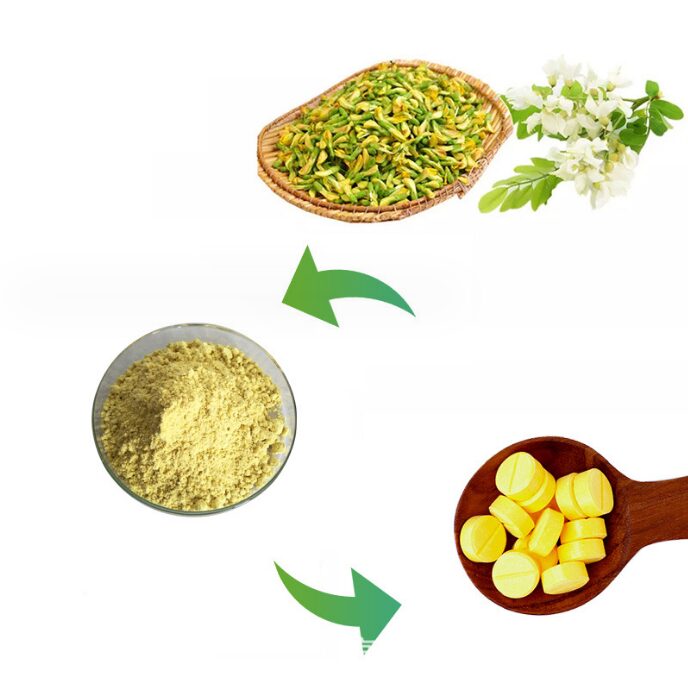 Summary and Outlook: The Development Prospects of Natural Antioxidants
Quercetin dihydrate powder, with its unique dual antioxidant mechanism of “directly scavenging free radicals + activating the endogenous antioxidant system,” has emerged as a rising star in the field of antioxidants. Its significant effects in skin anti-aging, liver and heart health, and lung health maintenance highly align with modern people’s pursuit of health and quality of life.
However, the development of quercetin dihydrate powder also faces some challenges, among which low bioavailability is particularly prominent. Due to its poor water solubility, its absorption and utilization in the body are somewhat limited. In the future, further efforts are needed to overcome this challenge by developing new technologies and formulations, such as nanotechnology and liposome encapsulation technology, to improve its bioavailability and enhance its activity and efficacy in the body.
In terms of clinical application research, although considerable basic research and animal experiments have confirmed the various effects of quercetin dihydrate powder, more large-scale, high-quality clinical trials are needed to clarify its specific efficacy and safety in humans, providing a more solid scientific basis for its widespread application.
With the continuous improvement of people’s health awareness, the demand for natural, safe, and effective antioxidants will continue to grow. Quercetin dihydrate powder is expected to achieve diversified development in areas such as dietary supplements, skincare products, and functional foods. In the field of dietary supplements, it can be used as an independent ingredient to provide daily antioxidant support; in the field of skincare products, its antioxidant and anti-aging effects can be used to develop various high-end skincare products to meet consumers’ pursuit of healthy and beautiful skin; in the field of functional foods, it can be added to various foods, such as beverages and baked goods, giving these foods additional health benefits. It is believed that in the future, with the continuous deepening of research and technological advancements, quercetin dihydrate powder will play an important role in more fields, bringing more benefits to people’s health and lives.
