








In the field of natural active substances, thymoquinone (TQ), as the core active ingredient in black cumin seed extract, is a key force in enhancing human immunity due to its unique benzoquinone compound properties. It is a fat-soluble small molecule extracted from black cumin (Nigella sativa) seeds, possessing a well-defined chemical structure and stable biological activity, occupying a central position in the physiological efficacy of black cumin seeds. From a molecular structure perspective, thymoquinone’s quinone structure endows it with powerful antioxidant and anti-inflammatory activities. These two activities are the important basis for its regulation of immune function. Simultaneously, it can precisely regulate the proliferation, differentiation, and activity of immune cells, achieving multi-dimensional regulation of the human immune system.
In addition to its core immunomodulatory function, thymoquinone also possesses significant antioxidant, anti-inflammatory, liver-protective, and lipid-regulating biological activities. Among these, antioxidant and anti-inflammatory activities work synergistically with immunomodulatory functions to maintain homeostasis: antioxidant activity can reduce the damage of oxidative stress to immune cells, providing a favorable environment for the normal functioning of the immune system; anti-inflammatory activity can inhibit the damage of excessive inflammatory responses to body tissues, avoiding adverse consequences caused by immune imbalance. In addition, Thymoquinone also shows positive effects in improving gastrointestinal function and assisting in blood sugar control, making it a natural active substance with multiple health benefits.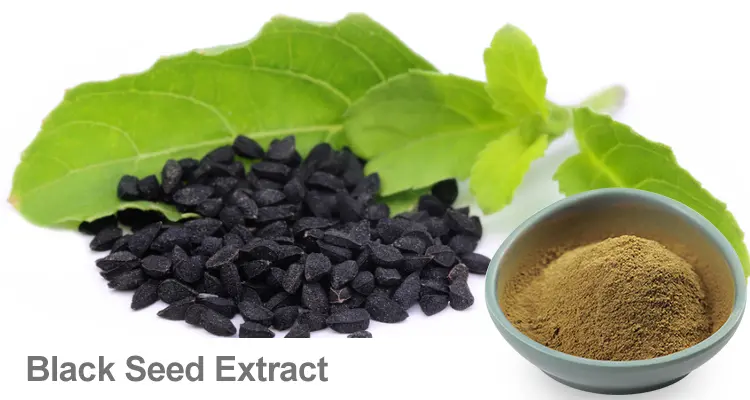
Natural Occurrence and High-Quality Acquisition Methods
Thymoquinone is primarily found naturally in black cumin seeds, also known as black cumin. Its seeds serve as a “natural reservoir” of thyquinone, containing significantly higher levels than other natural food ingredients, making them a high-quality raw material for extracting high-purity thyquinone. Black cumin has a traditional use history of over 2000 years in Asia and the Middle East, with records of its application found in ancient Egyptian and Indian herbal medicine. The diverse health benefits of its seeds have long been recognized by traditional medicine. Under suitable growing conditions, black cumin seeds can fully accumulate active ingredients. During subsequent processing and extraction, a well-designed process can maximize the preservation of thyquinone’s bioactivity.
In daily diets, black cumin seeds can be directly used as a source of thyquinone. For example, they can be sprinkled on bread, salads, roasted vegetables, or added to curry, rice, or stews. They can also be taken with warm water and honey; their slightly bitter and nutty flavor can enhance the taste of dishes. However, the intake of thymequinone through conventional consumption is limited, and its fat-soluble nature results in low absorption and utilization rates when consumed directly, making it difficult to meet the body’s precise needs for thymequinone.
Black cumin seed extract, with its high thymequinone content, strong activity, and high absorption and utilization rate, has become the preferred method for efficiently supplementing thymequinone. Through modern bio-extraction technology, thymequinone can be precisely separated and purified from high-quality black cumin seeds, while retaining some synergistic active ingredients (such as saponins and alkaloids), further enhancing its immunomodulatory effects. Whether for the general population focused on daily health maintenance and wishing to enhance immunity, or for groups with weaker immunity and specific health needs, black cumin seed extract thymequinone preparations can provide a scientific supplementation of thymequinone.
The Core Mechanism of Immune Regulation by Thymicin
(I) Activation and Proliferation Regulation of Immune Cells
The core function of the immune system relies on the synergistic action of various immune cells. The activity of immune cells such as macrophages and lymphocytes directly determines the body’s immune defense capabilities. Thymicin, as an “activator” of immune cells, can precisely target key immune cells, enhancing their proliferative capacity and activity, and strengthening the body’s immune defenses.
Macrophages, as the “vanguard” of the immune system, are responsible for recognizing, phagocytizing, and clearing pathogens and foreign substances. Thymicin can significantly activate the activity of macrophages, enhancing their phagocytic capacity and antigen-presenting function, allowing macrophages to more efficiently recognize and clear harmful substances invading the body, while simultaneously transmitting antigen information to other immune cells, initiating subsequent immune responses. Furthermore, thymicin can promote the proliferation and differentiation of lymphocytes. T cells and B cells within lymphocytes are the core forces of specific immunity. T cells can directly kill cells infected by pathogens, and B cells can secrete antibodies that specifically bind to pathogens. Thymicin, by promoting lymphocyte proliferation, increases the number of immune-active cells and enhances the body’s specific immune response capabilities.
(II) Precise Regulation of Inflammatory Factor Balance
Inflammation is a crucial defense mechanism of the body’s immune system. However, excessive or persistent inflammation can lead to immune imbalance, damage to tissues, and even trigger various diseases. One of the core immunomodulatory advantages of Thymoquinone is its ability to precisely regulate the secretion of inflammatory factors, maintaining a balanced inflammatory response and achieving a “anti-inflammatory without suppressing immunity” effect.
The nuclear factor-κB (NF-κB) signaling pathway is a core pathway regulating inflammatory factor secretion. Thymoquinone achieves precise regulation of the inflammatory response by inhibiting the overactivation of this pathway. Under normal conditions, NF-κB is in a resting state; when the body is stimulated by pathogens, NF-κB is activated and enters the cell nucleus, initiating the transcriptional expression of pro-inflammatory factors. Thymoquinone can directly act on key nodes of the NF-κB signaling pathway, inhibiting its activation process, thereby reducing the release of pro-inflammatory factors and promoting the expression of anti-inflammatory factors, thus maintaining the balance of inflammatory factors.
Under the regulatory effect of Thymoquinone, the secretion of pro-inflammatory factors such as tumor necrosis factor-α (TNF-α), interleukin-1β (IL-1β), and interleukin-6 (IL-6) is significantly reduced. These pro-inflammatory factors are key substances that trigger inflammatory responses and lead to tissue damage. Simultaneously, Thymoquinone can promote the expression of the anti-inflammatory factor interleukin-10 (IL-10), which can inhibit excessive immune responses and reduce inflammatory damage. This dual regulatory effect of “suppressing pro-inflammation and promoting anti-inflammation” allows Thymoquinone to effectively balance the body’s inflammatory response, avoid the adverse consequences of immune imbalance, and provide a stable environment for the normal functioning of the immune system.
Experimental data fully validated the immunomodulatory effects of Thymoquinone: In a collagen-induced rat arthritis model, administration of Thymoquinone at doses of 25 mg/kg and 50 mg/kg significantly reduced the levels of pro-inflammatory factors such as IL-1β and TNF-α in rat serum, while significantly increasing IL-10 expression. Simultaneously, joint swelling symptoms were effectively alleviated, and tissue oxidative damage indicators were significantly improved, with statistically significant differences (P<0.05). This indicates that Thymoquinone can precisely regulate the immune system and enhance the body’s immune defense capabilities by modulating the balance of inflammatory factors and maintaining the stability of the oxidation-antioxidant system.
The Multidimensional Protective Effects of Thymicone on the Body’s Immune Health
(I) Enhancing the Body’s Anti-Infection Capacity
Infection is one of the main challenges faced by the body’s immune system. Thymicone significantly enhances the body’s resistance to pathogens by activating immune cells and strengthening the immune response. Its activated macrophages can more efficiently engulf bacteria, viruses, and other pathogens, reducing their proliferation and spread within the body; the promoted proliferation of lymphocytes can rapidly produce specific antibodies and immune effector cells, precisely clearing the source of infection and shortening the infection process.
Clinical studies have shown that thymicone has an auxiliary effect in improving the condition of people with recurrent respiratory infections, reducing the frequency of infection attacks and alleviating infection symptoms. This effect is closely related to its ability to enhance immune cell activity and balance the inflammatory response. For people who are prone to colds and have weak immunity, scientific supplementation with thymicone can effectively improve the body’s anti-infection capacity, building a solid first line of defense for health.
(II) Alleviating Chronic Inflammation-Related Damage
Chronic inflammation is an important contributing factor to many chronic diseases (such as arthritis, cardiovascular disease, diabetes, etc.). Long-term inflammatory damage can impair the body’s tissue function and affect the normal operation of the immune system. Thymicin, with its potent anti-inflammatory activity, can effectively alleviate chronic inflammatory responses, reduce the damage caused by inflammation to the body, and protect immune cell function, thus maintaining immune system homeostasis.
In arthritis model experiments, thymicin significantly alleviated joint swelling in rats, reduced the levels of inflammatory factors and oxidative damage indicators in joint tissues, and improved joint function. This effect validates its alleviating effect on chronic inflammation. Furthermore, thymicin can also protect the function of vascular endothelium, liver, and other tissues and organs by reducing inflammatory responses, thereby reducing multi-system damage caused by chronic inflammation and indirectly maintaining the overall functional stability of the immune system.
(III) Assisting in the Regulation of Immune Imbalance
Immune imbalance is a core manifestation of immune system dysfunction, including various states such as excessive immune activation (e.g., autoimmune diseases) and weakened immune function. By precisely regulating the balance of immune cell activity and inflammatory factors, thymicin can assist in regulating the body’s immune imbalance, allowing the immune system to return to homeostasis.
For autoimmune diseases caused by excessive immune activation, Thymoquinone can reduce the attack of immune cells on the body’s own tissues and alleviate disease symptoms by inhibiting the NF-κB signaling pathway and reducing the release of pro-inflammatory factors. For individuals with weakened immune function, it can activate immune cells, promote their proliferation, and enhance the immune system’s defense capabilities. It is important to note that patients with autoimmune diseases have complex conditions and should use Thymoquinone-related products under the guidance of a professional physician.
Scientific Intake and Safety Guidelines for Thyquinone
(I) Principles of Dietary Supplementation and Preparation Use
Scientific intake of thyquinone is key to maximizing its immunomodulatory effects. For the general health-conscious population, basic supplementation through daily diet is recommended, with appropriate combinations of thyquinone-rich foods such as black cumin seeds. For example, black cumin seeds can be sprinkled into salads, yogurt, hummus, or added to tea for brewing, providing both thyquinone supplementation and enriching the flavor of the diet.
It is important to note that cooking methods significantly affect the activity of thyquinone in black cumin seeds. High-temperature frying and prolonged stewing will damage the molecular structure of thyquinone, reducing its activity and content. Therefore, low-temperature cooking or raw consumption is recommended, such as cold salads, short-time stir-frying, or directly grinding black cumin seeds and consuming them to maximize the retention of its active ingredients.
For individuals with specific supplementation needs, such as the elderly with weakened immunity, those with recurrent respiratory infections, or those suffering from chronic inflammation, thyquinone preparations derived from black cumin seeds can be chosen. When choosing products, prioritize those manufactured by reputable companies with authoritative testing and certification to ensure accurate Thymoquinone content, high purity, and absence of harmful impurities. Dosage should be individualized, adjusted according to age, physical condition, and health needs. It is recommended to use under the guidance of a professional physician or nutritionist to avoid blindly supplementing excessively.
Special reminder: Individuals currently taking anti-inflammatory drugs, immunosuppressants, or other chronic disease medications should inform their doctor before using Thymoquinone preparations to assess drug interaction risks and ensure medication safety and supplementation effectiveness. Patients with autoimmune diseases should exercise extreme caution and use only under the guidance of a doctor to avoid interfering with disease treatment.
(II) Contraindications and Monitoring for Special Populations
Special populations should exercise extreme caution when using Thymoquinone, prioritizing the principle of “safety first.” Due to limited safety research data, pregnant and lactating women are advised against using Thymoquinone preparations indiscriminately to avoid potential impacts on fetal or infant development. If supplementation is necessary, a comprehensive evaluation by a professional physician is required.
Individuals with impaired liver or kidney function have weakened metabolic and detoxification abilities, and the metabolism of thyme requires the participation of both the liver and kidneys. Using thyme preparations in this population may further burden their liver and kidneys, leading to accumulation of the compound and adverse reactions. Therefore, individuals with impaired liver or kidney function should undergo a comprehensive liver and kidney function assessment, use the product cautiously under close medical supervision, and have their liver and kidney function indicators checked regularly.
Individuals with allergies should be aware of the risk of allergic reactions. If allergic to black cumin seeds or thyme-related products, allergic symptoms such as skin itching, rashes, and difficulty breathing may occur after use. Such individuals should absolutely avoid using the product. For first-time users of thyme preparations, it is recommended to start with a small dose to observe for any adverse reactions. If no abnormalities are observed, normal use can then proceed.
Long-term use of high doses of thyme preparations may cause mild gastrointestinal discomfort, such as nausea, bloating, and diarrhea. If such symptoms occur, the dosage should be adjusted immediately or use should be discontinued. To ensure safe use, long-term users are advised to regularly monitor their health indicators, including liver and kidney function and immune function, to identify potential risks and adjust the supplementation regimen accordingly. It is important to emphasize that the efficacy of Thymoquinone described in this article is based on preclinical studies and animal experimental data. Thymoquinone preparations, derived from black cumin seed extract, are dietary supplements and cannot replace medication for disease treatment. In practical application, it is essential to follow evidence-based medicine principles and use Thymoquinone rationally under professional medical guidance to ensure it truly becomes a powerful aid in enhancing immunity and promoting overall health.
