







Rhus Fisetin, a natural flavonoid compound, shine like a bright pearl, radiating a unique charm. They are widely found in various fruits and vegetables, such as strawberries, apples, onions, cucumbers, and the privet tree (Anacardiaceae). Its chemical name is 3,3′,4′,7-tetrahydroxyflavone, with the molecular formula C₁₅H₁₀O₆. It appears as yellow needle-like crystals, insoluble in water, ether, benzene, chloroform, and petroleum ether, but readily soluble in ethanol, acetone, and acetic acid.
The flavonoid family is vast and diverse, and rhus Fisetin are an important member. Fisetin are widely distributed in plant-based products such as fruits, vegetables, wine, tea, and chocolate, encompassing six major categories: flavonols, flavones, flavanones, flavanols, anthocyanins, and isoflavones. With their inherent antioxidant activity, these substances become powerful allies in the body’s fight against daily toxins. They can regulate cellular activity, combat free radicals, reduce the damage of oxidative stress to the body, and thus lower the risk of chronic diseases. As an outstanding representative of Fisetin, rosin, in addition to possessing the common characteristics of Fisetin, also has more unique antioxidant and anti-aging capabilities, making it highly regarded in the life sciences field.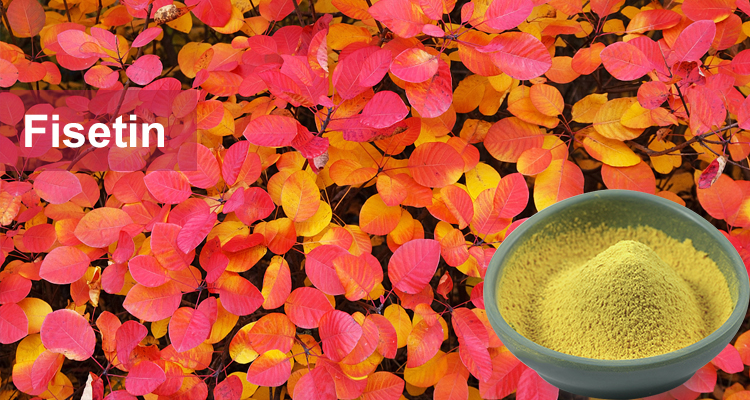
The “Dark Alliance” of Free Radicals and Aging
In the human body, this exquisite and complex “life factory,” countless chemical reactions occur every moment, and free radicals are one of the byproducts of these reactions. During cellular respiration and metabolism, incomplete electron transfer—a “small episode”—can quietly give rise to free radicals. When we exercise, the body’s energy demand increases significantly, cellular respiration accelerates, and the production of free radicals also rises; during inflammatory responses, immune cells release free radicals as “weapons” to fight pathogens, which also leads to an increase in free radicals in the body. Besides internal physiological activities, the external environment constantly fuels the production of free radicals. Ultraviolet (UV) radiation acts like an invisible killer; when it penetrates the atmosphere and shines unhindered onto our skin, the molecules in skin cells instantly become disorganized, leading to rapid oxidation and a surge of free radicals. Skin exposed to sunlight for extended periods without proper sun protection is relentlessly attacked by free radicals, resulting in sunburn, premature aging, and other problems. Pollutants such as industrial waste gas, vehicle exhaust, and pesticide residues, once inside the body, interfere with normal physiological metabolism, triggering oxidative stress and promoting the massive generation of free radicals. When smoking, harmful substances like nicotine and tar in tobacco trigger a series of oxidation reactions in the body. A small cigarette butt, when burned, can produce trillions of free radicals, which rampage through the body, causing serious damage.
Free radicals are extremely chemically reactive; they act like a group of “restless little devils,” attacking various biomolecules within cells, with DNA, proteins, and lipids bearing the brunt. When free radicals attack DNA, they cause oxidation, alkylation, or deamination of DNA bases, leading to DNA structure damage, base pairing errors, and consequently affecting normal gene expression and replication. Once proteins are targeted by free radicals, their amino acid residues are oxidized and modified, altering their spatial structure and causing functional loss. Lipids, the cell’s “protective membrane,” undergo peroxidation under free radical attack, disrupting cell membrane fluidity and integrity, severely impacting cellular transport and signal transduction.
When these biomolecules are damaged by free radical oxidative stress, cell function gradually declines, accelerating the aging process. In the skin, free radicals damage collagen and elastin fibers, causing loss of elasticity and the appearance of wrinkles, sagging, and other signs of aging. In the immune system, weakened immune cell function reduces the body’s ability to fight pathogens, making it more susceptible to disease. In the cardiovascular system, damaged vascular endothelial cells increase the risk of atherosclerosis, significantly raising the incidence of cardiovascular diseases such as heart disease and stroke. The nervous system is also not spared. Nerve cells are attacked by free radicals, and the synthesis and transmission of neurotransmitters become abnormal, leading to problems such as memory loss and cognitive impairment.
The Antioxidant “Superpower” of Fisetin
A “Sharp Weapon” for Directly Scavenging Free Radicals
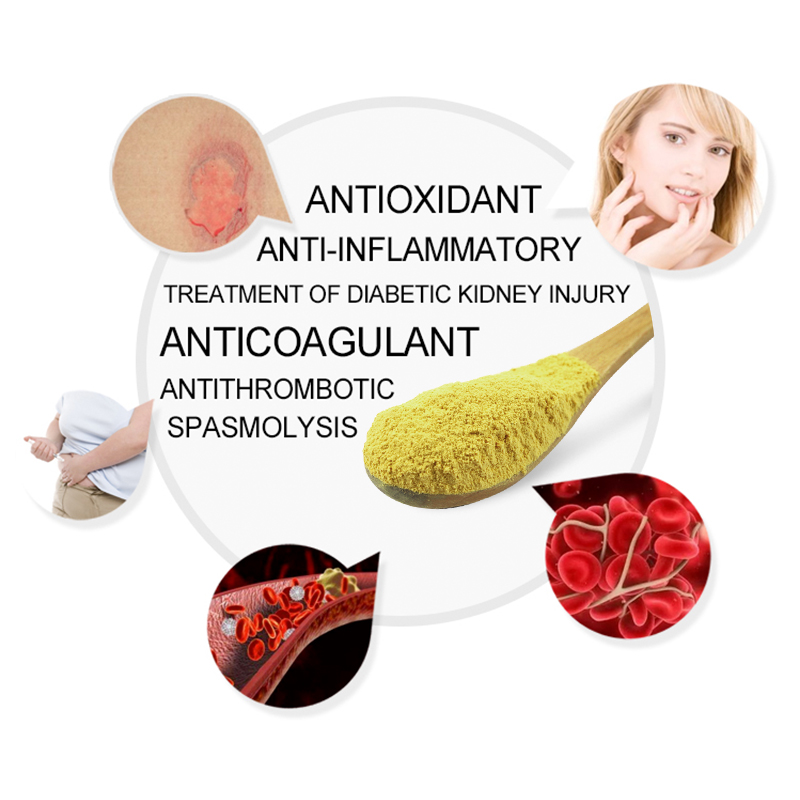
Fisetin‘s exceptional antioxidant capacity is closely related to its unique molecular structure, especially the multiple phenolic hydroxyl groups in its molecule. These phenolic hydroxyl groups are its key “weapons” for exerting its antioxidant effect. Superoxide anion radicals, as one of the most common free radicals in the body, are highly reactive and widely produced during cellular metabolism. The phenolic hydroxyl groups in the Fisetin molecule can keenly capture superoxide anion radicals. The hydrogen atoms in the phenolic hydroxyl groups generously provide hydrogen peroxide to the superoxide anion radicals, reducing them to hydrogen peroxide. Hydrogen peroxide has relatively low reactivity, and antioxidant enzymes such as catalase exist in cells, which can quickly decompose hydrogen peroxide into water and oxygen, thus effectively reducing the threat of superoxide anion radicals to cells.
Hydroxy radicals are the “destroyers” among free radicals, with extremely strong oxidizing power and great destructive force on intracellular biomolecules. Fisetin is also fearless in the face of hydroxyl radicals. The hydrogen atom of the phenolic hydroxyl group undergoes an addition reaction with the hydroxyl radical, and the two bind tightly together. The flavonoid itself is then transformed into a relatively stable phenoxy radical. It’s worth noting that the presence of multiple phenolic hydroxyl groups in the flavonoid structure allows the formed phenoxy radical to cleverly stabilize its own structure through resonance and other mechanisms. This is like creating a sturdy “shield” for the phenoxy radical, preventing it from further initiating free radical reactions and successfully stopping the attack of hydroxyl radicals on cells. In lipid peroxidation, peroxide radicals play a crucial “disruptor” role. WhenFisetin encounter peroxide radicals, they react rapidly, like a brave warrior engaging in fierce combat with an enemy. By providing hydrogen atoms, Fisetin transform peroxide radicals into relatively stable products. This process effectively prevents the chain reaction of lipid peroxidation. Just as Fisetin lend a helping hand at the critical moment when a domino is about to fall, blocking the first domino and preventing the subsequent chain reaction from continuing, thus protecting lipids from oxidative damage and maintaining the integrity and normal function of the cell membrane.
The “Conductor” Activating the Antioxidant Enzyme System
In the cell’s antioxidant defense system, antioxidant enzymes such as superoxide dismutase (SOD), glutathione peroxidase (GSH-Px), and catalase (CAT) act as loyal “guardians,” protecting cells from free radical damage. Fuchsia, on the other hand, acts like a wise “conductor,” precisely activating these antioxidant enzymes and enhancing the cell’s antioxidant capacity. SOD, as the first line of defense in antioxidant defense, catalyzes the dismutation reaction of superoxide anion free radicals, converting them into hydrogen peroxide and oxygen. Fuchsia can activate SOD by regulating complex intracellular signaling pathways. For example, it may activate the Nrf2-ARE signaling pathway. Nrf2 is a nuclear transcription factor; when activated by fuchsia, it acts like a “horn” being sounded, rapidly binding to antioxidant response elements (AREs). This combination acts like a cellular antioxidant “switch,” initiating the transcription of antioxidant enzyme genes such as SOD, prompting the cell to synthesize more SOD. More SOD means a stronger ability to scavenge superoxide anion free radicals, thus significantly reducing intracellular superoxide anion free radical levels and alleviating oxidative damage to the cell.
Glutathione peroxidase (GSH-Px) and catalase (CAT) are primarily responsible for removing hydrogen peroxide from cells. Excessive accumulation of hydrogen peroxide can cause severe cellular damage. Urushibrin can promote the function of GSH-Px by regulating the intracellular redox state. It increases the content of glutathione (GSH), an important cofactor for GSH-Px to function. More glutathione provides ample “ammunition” for GSH-Px, enabling it to more effectively remove hydrogen peroxide. For CAT, rutin may subtly modify its enzyme protein structure, much like carefully tuning a precision instrument, or regulate its synthesis and degradation processes to keep CAT in optimal working condition. This allows CAT to more efficiently decompose hydrogen peroxide, converting it into harmless water and oxygen, further enhancing the cell’s antioxidant capacity and enabling it to better resist free radical attacks.
The Anti-Aging “Miracle” of Rhus Fisetin
Calorie Restriction Mimic: Activating Autophagy
In the pursuit of health and longevity, calorie restriction (CR) has been proven to be an effective anti-aging strategy. By reducing calorie intake while ensuring the intake of essential nutrients, calorie restriction can activate a series of complex and sophisticated cellular and molecular mechanisms, thereby slowing down the aging process and reducing the risk of age-related diseases. However, strictly adhering to calorie restriction long-term is not easy; it requires strong willpower and strict control over diet, which deters many people. Fortunately, scientists have discovered calorie restriction mimics (CRMs), and rhus Fisetin is one of the best. As a calorie restriction mimic, rhus Fisetin can cleverly simulate the effects of calorie restriction without the need for people to endure the pain of hunger, activating related signaling pathways. In the complex signaling network of cells, the SIRT1 protein in the Sirtuins family acts as a key “key,” controlling the cellular aging process. Fuchsia can precisely upregulate SIRT1 expression, like injecting powerful energy into this “key,” enabling it to function better.
mTOR (mammalian target of rapamycin) is an important regulator of cell growth and metabolism. When mTOR is overactivated, cells grow and proliferate rapidly, which to some extent accelerates cellular aging. Fuchsia inhibits mTOR activity, acting like a “slow-down button” on cell growth and proliferation, thus slowing down cellular aging. During this process, autophagy is induced. Autophagy is a self-cleaning mechanism within cells, clearing damaged organelles, misfolded proteins, and other metabolic waste, acting like a diligent “cleaner,” constantly maintaining a clean cellular environment.
It is worth mentioning that, compared to other calorie restriction mimics, fuchsia exhibits unique tissue specificity, with a particularly significant effect on promoting autophagy in brain cells. As the body’s “command center,” the brain faces numerous challenges with age, such as an increased risk of neurodegenerative diseases. Autophagy in brain cells is crucial for maintaining normal neuronal function. It clears abnormal proteins accumulated within neurons, protecting them from damage. The promoting effect of Fisetin on autophagy in brain cells offers new hope for the prevention and treatment of neurodegenerative diseases. In animal experiments, feeding animals with a diet rich in Fisetin significantly increased autophagy levels in their brain cells, and also significantly improved memory and cognitive abilities, further confirming the important role of Fisetin in protecting brain health and delaying brain aging.
Senolytics: Clearing Senescent Cells
The continuous accumulation of senescent cells is a key factor in the aging process. These senescent cells are like “time bombs” in the body; although they no longer divide and proliferate normally, they are not “well-behaved.” Senescent cells secrete large amounts of senescence-associated secretory phenotypes (SASPs), which include various inflammatory factors, proteases, and growth factors. These SASPs, like “toxins,” negatively affect surrounding normal cells, interfering with their normal functions and causing them to gradually age as well. As senescent cells accumulate in the body, the functions of tissues and organs gradually decline, leading to various age-related diseases. In the cardiovascular system, the accumulation of senescent cells causes thickening of blood vessel walls and decreased elasticity, increasing the risk of atherosclerosis and cardiovascular disease. In joints, inflammatory factors secreted by senescent cells trigger inflammatory responses, leading to diseases such as arthritis. In the skin, senescent cells disrupt the synthesis of collagen and elastin fibers, causing the skin to lose elasticity, resulting in wrinkles and sagging.
Roseflavin, a powerful senolytic substance, can precisely identify and eliminate these senescent cells. Its mechanism of action is closely related to the upregulated SCAP network (anti-apoptotic pathway) of senescent cells. The reason senescent cells can survive in the body for a long time without undergoing apoptosis is largely due to their upregulated SCAP network. Roseflavin acts like a “precision marksman,” successfully blocking the SCAP network by blocking the PI3k/Akt/mTOR pathway and activating SIRT1. This removes the anti-apoptotic “protective shield” from senescent cells, forcing them to undergo apoptosis and be naturally eliminated by the body.
A wealth of research data has fully demonstrated the remarkable ability of Fisetin to clear senescent cells. In a 2018 study, scientists compared the effects of 10 Fisetin in clearing senescent cells. The results showed that Fisetin stood out, with its effect on clearing senescent cells far exceeding that of other Fisetin such as resveratrol, curcumin, and catechins. In another study on elderly mice infected with COVID-19, the remarkable efficacy of Fisetin was further validated. When these elderly mice were given Fisetin to clear senescent cells, their mortality rate decreased dramatically from nearly 100% to 50%. This astonishing result demonstrates that Fisetin can not only effectively clear senescent cells but also significantly improve the body’s health and reduce disease mortality.
Future Applications of Fisetin
 Future Applications of Fisetin
Fisetin, with its excellent antioxidant and anti-aging capabilities, has shown great application potential in multiple fields, bringing new hope for improving human health and quality of life.
In the food industry, Fisetin is expected to become a multifunctional food additive. It can be used as a natural food coloring additive, giving biscuits, bread, pastries, jams, jellies, candies, and other foods a bright yellow or brownish-yellow color, enhancing their appearance and meeting consumer demand for healthy, additive-free foods. Fisetin also has certain antibacterial properties, effectively inhibiting the growth of microorganisms in food, reducing the use of chemical preservatives, improving food safety, and extending shelf life. In jam production, adding an appropriate amount of Fisetin can extend the shelf life of the jam by several days. Fisetin is rich in vitamins and minerals and can be used as a nutritional fortifier in infant food, health products, and other products, providing the body with the necessary nutrients and promoting the growth, development, and health of infants and young children. It also possesses a certain aroma, making it a valuable flavoring agent that enhances the flavor and texture of food, adding a unique taste and improving its quality and market competitiveness.
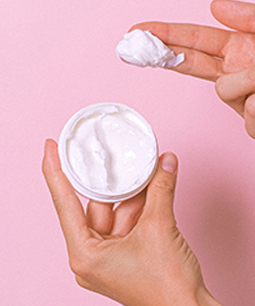
In the cosmetics field, ursolic acid is an ideal skincare ingredient. It has powerful antioxidant and anti-inflammatory effects, effectively scavenging free radicals in skin cells, reducing oxidative stress damage, and slowing down the skin aging process. Urushibrine can also inhibit inflammatory signaling pathways, reduce the production of inflammatory factors, regulate the function of immune cells in the skin, alleviate skin inflammation, and promote skin healing and recovery. Adding ursolic acid to skincare products such as creams, masks, and serums can protect the skin from environmental damage, improve skin quality, reduce the appearance of fine lines and wrinkles, and maintain skin elasticity and radiance. In a mouse model of photoaging, intervention with ursolic acid significantly reduced the depth and number of wrinkles and increased skin elasticity. Urushibrine can also be used as a natural hair dye to change hair color; its good dyeing effect and minimal damage to hair make it a promising candidate for use in hair dyeing products. It can also provide a vibrant yellow or brownish-yellow hue for lipsticks and lip balms, and a warm brownish-yellow hue for eyeshadows and blushes, increasing the appeal and market competitiveness of these makeup products.
In the pharmaceutical field, Fisetin also have broad application prospects. They possess strong antioxidant capabilities, can scavenge free radicals in the body, and protect cells from oxidative damage. They are widely used in antioxidant drugs, helping to prevent and treat various diseases. Fisetin are expected to play an important role in the treatment of neurodegenerative diseases, cardiovascular diseases, and other diseases closely related to oxidative stress. They also have certain anti-inflammatory effects, relieving inflammatory responses and reducing pain and discomfort, making them a common ingredient in anti-inflammatory drugs and analgesics. Fisetin can promote the metabolism and repair of hepatocytes, reduce the burden on the liver, and protect liver function, and are used in some hepatoprotective drugs. Some studies have shown that Fisetin have certain anti-tumor activity, inhibiting the growth and spread of tumor cells, and have potential application value in the development of anti-tumor drugs.
With ongoing research and technological advancements, the extraction and synthesis techniques for urscin will be continuously optimized, and costs will gradually decrease, providing strong support for its large-scale application. In the future, we can expect to see more foods, cosmetics, and pharmaceuticals containing urscin emerge, safeguarding people’s health and beauty. We also look forward to scientists further exploring the mechanism of action and application effects of urscin, uncovering its greater potential value, and providing more solutions to various health problems facing humanity.
