









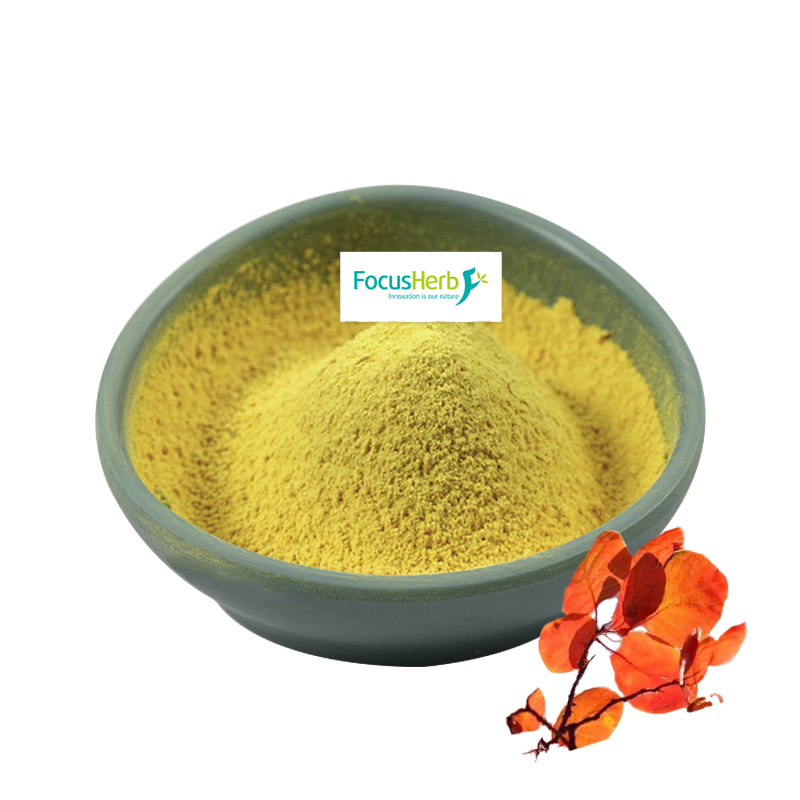
Fisetin is a unique and precious element in nature’s miraculous treasure trove. Fisetin, also known as fisetin, is a plant flavonol from the polyphenolic flavonoids family. It is a fat-soluble natural compound whose unique chemical structure endows it with numerous special properties and functions.
Fisetin is widely available, primarily found in plants such as the Anacardiaceae family, including the Cotinus coggygria and the Cotinus coggygria. As early as 1833, fisetin was successfully isolated and extracted from the succulent tree, a discovery that opened the door to its research and application. Besides Anacardiaceae plants, it is also widely found in various vegetables and fruits, such as strawberries, apples, onions, and cucumbers, making these everyday foods an important source of fisetin. Strawberries contain a relatively high level of fisetin, approximately 1-2 mg per 100 grams. This makes them not only a delicious fruit but also a great source of fisetin. Pumpkin is also a rich source of fisetin, which plays a positive role in maintaining good health. Apples, onions, and cucumbers, while containing relatively low levels of fisetin, can contribute to the accumulation of fisetin in the human body through long-term consumption, significantly benefiting health. Fisetin is also found in some traditional herbal remedies, used in traditional medicine to treat a variety of ailments. Some of their efficacy may be related to the presence of fisetin.
 Senescent Cells: The Body’s “Time Bomb”
 Senescent Cells: The Body’s “Time Bomb”
Senescent cells play a crucial role in the aging process, like a “time bomb” quietly placed within the body, gradually posing a serious threat to health over time.
Senescent cells exhibit a series of distinctive characteristics. Morphologically, they often increase in size and become irregular, like a formerly regular balloon that has been overinflated and distorted. Inside the cell, the nucleus increases in size, the nuclear membrane infolds inward, and the chromatin shrinks and darkens in color, as if the nucleus, the cell’s “command center,” has become chaotic and its function has declined. The number of mitochondria decreases, while their size increases. Mitochondria, the cell’s “energy plants,” decrease in efficiency, much like a significant drop in a factory’s production capacity. Simultaneously, a decrease in intracellular water causes cell atrophy, significantly slowing metabolism and the pace of various life activities. The activity of most enzymes decreases, making many biochemical reactions difficult to carry out normally, much like a machine running without lubricant. Furthermore, pigments gradually accumulate within the cell, forming substances such as lipofuscin, darkening the cell’s color and affecting its normal function. The harmful effects of senescent cells cannot be underestimated. Their accumulation in the body is a major cause of many age-related diseases. Senescent cells release the senescence-associated secretory phenotype (SASP), a cocktail of cytokines, chemokines, and proteases. The local inflammatory response triggered by the SASP is like an “inflammatory storm” raging through the body. This inflammatory response interferes with the function of surrounding normal cells and disrupts tissue homeostasis. In skin tissue, the accumulation of senescent cells affects dermal fibroblasts, reducing their ability to synthesize collagen. This leads to a loss of skin elasticity, increased wrinkling, and sagging and dryness. This is why skin condition gradually deteriorates with aging.
From a broader perspective of human health, senescent cells are closely linked to numerous serious diseases. In the cardiovascular system, endothelial cells are stimulated by the inflammatory factors secreted by senescent cells, resulting in reduced secretion of vasodilators such as nitric oxide, leading to vasoconstriction dysfunction. Furthermore, inflammation promotes platelet aggregation and thrombosis, significantly increasing the risk of cardiovascular diseases such as coronary heart disease and myocardial infarction. In the nervous system, the inflammatory factors released by the large accumulation of senescent cells in the brains of Alzheimer’s patients attack nerve cells, disrupting the structure and function of synapses, leading to an imbalance in neurotransmitters and ultimately causing cognitive impairment and memory loss. In diabetes, senescent cells can affect the normal function of pancreatic islet cells, reducing insulin secretion and efficiency, causing imbalances in blood sugar regulation, and ultimately triggering or worsening diabetes. Senescent cells act like hidden “time bombs” in the body. They accumulate with aging, their unique characteristics and the harmful factors they release gradually disrupting normal physiological functions and tissue homeostasis, becoming a major contributor to various age-related diseases and severely threatening people’s health and quality of life. This highlights the importance and urgency of clearing senescent cells in anti-aging and disease prevention.
The Miraculous Effects of Fisetin
Direct Elimination of Senescent Cells
Fisetin, like a precise “cell hunter,” possesses the remarkable ability to directly eliminate senescent cells. Its mechanism of action is sophisticated and complex. The persistence of senescent cells in the body stems from their upregulation of the SCAP network, an anti-apoptotic pathway that prevents them from undergoing normal apoptosis. Fisetin cleverly targets this mechanism by blocking the PI3K/Akt/mTOR pathway, effectively severing the anti-apoptotic signaling pathway in senescent cells, preventing the smooth transmission of these signals. Simultaneously, fisetin activates SIRT1, effectively triggering the apoptotic program within the cell. These two synergistic effects successfully block the SCAP network, an anti-apoptotic pathway. Senescent cells, seemingly without a protective shield, are forced to follow their natural course and undergo apoptosis, effectively eliminating them.
Numerous scientific experiments have provided solid evidence for the direct efficacy of fisetin in eliminating senescent cells. In cell experiments, researchers exposed cultured senescent cells to fisetin and, after observation for a period of time, were surprised to find a significant decrease in the number of senescent cells. Advanced cell-based assays, such as senescence-associated β-galactosidase (SA-β-Gal) staining, visually demonstrated that the senescent cells treated with fisetin showed a significant decrease in SA-β-Gal staining, indicating a decrease in the expression of characteristic markers of senescent cells and effective inhibition of senescent cell activity. In animal experiments, a mouse experiment conducted by a research team at West China Hospital was particularly noteworthy. The researchers randomly divided 70 mice of similar age and health into four groups. One group was designated as the fisetin-supplemented group. The mice were regularly given 100 mg/kg of fisetin to observe differences in their responses compared to the other three groups. After a 28-day experiment, the results were astonishing. Nearly 90% of senescent cells were eliminated in mice regularly supplemented with fisetin. Mentally, these mice were more active and agile, no longer sluggish like typical mice of the same age. In athletic tests, their endurance and speed were significantly improved. Their skin became firmer and smoother, and their hair thicker and more lustrous. Bone density and strength tests showed significant improvements, approaching the level of young mice. These experimental results fully demonstrate the powerful effect of fisetin in directly eliminating senescent cells, laying a solid foundation for its application in the anti-aging field.
Antioxidant and Anti-inflammatory: A Two-Pronged Approach
Fisetin possesses powerful antioxidant and anti-inflammatory properties, acting like a “double shield” for the body and playing a crucial indirect role in delaying aging.
From an antioxidant perspective, fisetin is a worthy “killer” of free radicals. Free radicals are highly reactive molecules in our bodies. They are naturally produced during cellular metabolism and are also stimulated by external factors such as ultraviolet radiation, environmental pollution, and unhealthy lifestyle habits (such as smoking and alcoholism). Like troublemakers, free radicals possess high oxidative activity and attack various biomolecules within cells, such as lipids, proteins, and DNA in cell membranes. When free radicals oxidize lipids in cell membranes, the membrane’s structure and function are damaged, altering its permeability and impairing the normal exchange of substances inside and outside the cell. Oxidative protein alters its structure and function, inhibiting the activity of many enzymes and disrupting normal biochemical reactions within the cell. Oxidative damage to DNA can trigger genetic mutations and increase the risk of diseases such as cancer. Fisetin’s molecular structure contains multiple phenolic hydroxyl groups, which possess unique chemical properties. These phenolic hydroxyl groups can donate hydrogen atoms to bind to free radicals, reducing them to relatively stable molecules. This effectively scavenges free radicals, terminates free radical chain reactions, and reduces oxidative damage to cells. Fisetin can also activate intracellular antioxidant enzyme systems, such as superoxide dismutase (SOD), glutathione peroxidase (GSH-Px), and catalase (CAT). These antioxidant enzymes work synergistically within the cell. SOD converts superoxide anions into hydrogen peroxide, which GSH-Px and CAT then decompose into water and oxygen, further enhancing the cell’s own antioxidant defenses and maintaining intracellular redox balance.
Fisetin also exhibits excellent anti-inflammatory properties. When the body is injured, infected, or otherwise stimulated, an inflammatory response is triggered. During inflammation, immune cells are activated, releasing a variety of inflammatory factors, such as interleukin-1β (IL-1β), interleukin-6 (IL-6), and tumor necrosis factor-α (TNF-α). These inflammatory factors act as “alarm signals” within the body, triggering an inflammatory response that causes symptoms such as redness, swelling, fever, and pain in the local tissue. Moderate inflammation is a self-protective mechanism of the body, helping to eliminate pathogens and repair damaged tissues. However, if the inflammatory response becomes uncontrolled, persistent chronic inflammation can cause serious harm to the body, disrupting normal cellular function, disrupting tissue homeostasis, and accelerating cellular and tissue aging. Fisetin can inhibit inflammatory signaling pathways, primarily by inhibiting the activation of nuclear factor-κB (NF-κB). NF-κB is a key transcription factor that plays a central role in the inflammatory response. It normally binds to the inhibitory protein IκB and exists in an inactive form in the cytoplasm. When cells are stimulated by inflammation, IκB is phosphorylated and degraded, releasing NF-κB, which then enters the cell nucleus, binds to specific DNA sequences, and initiates the transcription and translation of inflammation-related genes, leading to the massive production of inflammatory factors. Fisetin can prevent IκB phosphorylation, thereby inhibiting NF-κB activation and preventing it from entering the cell nucleus. This, in turn, reduces the production of inflammatory factors and alleviates the inflammatory response. Fisetin can also modulate immune cell function, promoting macrophage polarization toward the anti-inflammatory M2 type, enhancing their anti-inflammatory and tissue repair abilities, reducing the release of inflammatory mediators, and alleviating the damage caused by inflammation.
The antioxidant and anti-inflammatory effects of Fisetin have important indirect implications for delaying aging. Oxidative stress and chronic inflammation act as two key contributors to the aging process, mutually reinforcing each other in a vicious cycle that accelerates aging. By scavenging free radicals and inhibiting inflammation, Fisetin can effectively mitigate the damage caused by oxidative stress and chronic inflammation to cells and tissues, maintaining a stable internal environment and creating favorable conditions for normal cellular metabolism and function, thereby indirectly delaying the aging process. During skin aging, long-term oxidative stress and inflammation can lead to the degradation of collagen and elastin fibers, causing a loss of elasticity, wrinkles, and sagging. Fisetin’s antioxidant and anti-inflammatory properties can reduce free radical damage to skin cells, inhibit the destruction of collagen and elastic fibers by inflammatory factors, promote collagen synthesis, and maintain skin elasticity and firmness. In the cardiovascular system, oxidative stress and inflammation can damage vascular endothelial cells and promote the development of atherosclerosis. Through its antioxidant and anti-inflammatory properties, fisetin can protect endothelial cells, lower blood lipids, inhibit platelet aggregation, reduce the risk of cardiovascular disease, maintain cardiovascular health, and ultimately slow overall aging.
Activating Longevity Proteins and Regulating Cellular Pathways
Fisetin exerts unique anti-aging effects at the cellular level. Its key mechanism lies in activating longevity proteins and regulating cellular pathways.
Among the many longevity proteins, SIRT1 is particularly important, playing a central role in regulating cellular aging. SIRT1 belongs to the silent information regulator 2 (Sir2) protein family and possesses deacetylase activity, capable of deacetylating a variety of substrate proteins, thereby regulating their activity and function. Fisetin activates SIRT1, a process that involves a complex series of cellular signaling pathways. Once inside cells, fisetin interacts with specific receptors or molecules, triggering a signaling cascade. This reaction activates several kinases within the cell, which in turn act on the SIRT1 gene promoter, enhancing its transcriptional activity and increasing SIRT1 protein expression. Activated SIRT1, through deacetylation of various substrate proteins, exerts a range of beneficial effects on cells. It regulates cellular metabolism, enhancing energy efficiency and maintaining optimal cell function under limited energy supply. It also enhances cellular antioxidant capacity by regulating the activity and expression of antioxidant enzymes, improving free radical scavenging and reducing oxidative stress damage. SIRT1 also plays a key role in DNA repair, recruiting related repair proteins to the damaged site, promoting DNA repair and maintaining genomic stability. These synergistic effects effectively delay cellular aging. In addition to activating SIRT1, fisetin also plays a crucial role in regulating cellular pathways such as mTOR. mTOR is a serine/threonine protein kinase involved in regulating numerous important physiological processes, including cell growth, proliferation, metabolism, and autophagy. Under normal circumstances, mTOR regulates cell metabolism and growth by sensing intracellular signals such as nutrients, energy levels, and growth factors. When cells are well-nourished and rich in growth factors, mTOR is activated, promoting protein synthesis, cell growth, and proliferation. However, when cells are nutrient-deficient or exposed to stress, mTOR activity is inhibited, and cells initiate autophagy, degrading damaged organelles and proteins to maintain cell survival and homeostasis. However, with aging, the mTOR pathway tends to become overactivated, leading to excessive cell growth and proliferation, consuming excessive energy and nutrients, while also inhibiting autophagy, causing the accumulation of damaged organelles and proteins within the cell and accelerating cellular aging. Fisetin inhibits overactivation of the mTOR pathway by interacting with key molecules in the mTOR signaling pathway, blocking signal transmission and thus maintaining mTOR activity at a moderate level. When mTOR activity is inhibited, cellular metabolism and growth are properly regulated, preventing excessive consumption. Simultaneously, autophagy is activated and enhanced. Autophagy acts as a cellular “scavenger,” clearing damaged organelles (such as mitochondria and the endoplasmic reticulum) and misfolded proteins. The accumulation of these substances within cells is a key hallmark of cellular aging. By enhancing autophagy, fisetin helps maintain a clean and stable internal environment of cells, reducing the accumulation of aging-related substances and delaying the onset of aging at the cellular level.
Fisetin’s mechanisms of activating the longevity protein SIRT1 and regulating cellular pathways such as mTOR provide a deep understanding of its anti-aging effects at the cellular and molecular level. This provides a microscopic basis for understanding the anti-aging effects of fisetin and an important theoretical foundation for the development of fisetin-based anti-aging interventions.
Research Progress and Clinical Applications
Currently, research on fisetin in the anti-aging field is in full swing, demonstrating tremendous potential. Its findings also offer new hope for clinical application.
In the area of skin anti-aging, a wealth of research data and clinical case studies are encouraging. Studies have shown that fisetin can exert significant anti-aging effects through multiple pathways. It stimulates fibroblasts to produce collagen, injecting new vitality into the skin’s “support structure,” increasing collagen density and making the skin firmer and more elastic. Experimental data show that after using skincare products containing fisetin for a period of time, subjects’ skin collagen content increased significantly, wrinkle depth decreased significantly, and skin elasticity improved. Fisetin also inhibits the activity of matrix metalloproteinases (MMPs). MMPs act like “destroyer molecules” in the skin, breaking down collagen and elastic fibers in the extracellular matrix. Fisetin’s inhibition of MMPs acts like a shackle on these “destroyer molecules,” reducing collagen and elastic fiber degradation and thus delaying skin aging. In a clinical trial involving 50 middle-aged women, one group used a skincare product containing fisetin, while the other used standard skincare products. After three months of use, the group using the fisetin-containing product experienced an average 15% increase in skin firmness, a 10% reduction in wrinkle depth, and significant improvement in skin radiance, while the control group experienced relatively minimal changes. This study demonstrates the significant anti-aging effects of fisetin and provides strong theoretical and practical support for the development of novel anti-aging skincare products.
Fisesetin has also demonstrated remarkable neuroprotective effects, offering new hope for the treatment of neurodegenerative diseases. Multiple studies have demonstrated its potential therapeutic potential for neurodegenerative diseases such as Alzheimer’s disease and Parkinson’s disease. In Alzheimer’s research, fisetin has been shown to inhibit the aggregation and deposition of β-amyloid protein (Aβ). Abnormal aggregation and deposition of Aβ is a key pathological hallmark of Alzheimer’s disease. It forms senile plaques, disrupting the structure and function of nerve cells and leading to cognitive impairment. Fisetin, through its unique molecular structure, interacts with Aβ, preventing its aggregation and reducing the formation of senile plaques, thereby protecting nerve cells. In an animal study, administration of fisetin to mice with an Alzheimer’s disease model significantly reduced Aβ deposition in the brains of the mice and significantly improved cognitive abilities, demonstrating improved learning and memory in behavioral tests such as the water maze. Fisetin also regulates neurotransmitter levels, increasing acetylcholine (ACh). ACh is a neurotransmitter that plays a key role in learning and memory. ACh levels are typically reduced in the brains of Alzheimer’s patients, leading to impaired neural signaling. By promoting ACh synthesis or reducing its breakdown, fisetin enhances neural signaling and helps improve cognitive function. Fisetin can inhibit dopaminergic neuronal apoptosis in Parkinson’s disease. Massive dopaminergic neuron apoptosis is one of the primary pathological changes in Parkinson’s disease, leading to decreased dopamine secretion and symptoms such as movement disorders. Through its antioxidant and anti-inflammatory properties, fisetin protects dopaminergic neurons, reduces apoptosis, and maintains normal dopamine secretion, thereby improving symptoms in Parkinson’s patients. Fisetin’s protective effects have been observed in several cell and animal studies in Parkinson’s disease models. Although fisetin’s neuroprotective properties are still in the preclinical research stage, these findings lay a solid foundation for its future application in the treatment of neurodegenerative diseases, potentially making it a new and effective treatment for these diseases.
Fisetin has also demonstrated positive research progress in cardiovascular protection and metabolic regulation. In terms of cardiovascular protection, fisetin can lower blood lipids, inhibit platelet aggregation, and reduce the formation of atherosclerosis. It can regulate the expression of genes related to lipid metabolism, lowering blood cholesterol, triglycerides, and low-density lipoprotein levels while increasing high-density lipoprotein levels. This acts like a comprehensive “cleansing” of the cardiovascular system, reducing lipid deposition in blood vessel walls. In terms of metabolic regulation, fisetin can improve insulin resistance and regulate blood sugar levels. By activating relevant signaling pathways and enhancing insulin sensitivity, it enables cells to better uptake and utilize glucose, thereby maintaining stable blood sugar levels. This is of great significance for the prevention and treatment of metabolic diseases such as diabetes. Although fisetin has demonstrated numerous advantages in anti-aging and related disease treatments, clinical application still faces several challenges. Fisetin’s low bioavailability is a major factor limiting its widespread application. Due to its chemical structure, it has certain limitations in absorption, distribution, metabolism, and excretion in the body, resulting in a relatively low effective dose that enters the bloodstream and reaches target organs for its effects. Various methods are currently being actively explored to improve the bioavailability of fisetin. For example, nanotechnology, such as nanoparticles, can increase its solubility and stability, improving its absorption efficiency in the body. Drug delivery systems are also being developed, with novel drug carriers such as liposomes and microspheres encapsulating fisetin for targeted delivery and increased concentration in target tissues. The safety and side effects of long-term use of fisetin also require further investigation. Although current studies have shown that fisetin is safe within a certain dosage range, more clinical studies are needed to assess the potential risks of long-term use.
Research progress on fisetin in the anti-aging field is encouraging, with significant results in various areas, including skin anti-aging and neuroprotection. Although clinical application faces some challenges, with continued research and technological advancements, we believe that fisetin will play an even more important role in the future of anti-aging and disease treatment, bringing greater benefits to human health.
Future Outlook and Reflections

Research findings on fisetin in the anti-aging field have opened up broad prospects for its application in multiple fields and have also prompted in-depth reflection on its future development.
In the health supplement sector, fisetin holds enormous development potential. With rising health awareness, demand for health supplements is growing, particularly those with demonstrated anti-aging benefits. Health supplements based on fisetin have the potential to become a daily health maintenance and anti-aging option. Fisetin can be combined with other natural antioxidant and anti-inflammatory ingredients, such as vitamin C, vitamin E, and grape seed extract, to create multivitamin tablets or soft capsules, enhancing their health benefits and meeting the needs of diverse populations. However, the current health supplement market is mixed, and consumer trust in these products varies widely. To ensure market acceptance of fisetin health supplements, it is necessary to strengthen quality regulation to ensure product safety and efficacy. Establishing rigorous quality standards and testing systems ensures consistent fisetin content and reliable quality across each batch. At the same time, we should increase publicity efforts to raise consumer awareness of the health benefits of fisetin. Through scientific promotion and education, we should educate consumers about its efficacy, suitable patients, and usage methods, guiding them to make rational choices.
Skincare products are also an important area for the application of fisetin. As mentioned earlier, fisetin has significant anti-aging effects on the skin, stimulating collagen production, inhibiting matrix metalloproteinase activity, reducing wrinkles, and improving skin elasticity. In the future, as research into the mechanism of action of fisetin deepens, more effective anti-aging skincare products are expected to be developed. Fisesetin can be combined with moisturizing ingredients such as hyaluronic acid and ceramide to create moisturizing anti-aging creams, serums, and other products. During the production process, formulas and processes must be optimized to ensure the stability and activity of fisetin in skincare products. The skincare market is currently highly competitive, with numerous brands and consumers demanding high quality and effectiveness. To stand out in the market, continuous innovation is necessary, enhancing the technological content and user experience of products. Through clinical trials and user feedback, we can continuously improve our products to meet consumer demand for anti-aging skincare. The pharmaceutical field represents the most challenging yet promising application area for fisetin. Research findings on fisetin’s neuroprotective, cardiovascular, and metabolic effects offer new avenues for treating chronic diseases such as neurodegenerative diseases, cardiovascular disease, and diabetes. For example, in the treatment of neurodegenerative diseases, fisetin can inhibit β-amyloid aggregation and regulate neurotransmitter levels, laying the foundation for the development of novel therapeutic agents. However, developing fisetin into a clinical drug faces numerous challenges, such as the low bioavailability mentioned above. Further research is needed into the pharmacokinetics and pharmacodynamics of fisetin, and innovative drug delivery systems can be used to improve its bioavailability and targeting. The safety and side effects of long-term use of fisetin also require extensive clinical trials to ensure that the drug’s safety and efficacy meet clinical standards.
Research on fisetin in the anti-aging field provides a foundation for its application in health supplements, skincare products, and pharmaceuticals. Despite these challenges, with continued advancements in science and technology and in-depth research, we believe that fisetin will make even greater contributions to human health and beauty in the future.
