









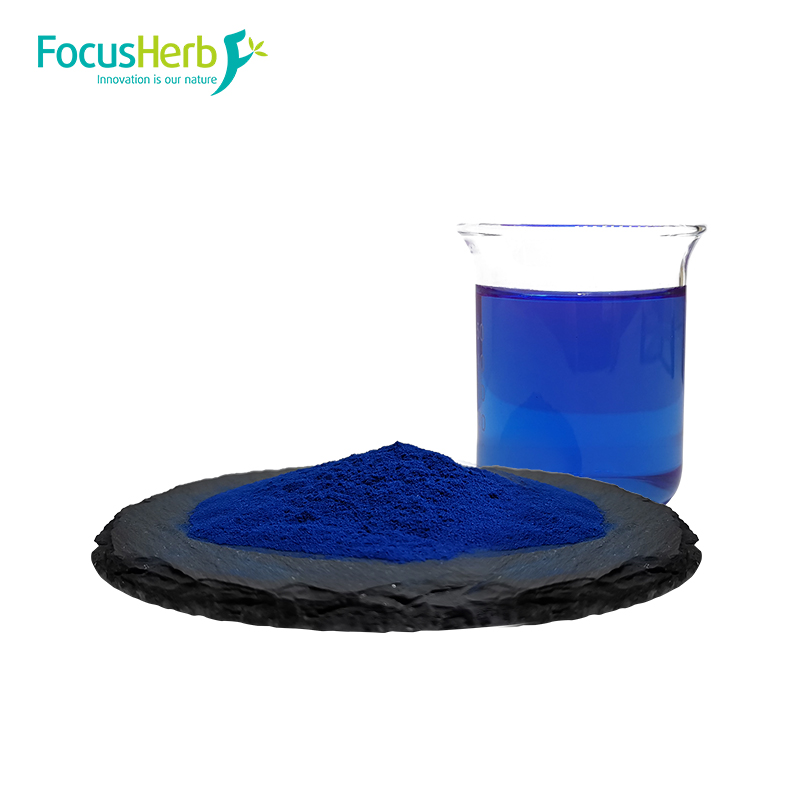
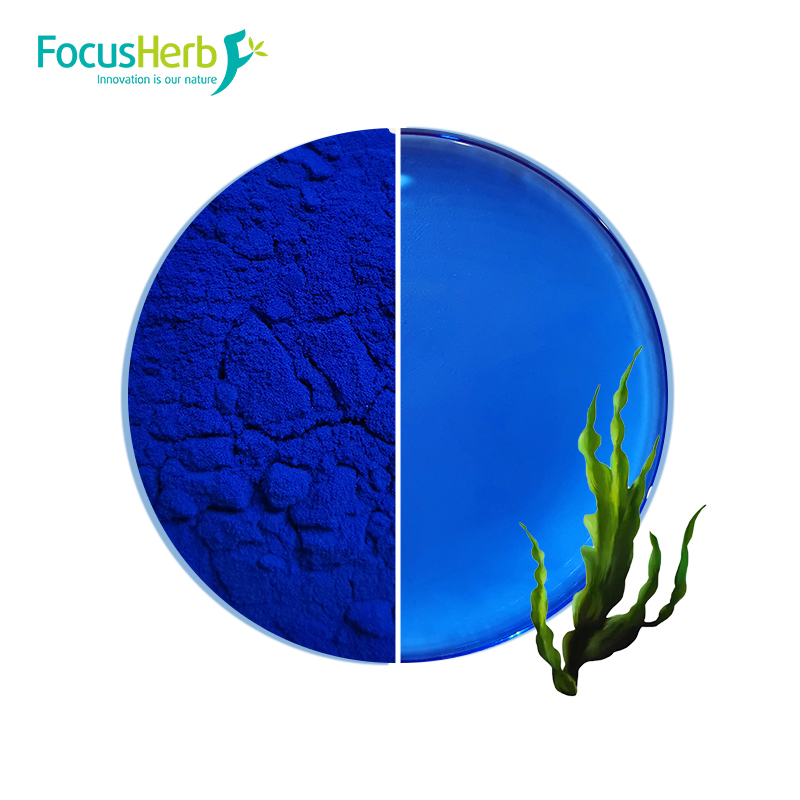
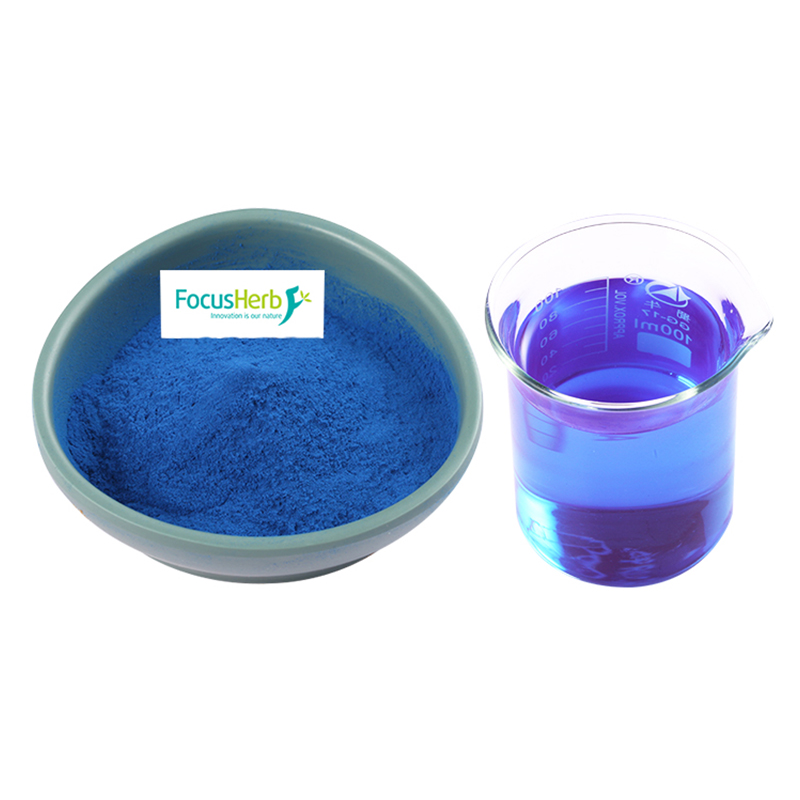
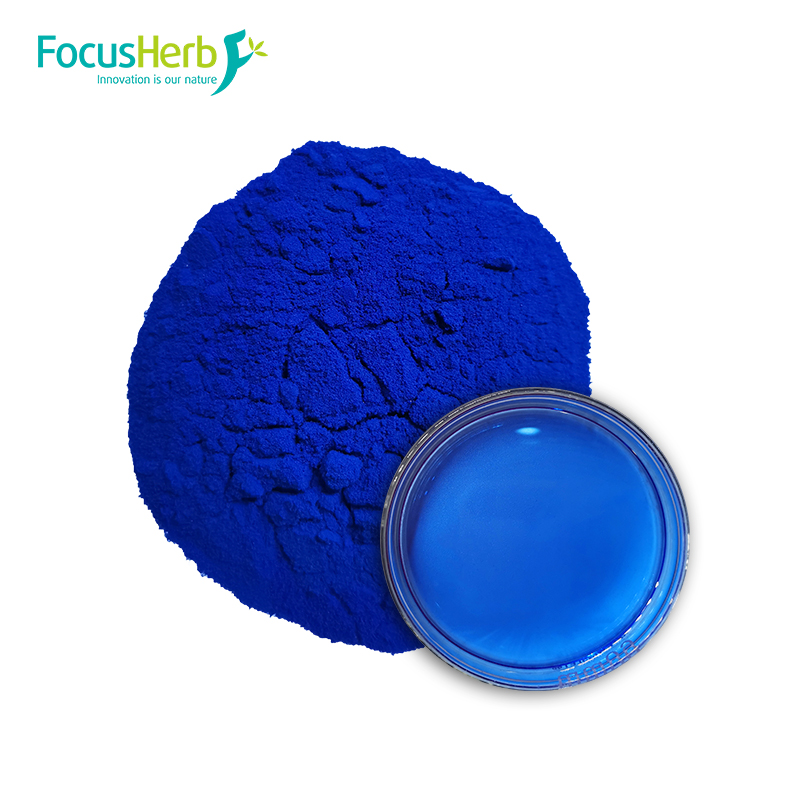
Phycocyanin is a natural water-soluble protein extracted from microorganisms such as spirulina and cyanobacteria. It possesses both pigment and bioactivity properties. Its core components are phycocyanin (chromophore), protein (carrier), and various amino acids (including essential amino acids), and it is also rich in minerals (iron, zinc, selenium) and bioactive peptides. Its remarkable characteristics make it a veritable “natural combination of advantages”:
Coloring characteristics: It exhibits a bright blue-green to sapphire blue hue, with stable color (wide range of light and heat resistance, and does not easily fade within pH 4-10), making it a natural and non-toxic food coloring;
Bioactivity: It possesses strong antioxidant, anti-inflammatory, and immunomodulatory functions, and has good biocompatibility, with a human absorption rate exceeding 85%;
Safety attributes: It contains no artificial synthetic additives, aligning with the “natural, healthy, and green” consumer trend, and has been listed as a permitted food additive and dietary supplement ingredient in many countries.
These characteristics give it irreplaceable application value in the fields of food, medicine, cosmetics, and scientific research, earning it the reputation of “natural blue gold.”
 Food Industry: A Dual Role of Natural Coloring and Nutritional Fortification
 Food Industry: A Dual Role of Natural Coloring and Nutritional Fortification
(I) Natural Colorants: The “Blue Aestheticians” of Food
Phycocyanin is an ideal natural raw material to replace artificial synthetic blue pigments (such as brilliant blue). It provides natural coloring without safety risks and is widely used in various food products:
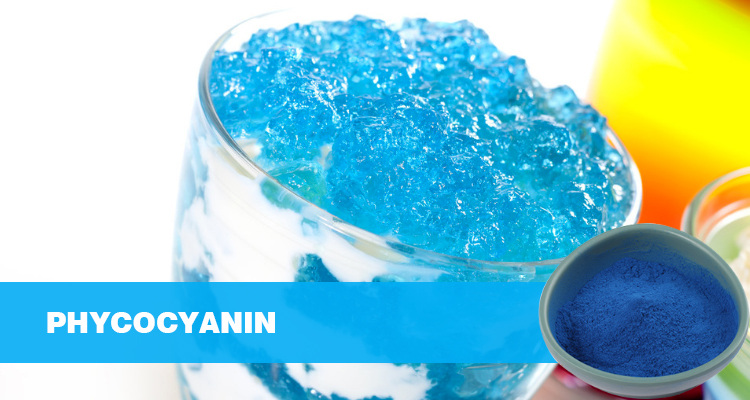
Beverage Industry: Used in functional beverages, juices, lactic acid bacteria drinks, cocktails, etc., giving products a unique blue-green or royal blue hue, enhancing visual appeal (e.g., blue sparkling water, layered gradient drinks);
Dairy Products: Added to yogurt, ice cream, cheese, milkshakes, etc., creating high-value “blue-toned desserts” while avoiding the potential effects of artificial coloring on children;
Baking and Confectionery: Used in cakes, cookies, macarons, chocolates, and candies (e.g., blueberry gummies, blue lollipops), providing uniform coloring without affecting product flavor, suitable for low- to medium-temperature processing;
Health Foods: Added to nutritional meal replacement powders, protein powders, and solid beverages, serving both as a natural coloring agent and simultaneously supplementing nutrition, aligning with the product positioning of “aesthetics + health”.
(II) Nutritional Fortifiers: The “Hidden Nutritional Powerhouse” of Food
Phycocyanin contains high-quality complete protein (its amino acid composition closely matches human needs) and is rich in trace elements such as iron and zinc, making it an excellent raw material for food fortification:
Infant Foods: Appropriate amounts can be added to infant rice cereal, complementary food purees, and formula milk powder (compliant with GB 2760 standards) to supplement protein and minerals. It is naturally gentle and suitable for the delicate digestive systems of infants and young children.
Functional Foods: Used in immune-modulating foods, antioxidant foods, and sports nutrition foods (such as sports drinks and energy bars), it can both enhance protein supply and alleviate post-exercise fatigue and boost immunity through bioactive components.
Vegetarian Foods: As a source of plant protein, it can be added to vegetarian burgers, plant-based meats, plant-based milk products, etc., to compensate for the lack of protein and trace elements in vegetarian diets, while also giving the products a natural color.
In the pharmaceutical and healthcare field: A “Functional Pioneer” of Bioactivity
(I) Immune Regulation and Antioxidant: A “Shield” for Health
The core bioactivity of phycocyanin is concentrated in immune enhancement and oxidative stress protection, making it an important choice for dietary supplements and pharmaceutical raw materials:
Immune Regulation: By activating macrophage and lymphocyte activity, it promotes the synthesis of immunoglobulins (IgG, IgA), enhancing the body’s resistance to bacteria and viruses, making it suitable for people with low immunity (such as the elderly, postoperative recovery patients, and people who frequently stay up late);
Antioxidant: Its chromophores can scavenge free radicals (such as hydroxyl radicals and superoxide anions), inhibit lipid peroxidation, reduce cell damage, and have an auxiliary protective effect against cardiovascular diseases and liver damage;
Clinical Applications: Studies have shown that the active peptides in phycocyanin can inhibit the release of inflammatory factors (such as TNF-α and IL-6), have an auxiliary alleviating effect on chronic inflammation (such as arthritis and enteritis), and have a certain inhibitory activity against tumor cells (further clinical verification is needed), making it a promising raw material for pharmaceutical intermediates.
(II) Nutritional Supplementation and Special Medical Uses
High-Quality Protein Supplementation: Contains all eight essential amino acids and is easily absorbed. It can be used as a dietary supplement for people with protein deficiencies (such as vegetarians and those with weak constitutions), or in special medical purpose formula foods (such as postoperative nutritional preparations and nutritional supplements for patients with liver disease);
Hematopoietic Function Assistance: Rich in iron (which binds to proteins to form easily absorbed iron complexes) and working synergistically with vitamin B12, it can help improve iron-deficiency anemia, suitable for women, adolescents, and postpartum women;
Eye Health Protection: Phycocyanin’s antioxidant properties protect retinal cells from free radical damage and relieve eye fatigue. It can be used as a core ingredient in eye care products, suitable for people who use their eyes for long periods (such as office workers and students).
Cosmetics: The “Blue Code” of Natural Skincare
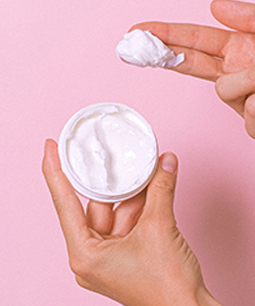
 Cosmetics: The “Blue Code” of Natural Skincare
(I) Natural Coloring and Skin Texture Improvement: The “Green Raw Material” for Makeup
The natural blue-green color of phycocyanin can be used in makeup products, combining coloring and gentle properties:
Makeup Products: Added to eyeshadow, blush, lipstick, nail polish, etc., to create a natural and fresh blue-green tone, avoiding the irritation of artificial pigments to the skin, especially suitable for sensitive skin makeup;
Skincare Coloring: Used in masks, serums, body lotions, etc., to give products visual recognition (such as blue hydrating masks), and is non-irritating and does not affect the skin barrier.
(II) Skincare Functional Ingredients: Skin’s “Repair and Protection Agents”
The antioxidant, anti-inflammatory, and moisturizing properties of phycocyanin make it a core ingredient in high-end skincare products:
Antioxidant and Anti-aging:Clears free radicals from the skin, inhibits collagen degradation, reduces wrinkles and sagging, and delays skin aging. Suitable for anti-aging serums, creams, and other products.
Anti-inflammatory and Soothing:Regulates skin inflammation signaling pathways, relieves redness and itching in sensitive skin, and improves skin inflammation after acne and sunburn. Can be used in sensitive skin repair products and medical dressings.
Moisturizing and Barrier Repair:The protein components can form a breathable moisturizing film on the skin surface, locking in moisture while promoting the repair of the stratum corneum, improving dry and rough skin texture. Suitable for basic skincare products such as moisturizing toners and lotions.
Brightening: Inhibits tyrosinase activity (reducing melanin production) and, through antioxidant effects, fades dark spots and dullness, achieving a dual effect of “brightening + repair.” Suitable for whitening serums, masks, and other products.
Scientific Research and Other Fields: Unique “Application Tools”
(I) Biomedical Research Tools
The fluorescent properties of phycocyanin (excitation wavelength 580-620 nm, emission wavelength 650-670 nm) make it an ideal biological probe:
Used in experiments such as cell labeling, immunofluorescence detection, and flow cytometry, as a fluorescent dye to replace traditional chemical fluorescent agents, with lower toxicity and stronger stability;
Used in the preparation of biosensors to detect heavy metal ions and harmful substances in the environment, or in medical diagnostic reagents (such as tumor marker detection), improving detection sensitivity and specificity.
(II) Feed and Aquaculture Sector
Aquatic Feed Additives: Used in aquaculture feeds for fish, shrimp, crabs, etc., they act as natural colorants (improving the body color of aquatic products, such as salmon and shrimp), supplement protein and bioactive components, enhance the immunity of aquatic animals, and reduce the incidence of disease.
Livestock and Poultry Feed Colorants: Added to poultry feeds (such as laying hens and broilers), they can improve the color of egg yolks and chicken meat (giving egg yolks a natural golden yellow color), while also increasing the nutritional added value of livestock and poultry products.
(III) Other Potential Applications
Environmental Governance: Utilizing the adsorption properties of phycocyanin, industrial wastewater can be treated (adsorbing heavy metal ions), or it can be used as a biological indicator to detect water pollution;
Bioenergy and Materials: Through bio-fermentation technology, the protein components of phycocyanin can be converted into biofuels, or used to prepare biodegradable materials (such as food packaging films), which aligns with environmental protection trends.
Application Prospects and Development Trends
With the continuous upgrading of consumer demand for “natural, healthy, and functional” products, the application prospects of phycocyanin are becoming increasingly broad:
Food Sector: The demand for replacing artificial synthetic pigments will continue to grow, especially in infant formula, high-end beverages, and functional foods, where its application will further expand, with “coloring + nutrition” dual-function products becoming mainstream;
Pharmaceutical and Healthcare Sector: It is expected to be used to develop precision health products targeting specific scenarios such as immune regulation, anti-inflammation, and eye protection, or as a pharmaceutical intermediate in the research and development of drugs for adjuvant cancer treatment and chronic inflammation;
Cosmetics Sector: Its application in high-end products such as sensitive skin repair, natural makeup, and anti-aging skincare will increase, becoming a core raw material under the “natural skincare” trend;
Scientific Research and Environmental Protection Sector: Applications in specific areas such as biological probes, environmental monitoring, and biomaterials will gradually be implemented, driving the expansion of phycocyanin from “consumer grade” to “industrial grade + scientific research grade”.
Meanwhile, with the upgrading of extraction technologies (such as supercritical fluid extraction and membrane separation technology), the purity, activity retention rate, and production cost of phycocyanin will be further optimized, laying the foundation for its in-depth application in more fields.
Previous: Gardenia Blue:Summary of uses
