








Beef liver powder grade selection for functional food is a core sourcing problem for functional food manufacturers. Focusherb As qualified GMP factory bulk wholesale raw materials, beef liver powder has strict grade access standards different from ordinary food seasonings. Functional foods cover adult wellness supplements, maternal & infant complementary foods, sports nutrition, and functional pet supplements, requiring strict raw material traceability, nutrient retention and cross-border compliance. This article sorts out three mainstream liver powder grades and their applicable production scenarios.
Beef liver powder available on the market is categorized into three grades based on raw material source, manufacturing processes and certifications: conventional grain-fed industrial grade, standard grass-fed food grade, and organic grass-fed high-purity functional grade. Many buyers sourcing materials for functional foods confuse the specifications of these three tiers. Blindly purchasing low-cost industrial-grade powder often results in failed regulatory inspections and non-compliant nutritional benefit labeling. Below we break down the applicable scope of each grade against functional food access standards, pairedwith practical procurement guidance for brands.
Can Conventional Grain-Fed Industrial-Grade Beef Liver Powder Be Used in Functional Foods?
Manufacturers adopt high-temperature spray drying exclusively to cut production costs for this grade. Some suppliers further dilute the base material with bulking agents such as starch and plant fiber to reduce expenses. This grade fails to meet functional food entry requirements on both safety and nutritional grounds, with four critical drawbacks outlined below:
Elevated residual hazards
The liver acts as the animal’s primary detoxification organ, prone to accumulating veterinary drug residues and mycotoxins from conventional grain feed. It also contains excessive fat, cholesterol and purines. Long-term addition in functional products will increase chronic metabolic pressure on human and pet liver and kidney organs.
Zero cross-border compliance credentials
It carries no domestic or international organic certifications nor AAFCO-compliant pet ingredient test reports. Its only permitted applications are low-cost extruded pet kibble and culinary seasoning mixes, and it is prohibited for all domestic and export functional food lines.
Limitations of Standard Grass-Fed Food-Grade Beef Liver Powder
Standard grass-fed food-grade liver powder uses free-range grass-fed yellow cattle without grain-based fattening feeds. It delivers superior fat and cholesterol profiles compared to grain-fed variants and comes with standard domestic food hygiene test reports; some items hold only single domestic organic certification.
Insufficient retention of bioactive nutrients
Only high-temperature spray drying is available, with no FD freeze-drying or low-temperature air-drying options. Trace functional compounds including natural liver nutrient peptides and plant-sourced antioxidants degrade heavily, resulting in nutrient concentrations below the threshold required for legal functional nutrition labeling under national standards.
Poor batch consistency: Cattle slaughter age is not standardized, with wide age variation across production runs. Heme iron and vitamin B12 levels fluctuate by more than 20% between batches, making consistent nutritional labeling impossible and creating risks during regulatory sampling inspections.
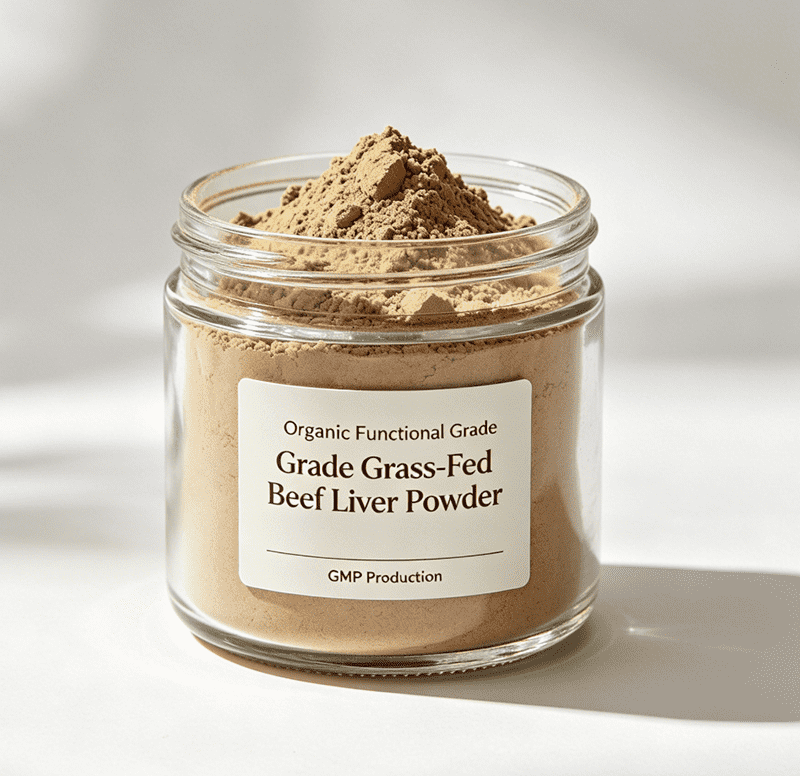
Why Is Organic Grass-Fed High-Purity Functional Grade the Top Raw Material Choice for Functional Foods?
Core Compliance Advantages Supporting Legal Functional Benefit Claims
Comprehensive safety certifications eliminate regulatory risks. Cattle are raised with zero antibiotics, growth hormones or pesticides at all stages. Pasture soil and water undergo annual organic recertification, so the liver contains no accumulated heavy metals or toxins, making it safe for functional products targeting sensitive groups such as infants, post-surgery recuperating individuals, and seniors. It holds three
authoritative organic certifications: China Organic, EU Organic and USDA Organic. It also complies with GB 2760 national food safety standards for human consumption and AAFCO ingredient specifications for pets, enabling smooth customs clearance for both domestic sales and overseas exports.
Standardized Dosing Simplifies Functional Formula Development
Official safe inclusion dosages are defined for distinct consumer groups to eliminate risks of excessive vitamin A buildup from the source, ideal for professional functional food formulation teams:
- Functional infant complementary food: 0.2–0.3 g daily
- Adult functional wellness supplements: 0.5-1g daily
- Pet functional nutritional supplements: 0.1g per 5kg body weight daily
All functional-grade products adopt low-temperature FD/AD processing in GMP sterile workshops, retaining over 92% natural active nutrients, fully meeting legal functional ingredient labeling requirements.
Grade Selection Quick Summary for Functional Food Buyers
- Industrial grade: Only for common seasoning & low-grade pet kibble, banned for all functional food
- Food grade: Only for ordinary nutritional food, cannot mark functional nutrition effects
- Functional grade: Fully compliant for maternal-infant, sports, human and pet functional food export
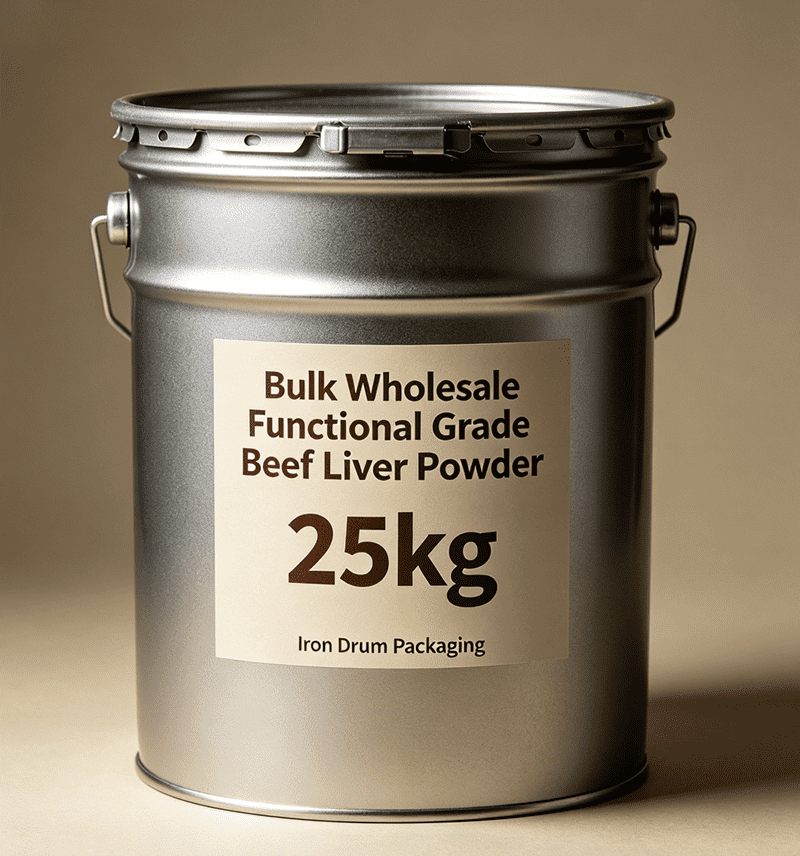
Bulk Procurement
We provide third-party full-item detection reports, organic certification copies and customized batch nutrient stability testing for functional food factories. All functional grade beef liver powder supports mixed container shipment and private label packaging.Inquire now to get free sample sets and customized compliance documents within 12 hours, with long-term bulk price locking service.
References
1. USDA National Organic Program (NOP), Organic Production and Handling Standards
https://www.ecfr.gov/current/title-7/subtitle-B/chapter-I/subchapter-M/part-205
2. European Commission – Organic Farming and Organic Production Rules
https://agriculture.ec.europa.eu/farming/organic-farming/organic-production-and-products_en
3. Codex Alimentarius – Veterinary Drug Residues in Food
https://www.fao.org/fao-who-codexalimentarius/codex-texts/dbs/vetdrugs/en/
4. Association of American Feed Control Officials (AAFCO) – Official Publication and Ingredient Definitions
https://www.aafco.org/
5. U.S. Food and Drug Administration (FDA) – Current Good Manufacturing Practice (CGMP) Regulations
https://www.fda.gov/drugs/pharmaceutical-quality-resources/current-good-manufacturing-practice-cgmp-regulations
6. National Center for Biotechnology Information (NCBI) – Liver Physiology and Function
https://www.ncbi.nlm.nih.gov/books/NBK535438/
7. National Health Commission of the People’s Republic of China – National Food Safety Standards (GB Standards)
https://www.nhc.gov.cn/
8. State Administration for Market Regulation (SAMR) – Food Safety Regulatory Information
https://www.samr.gov.cn/
