






The discovery of spermidine is a fascinating chapter in the long history of scientific exploration. As early as the 19th century, scientists began studying substances with special functions within organisms, and spermidine was one of them. With continuous advancements in research methods, its mysteries have gradually been unveiled. Spermine belongs to the polyamine class of substances and is widely distributed in nature, found in everything from microscopic bacteria to complex plants and animals, and even inside the human body.
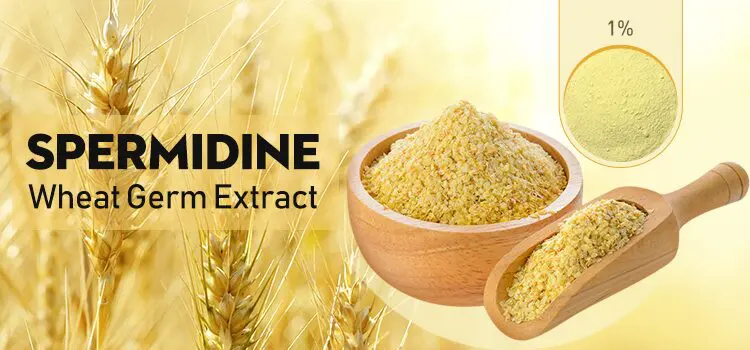
Among the many sources rich in spermidine, wheat germ stands out as a focus of attention. As one of the world’s most important food crops, wheat germ, although comprising only a small percentage of the grain’s weight, contains abundant nutrients, with spermidine being a key active ingredient. Studies have found that every 100 grams of wheat germ contains a considerable amount of spermidine, making wheat germ extract spermidine a popular target for in-depth research and development. Its potential value in multiple fields is attracting increasing attention.
 In the medical field: The “Invisible Guardian” of Health
 In the medical field: The “Invisible Guardian” of Health
(I) A “Special Indicator” for Disease Diagnosis
In the sophisticated world of medical testing, spermidine is quietly playing a crucial role, becoming a “special indicator” for disease diagnosis. For prostate cancer diagnosis, spermidine is of paramount importance. Studies have shown that spermidine levels in prostate cancer patients often exhibit specific changes, significantly different from those in healthy individuals. Clinicians can use the spermidine content in a patient’s blood, urine, or tissues as an auxiliary reference indicator for prostate cancer diagnosis. This is like providing doctors with a crucial “navigation point” in the vast fog of disease, helping them more accurately determine whether a patient has prostate cancer and assess the severity of the condition.
Furthermore, spermidine plays a role in broader cancer diagnosis. It is closely related to the proliferation, differentiation, and apoptosis of tumor cells, and many cancer patients exhibit abnormal spermidine metabolism. Therefore, spermidine can serve as a potential auxiliary diagnostic indicator for cancer, used in combination with other traditional tumor markers to improve the accuracy of early cancer diagnosis. For example, in early liver cancer screening, combining spermidine detection with commonly used indicators such as alpha-fetoprotein (AFP) can more comprehensively assess a patient’s physical condition, detect potential lesions, and buy valuable treatment time for the patient.
(II) A “Potential Star” in Drug Development
In the forefront of drug development, spermidine, an extract from wheat germ, shines like a “potential star,” bringing new hope for conquering many intractable diseases. Neurodegenerative diseases such as Alzheimer’s and Parkinson’s have always been a challenge in the medical field, seriously affecting patients’ quality of life and health. Spermine has shown unique potential in drug development for these diseases, as it can have a positive impact on the nervous system through multiple pathways.
Studies have found that spermidine has the effect of inhibiting neurotransmitter compounds, regulating the balance of neurotransmitters, and reducing nerve cell damage and death. In animal experiments, administering a diet rich in spermidine or spermidine preparations can improve the cognitive function and motor ability of experimental animals and alleviate the symptoms of neurodegenerative diseases. This discovery provides an important direction for developing drugs to treat neurodegenerative diseases. Researchers are using this as a foundation to delve into the mechanism of action of spermidine, attempting to develop novel drugs with spermidine as a core component or inspired by its mechanism of action, hoping to provide patients with effective treatments.
Furthermore, spermidine has also attracted considerable attention in the development of drugs for cardiovascular diseases. It can regulate the function of vascular endothelial cells, inhibit inflammatory responses and oxidative stress, and reduce the risk of cardiovascular diseases. Some studies suggest that appropriate spermidine supplementation may help improve the condition of patients with cardiovascular diseases such as hypertension and atherosclerosis. This opens up new avenues for the development of drugs for cardiovascular diseases, and perhaps in the near future, novel cardiovascular drugs based on spermidine will emerge, bringing good news to a large number of cardiovascular disease patients.
Food Sector: A “Double Guarantee” of Nutrition and Preservation
(I) A “New Favorite” in Nutritional Supplementation
In an era that pursues a healthy lifestyle, spermidine, as a “new favorite” in nutritional supplementation, is gradually entering people’s field of vision. Scientific research provides strong evidence for the health benefits of spermidine, which plays a positive role in many aspects, one of which is improving cognition. As people age, their cognitive function gradually declines, while spermidine can regulate the transmission of neurotransmitters and enhance signal communication between nerve cells, thereby helping to improve memory and attention. Some studies on the elderly have found that after appropriate spermidine supplementation, their performance in cognitive tests showed significant improvement. Boosting immunity is another important function of spermidine. It can activate immune cells, enhance their activity and function, and make the body’s immune system more efficient in resisting the invasion of pathogens. During flu season, people who consume foods or supplements rich in spermidine have a relatively lower chance of contracting the flu virus, and the symptoms they do experience are relatively milder and the recovery time is shorter.
Furthermore, spermidine also has a positive impact on cardiovascular health. It can lower cholesterol and triglyceride levels in the blood, inhibit platelet aggregation, reduce the risk of thrombosis, and thus reduce the incidence of cardiovascular disease. Given the many health benefits of spermidine, it has a broad market prospect as a nutritional supplement, and more and more consumers are beginning to pay attention to and choose products containing spermidine, such as spermidine capsules and spermidine oral liquid, investing in their health.
(II) A “Natural Preservative” for Food Preservation
In the field of food preservation, spermidine acts as a “natural preservative,” playing a key role in extending the shelf life of food and ensuring food safety due to its unique antibacterial properties. Spermidine effectively inhibits the growth and reproduction of common spoilage bacteria and pathogens in food. In meat preservation, it inhibits the growth of harmful bacteria such as Escherichia coli and Staphylococcus aureus, reducing spoilage and off-odors. In one experiment, pork coated with spermidine solution and untreated pork were stored in the same environment. After a period of time, the untreated pork developed noticeable slime and an off-odor, with a significant increase in bacteria. The spermidine-treated pork, however, maintained good color and texture, with a much lower bacterial count than the untreated group.
Spermidine also performs well in the preservation of fruits and vegetables. It can reduce the rate of fruit decay and slow down the aging process. For example, strawberries are highly perishable, quickly becoming soft, rotten, and moldy after harvesting. Strawberries treated with spermidine have a significantly extended shelf life, maintaining their plumpness, color, and taste for a longer period, facilitating long-distance transportation and sales. The application of spermidine in food preservation not only reduces the use of chemical preservatives, meeting consumers’ pursuit of natural and healthy foods, but also reduces economic losses caused by food spoilage, resulting in significant economic and social benefits.
Cosmetics: The “Youth Code” to Reverse Skin Aging
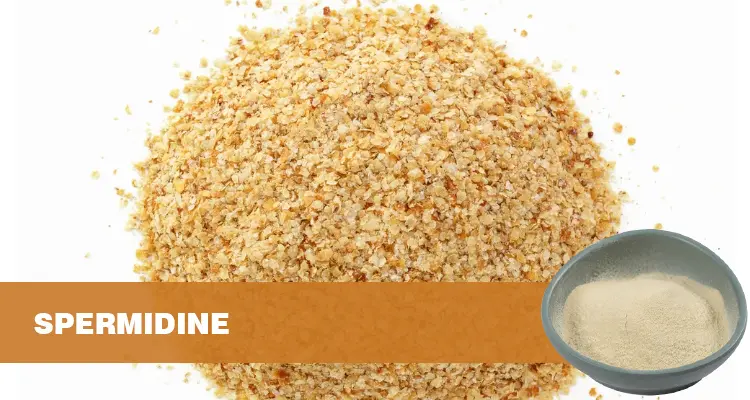
In the cosmetics field, spermidine, an extract from wheat germ, is considered the “youth code” to reverse skin aging, bringing numerous amazing benefits to skin health and beauty.
(I) An Antioxidant “Vitality Factor”
As time passes and external environmental factors such as ultraviolet radiation and pollution affect the skin, it is constantly attacked by free radicals. Free radicals are highly reactive molecules that wantonly damage cell structures and biomolecules within the skin, leading to signs of aging such as increased wrinkles, sagging, and loss of radiance. Spermidine, on the other hand, is a “vitality factor” that combats free radicals. With its unique chemical structure, it actively binds to free radicals, undergoing a chemical reaction that transforms them into stable substances, thus effectively eliminating free radicals from the skin.
In an experiment on skin anti-oxidation, skincare products containing spermidine were applied to the skin of experimental animals. After a period of time, tests showed a significant reduction in the level of free radicals in the skin, while the activity of antioxidant enzymes in the skin was significantly enhanced. This indicates that spermidine not only directly scavenge free radicals but also stimulates the skin’s own antioxidant defense system, giving the skin a stronger ability to resist free radical damage. By continuously scavenging free radicals, spermidine slows down the skin’s aging process, keeping the skin youthful and radiant.
(II) Cell Regeneration “Activator”
Autophagy is an important mechanism for cells to maintain their homeostasis and function. It acts like a “scavenger” within the cell, removing damaged organelles, protein aggregates, and other waste products, creating favorable conditions for normal cell metabolism and function. Spermidine is an “activator” of autophagy; it can initiate the autophagy process, promoting the removal and renewal of intracellular waste.
In skin cells, with age, the ability of autophagy gradually declines, leading to waste accumulation, impaired cell function, and consequently affecting skin metabolism and quality. When spermidine acts on skin cells, it can activate related signaling pathways, promoting the formation of autophagosomes and enhancing autophagy activity. Activated skin cells accelerate the removal of internal aging substances and damaged structures, making room for the synthesis of new cellular substances and the restoration of cellular function. This speeds up skin cell metabolism, with new cells constantly being generated and old cells being renewed in an orderly manner, thereby improving skin quality. Skin becomes firmer and smoother, with a more even skin tone, and fine lines and dullness are significantly improved, revealing a more delicate and elastic appearance.
In the realm of biological reactions: A “Regulatory Master” in the Microscopic World
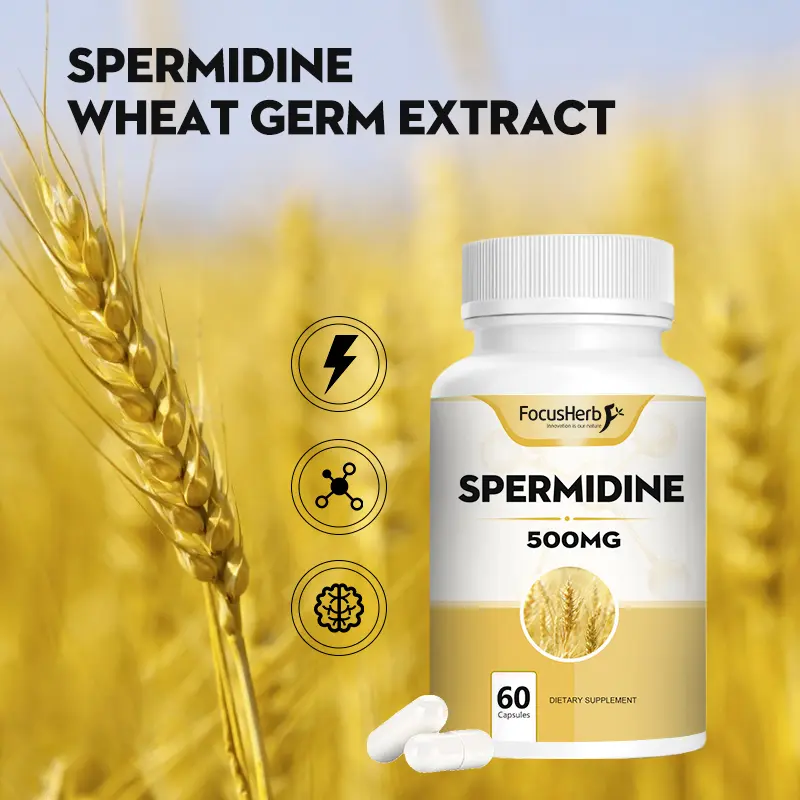
In the microscopic world of biological reactions, spermidine, an extract from wheat germ, plays a crucial role as a “regulatory master,” exerting an indispensable regulatory effect on some fundamental and important biological processes. In the in vitro transcription process of bacteriophage RNA polymerase, spermidine is a critical activator. In vitro transcription is an important way to synthesize RNA, and it is of great significance for studying biological processes such as gene expression and protein synthesis. Taking T7 bacteriophage RNA polymerase as an example, adding an appropriate amount of spermidine during in vitro transcription experiments can significantly improve transcription efficiency and increase the amount of RNA synthesized. This is because spermidine can interact with RNA polymerase and the DNA template, changing their spatial conformation to make them more conducive to transcription initiation and elongation. It’s like injecting a powerful force into the transcription process, allowing RNA polymerase to move more efficiently along the DNA template and accurately synthesize RNA chains according to the base pairing principle.
Spermine also plays an important role in the complex process of hormone regulation of nucleic acid metabolism. Hormones participate in regulating various physiological processes in organisms, including growth, development, and metabolism, while nucleic acid metabolism is fundamental to cellular life activities. For example, in animals, hormones such as insulin involve changes in nucleic acid metabolism when regulating cellular glucose uptake and utilization. Research has found that spermidine can participate in this process, regulating the expression of related genes and influencing nucleic acid synthesis and degradation. Through interactions with key molecules in hormone signaling pathways, spermidine assists hormones in more precisely regulating intracellular nucleic acid metabolism, maintaining normal cellular physiological functions. If we compare a cell to a sophisticated factory, then hormones are the managers issuing production instructions, while spermidine acts as a capable assistant, helping the managers better coordinate various production activities within the factory to ensure the smooth operation of nucleic acid metabolism, a crucial “production link.”
Future Prospects: The Limitless Potential of Spermine
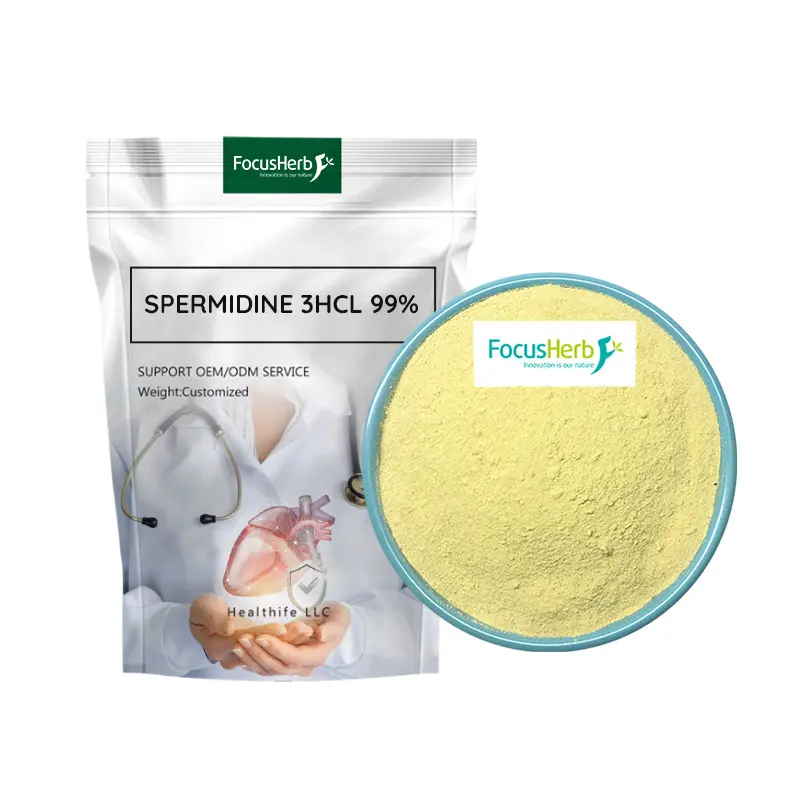
Spermine, an extract from wheat germ, has demonstrated remarkable application value in multiple fields, including agriculture, medicine, food, cosmetics, and bioreactors. With continuous research and technological advancements, its future development potential is limitless. In agriculture, spermidine holds promise for achieving more efficient and sustainable agricultural production models. In the future, researchers may further optimize the application technologies of spermidine in crop propagation, root development, fruit preservation, and genetic engineering, developing more precise and environmentally friendly spermidine formulations to provide strong support for solving global food security and agricultural product quality issues.
The medical field will be a crucial arena for spermidine to shine. With in-depth research into the mechanism of action of spermidine, its applications in disease diagnosis and drug development will become more widespread and profound. Perhaps in the near future, novel diagnostic reagents and therapeutic drugs based on spermidine will emerge, bringing new hope for conquering major and intractable diseases such as cancer, neurodegenerative diseases, and cardiovascular diseases.
In the food and cosmetics industries, consumer demand for healthy, natural, and effective products is growing, and spermidine perfectly aligns with this trend. In the future, more functional foods rich in spermidine and cosmetics with excellent anti-aging effects will be launched on the market, satisfying people’s pursuit of a better life. Research on spermidine in the field of bioreactions will continue to expand, providing new perspectives and tools for a deeper understanding of the mysteries of life processes, thereby promoting innovative development in biotechnology. Spermine, an extract from wheat germ, is a highly valuable bioactive substance that has brought new opportunities and changes to multiple fields. We look forward to more researchers dedicating themselves to spermidine research, exploring its greater potential value, and making greater contributions to the progress and development of human society.
