






In the vast field of bioactive substances, spermidine, with its unique polyamine compound properties, stands as a core force in protecting cellular health. It is a naturally occurring active substance synthesized from the amino acids arginine and proline, widely present in organisms, playing an indispensable role, especially in cell growth, division, and metabolism. From a molecular structure perspective, multiple amino groups in the spermidine molecule constitute its core active site. These amino groups act as precise “free radical scavengers,” endowing it with powerful antioxidant potential and simultaneously regulating key intracellular physiological pathways, achieving multi-dimensional protection of cellular health.
Beyond its core antioxidant function, spermidine’s most remarkable bioactivity is its activation of autophagy. Autophagy acts as a “cleaning system” within cells, promptly removing damaged organelles and abnormal proteins, maintaining cellular homeostasis. Spermidine can awaken this “cleaning system” by regulating related signaling pathways, thus slowing down the cellular aging process. Furthermore, spermidine possesses significant neuroprotective activity, inhibiting neuroinflammatory responses, regulating neurotransmitter balance, building a strong defense for nervous system health, and also showing positive effects in improving cardiovascular health.
 Natural Presence and High-Quality Acquisition Methods
 Natural Presence and High-Quality Acquisition Methods
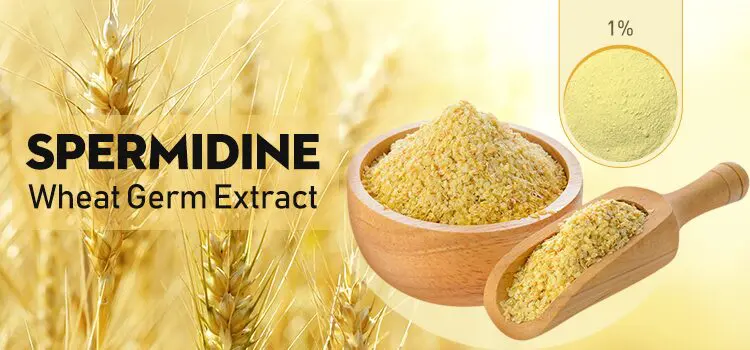
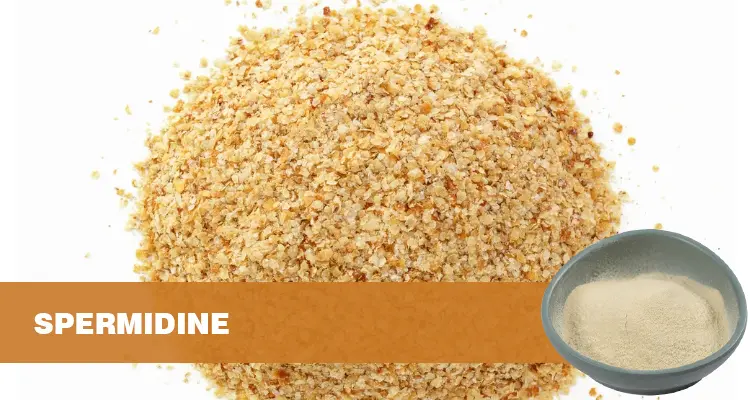
Spermidine is widely distributed in the bodies of plants and animals in nature, but its content and bioavailability vary significantly depending on the source. Wheat germ is considered a “natural goldmine” of spermidine, with a much higher spermidine content than ordinary foods, making it a high-quality raw material for extracting high-purity spermidine. As the core nutrient region of wheat seeds, wheat germ contains the essential nutrients needed for seed growth and development. Under suitable growing environments and processing techniques, the activity of spermidine can be preserved to the maximum extent.
In daily diets, legumes, nuts, and fermented foods also contain small amounts of spermidine, such as soybeans, peas, almonds, and fermented products like natto and kimchi. These foods can serve as basic sources of spermidine. However, it is important to note that the spermidine content in ordinary foods is low and easily affected by cooking methods, making it difficult to meet the body’s precise needs for spermidine.
Wheat germ extract, with its high spermidine content, strong activity, and high absorption and utilization rate, has become the preferred method for efficiently supplementing spermidine. Modern bio-extraction technology allows for the precise separation and purification of spermidine from high-quality wheat germ, while retaining some synergistic active ingredients to further enhance its health benefits. Whether for the general population focused on daily health maintenance or for groups with specific health needs, spermidine preparations derived from wheat germ extract can provide a scientifically sound source of spermidine.
Spermine’s Multidimensional Antioxidant Defense Mechanism
 Spermine’s Multidimensional Antioxidant Defense Mechanism
(I) Direct Protection Against Exogenous Free Radicals
During human metabolism, reactive oxygen species such as superoxide anion radicals (O₂⁻) and hydroxyl radicals (·OH) are continuously generated. These free radicals act like “destructive molecules,” constantly attacking intracellular biomolecules such as lipids, proteins, and DNA, causing oxidative damage and accelerating cellular aging and disease. Spermine acts like a “frontline defender,” leveraging its molecular structure advantages to actively eliminate free radicals.
The amino group in spermine molecules has strong reducing properties, enabling it to directly react with free radicals in the body. By donating electrons, it converts free radicals into relatively stable substances, thereby terminating their attack on cells. Especially for lipid free radicals generated during lipid peroxidation, spermine can precisely bind to them, blocking the lipid peroxidation chain reaction, reducing the level of lipid peroxidation products, effectively protecting the integrity of cell membranes, and preventing cells from losing normal function due to membrane structure damage.
(II) Activation and Regulation of the Endogenous Antioxidant System
The antioxidant effect of spermidine is not limited to directly scavenging free radicals; its core advantage lies in its ability to activate the body’s own endogenous antioxidant system, constructing a three-dimensional defense network of “internal and external synergy,” and fundamentally enhancing the cellular antioxidant capacity. This “internal defense before external defense” regulatory mechanism makes antioxidant defense more durable and efficient.
The nuclear factor E2-associated factor 2 (Nrf2)-antioxidant response element (ARE) signaling pathway is the “core command system” of the human body’s antioxidant defense system, and spermidine is the key to activating this pathway. Under normal conditions, Nrf2 binds to Kelch-like epichlorohydrin-associated protein 1 (Keap1) in the cytoplasm and is inactive. When stimulated by oxidative stress, spermidine can promote the dissociation of Nrf2 from Keap1. The activated Nrf2 rapidly enters the cell nucleus, binds to ARE, and initiates the transcription of a series of antioxidant genes.
Under the regulation of spermidine, the expression and activity of key antioxidant enzymes such as superoxide dismutase (SOD), glutathione peroxidase (GPx), and catalase (CAT) are significantly upregulated. SOD can convert superoxide anion radicals into relatively harmless hydrogen peroxide (H₂O₂); GPx can utilize reduced glutathione (GSH) to reduce H₂O₂ to water, and spermidine can also regulate intracellular GSH levels, providing sufficient substrate for GPx; CAT can rapidly decompose H₂O₂ into water and oxygen, preventing its conversion into more toxic hydroxyl radicals. Furthermore, spermidine can induce the expression of antioxidant proteins such as heme oxygenase-1 (HO-1) and glutamate-cysteine ligase (GCL), further strengthening the endogenous antioxidant defense.
Experimental data fully validated the regulatory efficacy of spermidine: in relevant animal model experiments, spermidine supplementation significantly increased SOD activity and GPx activity in body tissues, and substantially reduced the levels of oxidative stress markers. This indicates that spermidine can effectively stimulate the body’s own antioxidant potential, synergistically working with direct free radical scavenging mechanisms to comprehensively reduce oxidative stress damage and provide lasting protection for cell health.
Spermine’s Multidimensional Protective Effects on Cellular Health
(I) Autophagy Activation and Aging Delay
Autophagy is a core physiological process for maintaining cellular health. With age, the capacity for autophagy gradually declines, leading to the accumulation of damaged organelles and abnormal proteins within cells, accelerating cellular aging. Spermine, as an “activator” of autophagy, can precisely regulate autophagy-related signaling pathways, awakening the cell’s “self-cleaning” function.
Spermine initiates the autophagy process by regulating the activity of key signaling molecules such as mammalian target of rapamycin (mTOR), promoting the efficient operation of the cell’s “cleaning mechanism.” This mechanism promptly removes aging and damaged organelles and misfolded proteins, while simultaneously recycling degradation products to provide energy and nutrients to the cell. This activation of autophagy effectively delays the cellular aging process and maintains normal cellular physiological functions. Studies have found that spermine supplementation can significantly extend the lifespan of model organisms and improve aging-related physiological indicators, fully demonstrating its outstanding efficacy in delaying cellular aging.
(II) Targeted Protective Effects on Nerve Cells
Nerve cells are extremely sensitive to oxidative damage. Oxidative stress and neuroinflammation are important triggers for nerve cell damage and the development of nervous system diseases. Spermidine, with its dual antioxidant and anti-inflammatory activities, acts as a “guardian” of nerve cells, protecting the health of the nervous system from multiple dimensions.
Spermidine can directly scavenge free radicals generated during nerve cell metabolism, reducing the damage of oxidative stress to nerve cell membranes and organelles. Simultaneously, by activating the Nrf2 signaling pathway, it enhances the nerve cells’ own antioxidant defense capabilities, reducing the risk of oxidative damage. Furthermore, spermidine can precisely inhibit the activation of inflammatory signaling pathways such as nuclear factor κB (NF-κB), reducing the release of pro-inflammatory factors such as tumor necrosis factor α and interleukins, thus calming neuroinflammatory responses. In terms of neurotransmitter regulation, spermidine can promote the synthesis and release of beneficial neurotransmitters, maintain neurotransmitter balance, and enhance the signal transduction function of nerve cells, which has positive significance for preventing and improving neurodegenerative problems.
(III) Synergistic Protection of the Cardiovascular System
The health of the cardiovascular system is closely related to oxidative stress and inflammatory responses. Spermidine, through its multidimensional biological activities, provides comprehensive protection for the cardiovascular system. On the one hand, spermidine’s strong antioxidant capacity can inhibit oxidative damage to vascular endothelial cells, protecting the integrity of the vascular endothelium. On the other hand, spermidine can regulate the function of vascular smooth muscle cells, inhibit abnormal proliferation, and maintain normal vascular elasticity.
Furthermore, spermidine can reduce the risk of thrombosis by inhibiting excessive platelet aggregation, while simultaneously regulating lipid metabolism, reducing lipid deposition on the vascular wall, and slowing the progression of atherosclerosis. Experimental studies have shown that spermidine supplementation can improve cardiovascular function indicators in animal models, reduce the risk of cardiovascular disease, and provide strong protection for cardiovascular health.
Scientific Intake and Safe Application Guidelines for Spermidine
(I) Principles of Dietary Supplementation and Preparation Use
Scientific intake of spermidine is key to maximizing its health benefits. For the general health-conscious population, basic supplementation through daily diet is recommended, with a balanced intake of spermidine-rich foods such as wheat germ, legumes, nuts, and fermented foods. Wheat germ can be added directly as a complementary food, such as to porridge or rice, or ground into powder and brewed for consumption, which better preserves its nutritional activity.
It is important to note that cooking methods significantly affect the activity of spermidine in food. High-temperature frying and prolonged stewing will damage the molecular structure of spermidine, reducing its activity and content. Therefore, low-temperature cooking methods are recommended, such as steaming, cold dishes, and short-time stir-frying, to maximize the preservation of spermidine activity in food.
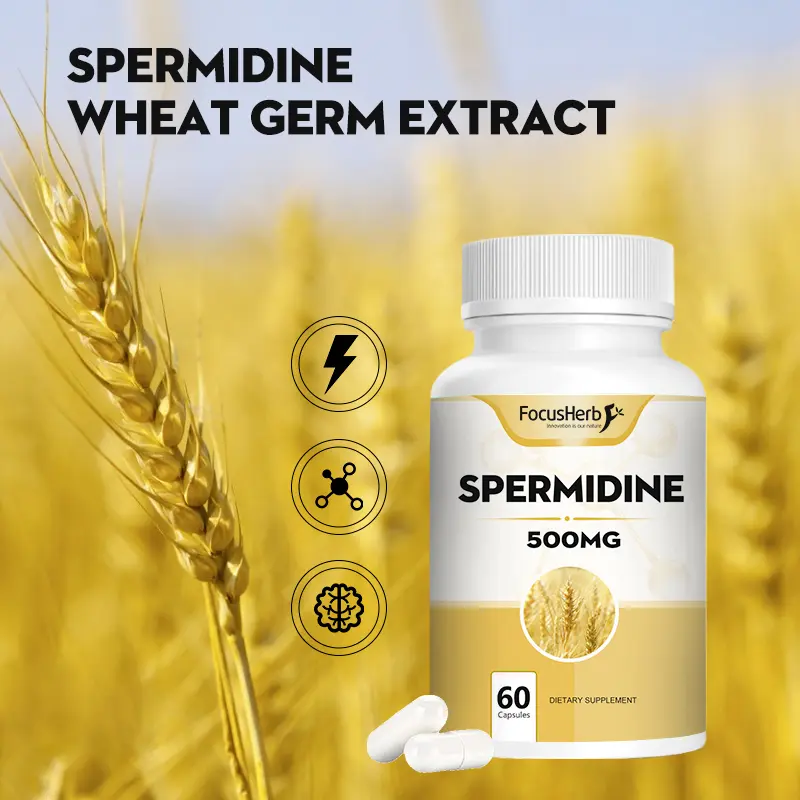
For individuals with specific supplementation needs, such as the middle-aged and elderly, office workers, and those with specific health management needs, spermidine preparations made from wheat germ extract can be chosen. When choosing spermidine products, prioritize those from reputable manufacturers with authoritative testing and certification to ensure accurate content, high purity, and absence of harmful impurities. Dosage should be individualized, adjusted according to age, physical condition, and health needs. It is recommended to use under the guidance of a professional physician or nutritionist to avoid blindly supplementing excessively.
Special reminder: Individuals taking anticoagulants, antihypertensive drugs, or other chronic disease medications should inform their doctor before using spermidine preparations to assess drug interaction risks and ensure medication safety and supplementation effectiveness.
(II) Contraindications and Monitoring in Special Populations
Special populations should exercise extreme caution when using spermidine, prioritizing the principle of “safety first.” Due to limited safety research data, pregnant and lactating women are advised against using spermidine preparations indiscriminately to avoid potential impacts on fetal or infant development. If supplementation is necessary, a comprehensive evaluation by a professional physician is required.
Individuals with impaired liver or kidney function have weaker metabolic and detoxification functions, and the metabolism of spermidine requires the participation of the liver and kidneys. Spermidine preparations may increase the burden on the liver and kidneys in individuals with impaired liver or kidney function, leading to accumulation of the substance in the body and causing adverse reactions. Therefore, individuals with liver or kidney dysfunction should undergo a comprehensive liver and kidney function assessment first, use the product cautiously under close medical monitoring, and have their liver and kidney function indicators checked regularly.
Individuals with allergies should be aware of the risk of allergic reactions. If allergic to wheat germ or spermidine-related products, allergic symptoms such as skin itching, rash, and difficulty breathing may occur after use. Such individuals should absolutely avoid using the product. For first-time users of spermidine preparations, it is recommended to start with a small dose to observe for any adverse reactions. If no abnormalities are observed, normal use can then proceed.
Long-term use of high doses of spermidine preparations may cause mild gastrointestinal discomfort, such as nausea, bloating, and diarrhea. If such symptoms occur, the dosage should be adjusted immediately or use should be discontinued. To ensure safe use, long-term users are advised to have regular monitoring of their physical indicators, including liver and kidney function and coagulation function, to identify potential risks and adjust the supplementation regimen accordingly.
It is important to emphasize that the efficacy of spermidine described in this article is based on preclinical studies and animal experimental data. Speridine preparations derived from wheat germ extract are dietary supplements and cannot replace medication for disease treatment. In practical application, it is essential to follow the principles of evidence-based medicine and use it rationally under professional medical guidance to ensure that spermidine truly becomes a powerful aid in protecting cellular health and promoting overall well-being.
