






Spermine, a key member of the polyamine family, is a naturally occurring polyamine compound whose unique molecular structure makes it indispensable in life activities. It is derived from putrescine. In organisms, putrescine combines with the propylamine group provided by S-adenosylmethionine (SAM) through a specific enzymatic reaction to generate spermine, which is a precursor to spermine. All three are closely linked in the polyamine metabolic pathway. Spermine has the chemical formula C7H19N3, a relative molecular mass of 145.25, and contains two or more primary amino groups. This structure gives it a positive charge, allowing it to bind with many negatively charged biomolecules in organisms, such as nucleic acids and proteins, through electrostatic interactions.
Throughout the long course of biological evolution, spermine has been widely present in various organisms, from single-celled organisms to higher plants and animals, and is an important endogenous substance for maintaining normal cellular physiological functions. In the human body, spermine is distributed in various tissues and organs, participating in a variety of physiological processes. At the cellular level, spermidine is distributed in the nucleus, cytoplasm, and mitochondria. In the nucleus, spermidine binds tightly to DNA, neutralizing the negative charge on the DNA molecule and making its double helix structure more compact and stable. This acts like a “stabilizing scaffold” for the DNA molecule, protecting it from damaging factors such as ultraviolet radiation, oxidative stress, and chemicals, reducing gene mutations and chromosomal abnormalities, and ensuring the accuracy of genetic information transmission. In mitochondria, spermidine participates in maintaining normal mitochondrial function and plays a crucial role in cellular energy metabolism and apoptosis regulation.
Spermine is mainly obtained through three pathways: endogenous synthesis, intestinal microbial metabolism, and dietary intake. The human body can synthesize spermidine gradually through its own metabolic pathways, using arginine and S-adenosylmethionine as raw materials, under the catalysis of a series of enzymes such as arginine decarboxylase and ornithine decarboxylase. Meanwhile, the gut microbiota also participates in spermidine synthesis. Gut microorganisms utilize nutrients from food for metabolic activities, producing spermidine. This microbially synthesized spermidine can be absorbed and utilized by the body, becoming one of the important sources of spermidine in the body. In daily diets, wheat germ, mushrooms, beans, and fermented foods are all excellent dietary sources of spermidine. The spermidine content varies among different foods; for example, wheat germ is relatively rich in spermidine, possibly containing several milligrams per 100 grams. In some vegetables and fruits, the spermidine content is relatively low, but a long-term balanced diet can still provide the body with a certain amount of spermidine.
As we age, the body’s physiological functions gradually decline, and the level of spermidine in the body also gradually decreases. From adolescence to middle age, and then to old age, the level of spermidine in the body shows a clear decreasing trend. Studies have shown that spermidine levels in the tissues and blood of older adults are significantly lower than those in younger adults. This age-related decline in spermidine levels is considered a potential biomarker of age-related functional decline and is closely associated with the development of various age-related diseases, such as cardiovascular disease and neurodegenerative diseases.
 Spermine’s Multidimensional Protective Mechanisms for Regulating Cellular Health
 Spermine’s Multidimensional Protective Mechanisms for Regulating Cellular Health
(I) Activating Autophagy: The Core Pathway for Clearing “Cellular Waste”
Autophagy is an important self-degradation and recycling mechanism within cells, playing an indispensable role in maintaining cellular homeostasis and ensuring normal cellular physiological functions. It acts like a “cleaning system” within the cell, responsible for clearing damaged organelles, misfolded proteins, and pathogens—”waste”—from the cell. Spermine, as a natural autophagy inducer, plays a crucial role in activating autophagy.
From a molecular perspective, spermine mainly upregulates the expression of autophagy-related genes through multiple pathways, such as LC3 (microtubule-associated protein 1 light chain 3) and ATG5 (autophagy-related gene 5). Among these proteins, LC3 plays a key role in autophagosome formation. Spermine promotes the conversion of LC3 from its soluble LC3-I form to its membrane-bound LC3-II form, thereby facilitating autophagosome formation. ATG5 participates in the elongation and closure of the autophagosome membrane and is crucial for autophagosome maturation. Spermine enhances ATG5 expression by regulating related signaling pathways, ensuring the smooth progress of autophagosome formation. Furthermore, spermine inhibits the activity of acetyltransferase EP300 and reduces the acetylation levels of key autophagy proteins (such as ATG5 and LC3), placing these proteins in a more active state and further promoting autophagosome formation and subsequent fusion and degradation with lysosomes.
In the actual process of autophagy, spermidine-induced autophagosomes act like “packages,” encapsulating harmful substances within the cell, such as damaged mitochondria and misfolded proteins. These packages then fuse with lysosomes, where various hydrolytic enzymes act like “scissors” and “shredders,” breaking down the encapsulated substances into smaller molecules, such as amino acids and nucleotides. These smaller molecules can be reused by the cell, participating in cellular synthesis and energy metabolism, thus achieving the recycling of intracellular substances and maintaining cellular homeostasis.
This process has a significant effect on delaying cellular aging and has received strong support from numerous scientific studies. The 2016 Nobel Prize in Physiology or Medicine was awarded to scientists who discovered the mechanism of autophagy, which further demonstrates the important position of autophagy in the life sciences and the scientific validity and importance of spermidine-activated autophagy. In yeast experiments, the addition of spermidine significantly enhanced autophagy activity in yeast cells, effectively clearing intracellular “waste,” and extending the yeast’s lifespan by 30% compared to the control group. In fruit fly experiments, fruit flies supplemented with spermidine showed an average lifespan increase of 25%, and during aging, physiological indicators such as muscle function and flight ability were better maintained. This was mainly due to spermidine activating autophagy and promptly clearing damaged substances from muscle cells. In mouse experiments, spermidine supplementation also improved the aging condition of the mouse heart, extending the healthy lifespan of mice by 15%. The study found that the autophagy level in mouse heart cells was significantly increased, and damaged mitochondria and other substances were reduced, effectively protecting the function of heart cells.
(II) Antioxidant Stress: Building a Cellular Defense “Shield”
During the normal life activities of cells, they are inevitably threatened by various oxidative stresses, with reactive oxygen species (ROS) being a major culprit. Superoxide anions, hydroxyl radicals, and other reactive oxygen species (ROS) are constantly generated within cells. If not cleared in time, they act like “free radical bombs,” attacking intracellular macromolecules such as lipids, proteins, and DNA, causing oxidative damage and leading to cellular dysfunction and accelerated aging.
Spermidine, with its unique molecular structure and physiological properties, has become a powerful guardian of cells against oxidative stress. From a direct perspective, spermidine possesses a strong free radical scavenging ability. It can directly react with superoxide anions, hydroxyl radicals, and other ROS, converting these highly oxidizing free radicals into relatively stable and harmless substances, thereby reducing the direct attack of free radicals on intracellular macromolecules. This is analogous to a firefighter quickly extinguishing a “fire” caused by free radicals, preventing further expansion of oxidative damage.
Spermidine can also indirectly enhance the cell’s antioxidant defense system by regulating the activity of intracellular antioxidant enzymes. It can induce the expression of antioxidant enzymes such as superoxide dismutase (SOD) and glutathione peroxidase (GSH-Px). Superoxide dismutase (SOD) can convert superoxide anions into hydrogen peroxide, while GSH-Px can reduce hydrogen peroxide to water. Through this series of enzymatic reactions, reactive oxygen species (ROS) are gradually cleared, reducing intracellular oxidative stress levels. Spermine acts like an “antioxidant conductor,” coordinating various antioxidant enzymes to work together and build a protective “shield” for cellular antioxidant defense.
Numerous preclinical studies have provided solid evidence for the antioxidant effects of spermine. Studies on skin fibroblasts have found that when skin fibroblasts are exposed to ultraviolet radiation, they produce large amounts of ROS, leading to increased intracellular lipid peroxidation levels, manifested as increased malondialdehyde (MDA) content. MDA is a product of lipid peroxidation, and its elevated levels are one of the important markers of oxidative stress damage. After treatment with spermidine, intracellular MDA levels significantly decreased, indicating that spermidine effectively inhibited lipid peroxidation and alleviated oxidative stress damage to cell membranes. Simultaneously, the activities of intracellular antioxidant enzymes SOD and GSH-Px were significantly enhanced, further confirming the mechanism by which spermidine enhances cellular antioxidant capacity by activating the antioxidant enzyme system. Similar antioxidant stress effects of spermidine have also been observed in other cell models and animal experiments, demonstrating its important role in protecting cells from oxidative damage and delaying cellular aging.
(III) Maintaining Genome Stability: A “Safety Lock” for Genetic Information
Genomic stability is fundamental to normal cell growth, development, and functional maintenance. Damage to the genome can lead to gene mutations, chromosomal abnormalities, and ultimately, cellular senescence, apoptosis, and even carcinogenesis. Speridine plays a crucial role in maintaining genome stability, acting as a “safety lock” for genetic information.
Structurally, spermidine carries a positive charge and can bind tightly to negatively charged DNA molecules through electrostatic interactions. This binding mechanism makes the DNA double helix structure more compact and stable, acting like a “protective shell” for the DNA molecule, effectively resisting damage from external factors. When cells are exposed to ultraviolet (UV) radiation, the high-energy photons can disrupt the DNA’s base structure, leading to DNA strand breaks or base mutations; however, the binding of spermidine to DNA can reduce the direct effects of UV radiation on DNA, lowering the risk of DNA damage. Similarly, chemical substances, such as some carcinogenic chemicals, can react with DNA, causing modifications such as alkylation and oxidation, thereby affecting DNA replication and transcription. The presence of spermidine can, to some extent, prevent these chemicals from binding to DNA, protecting its integrity.
During cell division, especially in rapidly dividing cells such as intestinal mucosal cells and immune cells, accurate replication and separation of the genome are crucial. Spermidine plays an indispensable role in this process, ensuring the accuracy of DNA replication and reducing gene mutations. Simultaneously, during chromosome segregation, spermidine helps maintain chromosome structural stability, preventing abnormalities such as chromosome breakage and adhesion, ensuring smooth cell division, and allowing daughter cells to inherit complete and accurate genetic information.
In-depth molecular studies have revealed that spermidine also participates in the regulation of DNA damage repair mechanisms. When DNA is damaged, a series of repair mechanisms are initiated within the cell, such as base excision repair and nucleotide excision repair. Spermidine can promote timely DNA damage repair by regulating the activity and expression of relevant repair enzymes. In base excision repair, some glycosidases are responsible for recognizing and excising damaged bases, followed by subsequent repair synthesis by other enzymes. Spermidine can enhance the activity of these glycosidases, improving the efficiency of base excision repair, fundamentally maintaining genome stability, delaying cellular aging, and reducing the genetic risk of age-related diseases.
(IV) Regulation of Gene Expression: Reshaping the Cellular “Anti-Aging Transcriptome”
The regulation of gene expression is one of the core aspects of cellular life activities, determining cellular function, differentiation state, and response to environmental changes. During cellular senescence, the gene expression profile undergoes significant changes. The expression of some pro-inflammatory cytokines and senescence-associated secretory phenotype (SASP)-related genes is upregulated, while the expression of genes with cell protection and repair functions is downregulated. This imbalance in gene expression accelerates cellular senescence and tissue functional decline. Spermidine plays a crucial role in regulating gene expression through interaction with chromatin, reshaping the cellular “anti-aging transcriptome” and creating an internal environment conducive to cell survival and functional maintenance.
Spermidine can inhibit the expression of pro-inflammatory cytokine-related genes, such as interleukin-6 (IL-6) and tumor necrosis factor-α (TNF-α). IL-6 and TNF-α are common pro-inflammatory cytokines that play important mediating roles in inflammatory responses and cellular senescence. When cells are damaged or under stress, the gene expression of these pro-inflammatory cytokines is activated, leading to increased release of inflammatory factors, triggering a chronic inflammatory response, and further damaging cells and tissues. Spermine, by binding to specific regions of chromatin, alters chromatin structure and accessibility, inhibiting the binding of related transcription factors to the promoter regions of pro-inflammatory genes, thereby reducing the transcription and expression of pro-inflammatory cytokines such as IL-6 and TNF-α, and alleviating the damage to cells caused by chronic inflammation.
Spermine can also activate the expression of genes with cell protection and repair functions, such as autophagy, antioxidant activity, and DNA repair. Regarding autophagy-related genes, as mentioned earlier, spermidine can upregulate the expression of autophagy genes such as LC3 and ATG5, promoting the formation of autophagosomes and the degradation process of autolysosomes, thus enhancing the cell’s autophagy capacity. Regarding antioxidant genes, it can induce the expression of antioxidant enzyme genes such as superoxide dismutase (SOD) and glutathione peroxidase (GSH-Px), enhancing the cell’s antioxidant defense system. Regarding DNA repair genes, spermidine can regulate the expression of related repair enzyme genes, promoting DNA damage repair and maintaining genome stability.
This bidirectional regulatory effect is significant in different cell types. In nerve cells, spermidine can inhibit the expression of genes related to β-amyloid deposition, reducing the production and accumulation of β-amyloid protein, thereby delaying the onset and progression of neurodegenerative diseases such as Alzheimer’s disease. Studies have shown that in Alzheimer’s disease model mice, spermidine supplementation significantly reduced the content of β-amyloid protein in the brain, leading to some improvement in cognitive function. In vascular endothelial cells, spermidine can enhance the expression of the nitric oxide synthase (eNOS) gene, promoting the synthesis and release of nitric oxide (NO). NO is an important vasodilator, capable of relaxing vascular smooth muscle, lowering blood pressure, and also inhibiting platelet aggregation and thrombosis, maintaining normal vascular endothelial cell function, and delaying vascular aging.
Key Evidence and Systemic Effects of Spermidine in Delaying Aging

(I) Cross-Level Effects from Molecular Aging to Organism Rejuvenation
Spermidine exhibits significant cross-level effects in delaying aging, from the molecular level to the overall organism, providing strong evidence for its important role in the field of anti-aging.
At the molecular level, spermidine plays a positive regulatory role in key intracellular aging markers. Telomeres, as the “protective caps” at the ends of chromosomes, are closely related to the aging process of cells. As cells divide, telomeres gradually shorten, and when they shorten to a certain extent, the cell enters a senescent state. A research team at Hannover Medical School found that after long-term administration of spermidine to model organisms, the percentage of cell nuclei with shortened telomeres significantly decreased, from 9.1% ± 7.63% to 0.4% ± 0.47%, indicating that spermidine can effectively delay telomere shortening, maintain chromosome stability, and delay cellular aging at the genetic level. Mitochondria, as the “energy factories” of cells, directly affect the energy supply and metabolic level of cells. A Harvard University study showed that spermidine supplementation improved mitochondrial function by 43%, primarily due to spermidine’s ability to enhance mitophagy (PINK1/Parkin pathway), promptly clearing dysfunctional mitochondria, optimizing mitochondrial energy metabolism efficiency, providing sufficient energy to cells, and maintaining normal cellular physiological functions.
At the organ level, spermidine plays a crucial role in maintaining the function of vital organs such as the heart and pancreas. In the heart, spermidine promotes energy metabolism in cardiomyocytes, improves mitochondrial function, and enhances the heart’s contractile and diastolic capacity. Studies have shown that adding spermidine to the drinking water of 800-day-old mice (equivalent to early human aging) significantly improved mitochondrial function in the hearts of aged mice, reducing the number of damaged mitochondria through mitophagy, thereby maintaining normal heart function. In the pancreas, spermidine helps maintain the insulin secretion capacity of pancreatic β cells and regulate blood glucose levels. Pancreatic β cells secrete insulin, which is crucial for maintaining stable blood glucose levels. However, with age or under certain pathological conditions, the function of pancreatic β cells gradually declines, leading to reduced insulin secretion. Spermidine can protect pancreatic β-cells and promote normal insulin secretion by regulating related signaling pathways, thus preventing and improving age-related metabolic disorders such as type 2 diabetes.
From a holistic systemic perspective, spermidine can activate the AMPK/mTOR pathway by mimicking the fasting effect, optimizing cellular energy allocation and metabolic processes. When AMPK is activated, cells sense a relative energy deficiency, initiating a series of adaptive responses, such as enhanced autophagy and promoted fatty acid oxidation for energy; simultaneously, it inhibits mTOR, reducing protein and fat synthesis, avoiding excessive energy consumption, and making cellular energy utilization more efficient and rational. In experimental animals, spermidine supplementation significantly improved exercise endurance because it optimized muscle cell energy metabolism, increased the efficiency of muscle fatty acid oxidation, reduced lactic acid accumulation, and delayed fatigue. The risk of metabolic syndrome was also significantly reduced, manifested in improved weight control, normalized blood lipid and blood glucose levels, and reduced inflammation. These findings indicate that spermidine improves overall health and slows down the aging process.
(II) Preventive Intervention Role in Age-Related Diseases
1. Cardiovascular Health: Cardiovascular disease is a common health problem among the elderly. Spermine plays an important preventive intervention role in maintaining cardiovascular health. As a layer of cells forming the inner wall of blood vessels, the integrity and normal function of vascular endothelial cells are crucial for maintaining normal vascular physiological function. Spermine can protect the integrity of vascular endothelium by inhibiting oxidative stress in endothelial cells, reducing reactive oxygen species (ROS) levels, and minimizing oxidative damage to vascular endothelial cells. Simultaneously, spermine can enhance the activity of nitric oxide (NO) synthase, promoting NO release. NO is an important vasodilator that relaxes vascular smooth muscle, lowers blood pressure, inhibits platelet aggregation, and prevents thrombosis. In the development and progression of atherosclerosis, spermine can inhibit inflammatory responses, reduce the infiltration of inflammatory cells and the release of inflammatory factors, prevent damage to vascular endothelial cells and lipid deposition; inhibit platelet aggregation, and reduce the risk of thrombosis, thereby effectively inhibiting the formation of atherosclerotic plaques. Studies on human food consumption show that low spermidine intake is associated with a high risk of heart disease and stroke. As average spermidine intake increases, the risk of heart disease and stroke decreases, further demonstrating the protective effect of spermidine on cardiovascular health.
2. Neurodegenerative Diseases: Neurodegenerative diseases such as Alzheimer’s disease and Parkinson’s disease severely impact the quality of life of the elderly. Their pathogenesis is closely related to neuronal damage and death. In Alzheimer’s disease, the abnormal aggregation of β-amyloid protein forming plaques is one of its important pathological features. These plaques lead to neuronal damage and death, resulting in cognitive impairment and memory loss. Spermidine can promote the clearance of β-amyloid protein by activating autophagy, reducing its deposition in the brain; it also enhances the antioxidant defense system, reducing oxidative stress damage to neurons and protecting normal neuronal function. In Parkinson’s disease, abnormal aggregation of α-synuclein and mitochondrial dysfunction are the main pathological changes. Spermidine can promote the degradation of α-synuclein, improve mitochondrial function, and reduce neuronal apoptosis by regulating related pathways. In animal experiments, animals given spermidine supplementation showed significantly reduced levels of β-amyloid and α-synuclein in their brains. Simultaneously, their memory and cognitive functions were significantly improved, with enhanced learning and memory abilities, indicating that spermidine has great potential in preventing and delaying neurodegenerative diseases.
3. Metabolic and Immune Regulation: The gut microbiota, as the microbial community in the human gut, is closely related to human metabolism and immune function. Spermidine can regulate the balance of gut microbiota, promoting the proliferation of beneficial bacteria such as Bifidobacteria and Lactobacillus, inhibiting the growth of harmful bacteria, and maintaining the integrity of the intestinal mucosal barrier. Beneficial bacteria can help the human body digest food, synthesize vitamins, and regulate immunity, while the intestinal mucosal barrier can prevent the invasion of pathogens and harmful substances. Spermidine can also enhance lymphocyte activity, regulate cytokine secretion, and optimize immune system function. In cases of weakened immunity, spermidine can promote the proliferation and differentiation of immune cells, enhance their activity and function, and improve the body’s immune defense capabilities. Conversely, in cases of overactive immunity or inflammatory responses, spermidine can inhibit the release of inflammatory factors, reduce inflammation, maintain immune system balance, and delay immunosenescence. This immunomodulatory effect enables the body to better cope with the invasion of external pathogens, reducing the risk of infectious diseases; effectively controlling chronic inflammatory responses, reducing the incidence of chronic inflammation-related diseases such as type 2 diabetes and arthritis, and delaying the aging process from metabolic and immune perspectives, thus maintaining the body’s healthy state.
 Why is spermidine indispensable?
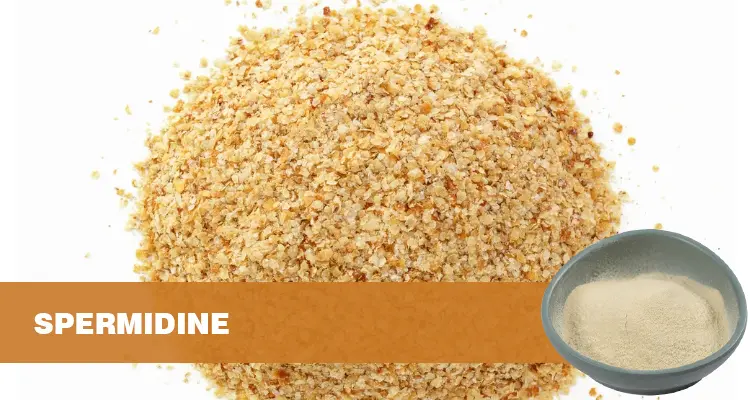 Why is spermidine indispensable?
In the exploration of life sciences, spermidine has become a key research focus in the fields of cellular health and anti-aging. From a cellular perspective, spermidine acts like a “key,” unlocking the door to autophagy and systematically clearing “waste” from within cells, keeping them clean and vibrant. It also acts as an “antioxidant guardian,” building a robust defensive “shield” to resist oxidative stress and protect the safety of intracellular biomolecules. Furthermore, it acts as a “safety lock,” tightly protecting the stability of the genome, ensuring the accurate transmission of genetic information and laying the foundation for maintaining normal cellular physiological functions. Finally, it functions as a “gene regulation master,” reshaping the cellular “anti-aging transcriptome,” regulating gene expression, and creating a healthy intracellular environment.
From the perspective of the entire body, the role of spermidine is even more comprehensive and profound. It exhibits significant effects across levels, from molecular aging to body rejuvenation, playing a crucial role in maintaining the function of vital organs such as the heart and pancreas. It can also mimic the fasting effect, optimizing cellular energy metabolism, improving physical endurance, and reducing the risk of metabolic syndrome. In the preventative intervention of age-related diseases, spermidine has demonstrated outstanding performance in multiple areas, including cardiovascular health, neurodegenerative diseases, and metabolic and immune regulation, offering new possibilities and hope for preventing and delaying the onset and progression of these diseases.
Extensive preclinical studies have provided a solid theoretical foundation and scientific basis for the effects of spermidine, gradually bringing it from the laboratory to the stage of formulation design. In formulation design, whether using naturally derived spermidine or synthetic preparations, factors such as bioavailability and precise dosage control must be fully considered to ensure its safety and efficacy. Regarding safety, spermidine, as an inherent component of the human body, is safe at normal physiological concentrations; however, caution is still needed for special populations such as pregnant women, breastfeeding women, and cancer patients.
With the continuous intensification of global aging, people’s attention to health and aging is increasing daily. Spermine-based precision anti-aging strategies are gradually transforming from laboratory research results into effective means of personalized health management. Spermine, as a key ingredient in cell health and anti-aging formulations, will play an increasingly prominent role in the life sciences field, providing strong scientific support for humanity’s pursuit of health and longevity. It is expected to play a greater role in the future health field and make important contributions to improving human health and quality of life.
