








Bulk buyers for dietary supplement softgels, functional food formulas, and pet nutrition products often face severe krill oil quality risks on the wholesale market. Low-grade blended oil, diluted phospholipids, oxidized stock, and non-Antarctic mixed oil are common pitfalls that cause unstable finished product efficacy, poor shelf-life performance, and even FDA customs clearance failures.
Visual judgment, color observation, and simple smell checks are not enough to verify pure Antarctic krill oil. Only professional laboratory testing can confirm authenticity, purity, and compliance. Below are 7 essential lab inspection standards every bulk buyer must verify before confirming large krill oil orders.
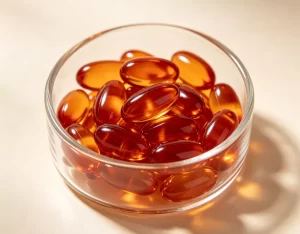
1. Phospholipid Content Verification
Phospholipid is the core marker that distinguishes real Antarctic krill oil from ordinary fish oil or blended oil. Genuine bulk Antarctic krill oil features high phospholipid-bound Omega-3, which delivers higher absorption rate and better stability than triglyceride-based fish oil.
Standard industrial grades include 30%, 40%, 60%, and 70% phospholipid content. Low-quality suppliers often dilute krill oil with cheap fish oil to lower costs,
resulting in drastically reduced phospholipid levels.
Bulk buying tip: Always verify HPLC test data on the official COA. Never trust only labeled specifications — always match actual tested phospholipid values with your formulation requirements.
2. Natural Astaxanthin Concentration Test
Pure Antarctic krill oil contains natural astaxanthin, the key antioxidant substance that provides reddish color and strong oxidation resistance. It also determines the shelf life stability of bulk krill oil during transportation and warehouse storage.
Fake or blended krill oil lacks natural astaxanthin. Many low-cost products use artificial pigment to simulate dark red appearance, leading to fast oxidation, color fading, and shortened softgel shelf life.
Inspection standard: Qualified bulk krill oil maintains stable astaxanthin content without artificial color additives, fully compliant with clean-label supplement production standards.
3. EPA & DHA Ratio Authenticity Check
Authentic Antarctic krill oil has a fixed natural EPA and DHA proportion. Blended oil mixed with generic fish oil will show abnormal nutrient ratios, which is one of the easiest ways to identify adulteration.
For supplement manufacturers, unstable EPA/DHA ratios will cause inconsistent product efficacy, failing third-party finished product testing and brand label claims.
4. Peroxide Value (PV) & Oxidation Inspection
Oxidation is the biggest hidden quality hazard for bulk krill oil inventory. High peroxide value indicates deteriorated oil, bringing unpleasant fishy odor, dark discoloration, and failed shelf-life stability.
Many wholesale suppliers store krill oil without cold-chain protection or vacuum sealing, resulting in high PV values after long-distance sea shipping and long-term warehouse stacking.
Buyer standard: Qualified bulk Antarctic krill oil must maintain low peroxide value, supporting 24-month stable shelf life for softgel finished products.
5. Heavy Metal & Arsenic Safety Limit Test (FDA Critical Standard)
Cross-border bulk krill oil imports to the US and EU face the strictest heavy metal and inorganic arsenic limits. Non-standard krill sources or unpurified crude oil often exceed limits, causing customs detention and batch rejection.
Pure Antarctic-sourced krill oil features ultra-low heavy metal residuals, fully meeting FDA, HACCP, and EU food-grade safety requirements. Bulk buyers must confirm full heavy metal test reports before import.
6. Residual Solvent & Extraction Safety Test
Low-cost krill oil suppliers adopt chemical solvent extraction to increase oil yield, resulting in residual solvent hazards. Such products cannot pass clean-label audits and are prohibited for high-end dietary supplement formulations.
Genuine premium Antarctic krill oil adopts low-temperature physical extraction, zero solvent residue, ensuring pure, safe, and clean-label compliant raw materials.
7. Antarctic Source Traceability Verification
Not all krill oil on the market originates from the Antarctic Ocean. Many mixed krill oils come from ordinary sea areas with unstable ecological environments and inconsistent quality.
Reliable bulk krill oil must support complete source traceability, including Antarctic fishing area records, sustainable fishing certification, and batch production logs, avoiding non-standard mixed-source raw materials.
Key Bulk Buying Avoidance Tips for Krill Oil
- Never judge purity only by color and smell — always rely on full lab COA reports
- Avoid ultra-low-price krill oil with unknown phospholipid data and missing test records
- Prioritize suppliers who provide third-party independent test reports instead of internal self-test documents
- Conduct free sample testing before placing large bulk orders to verify batch stability
Why Our Bulk Antarctic Krill Oil Passes Full 7-Point Lab Inspection
We focus on supplying pure, lab-verified Antarctic krill oil for global supplement and pet nutrition manufacturers. Every batch undergoes complete HPLC lab testing, strict oxidation control, and full safety detection.
We provide multiple phospholipid specifications (30%–70%), full third-party COA, MSDS, traceability files, and FDA-compliant certification packs. Cold vacuum sealed packaging and standardized low-temperature storage effectively prevent oxidation, ensuring long-term stable quality for bulk inventory.
Where to Buy Lab-Tested Pure Antarctic Krill Oil in Bulk
If you are looking for stable, pure, and fully tested bulk Antarctic krill oil for softgel manufacturing, dietary supplement formulas, and pet nutrition production, our factory direct supply provides flexible MOQ, free sample testing, complete qualification documents, and reliable long-term wholesale support.
